
Meet Lisa: How a leap of faith launched a lifetime of investing
Starting with nothing but nerve, this entrepreneur built a growing business and a disciplined investing approach over a 40-year journey.
 Add us as a preferred Google source
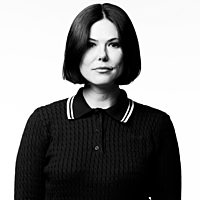
Lisa’s investment journey really brings the expression of 'starting with nothing but a dollar and a dream' to life. Her story almost writes itself - an entrepreneurial hustle combined with a fearless attitude to try new things.
“I remember my mum saying to me, ‘If you don’t get a job in two weeks, you’re coming home again'," Lisa said. "I’d moved from Bathurst, and she was worried because she knew I didn’t have any money. That was motivation, I assure you.”
Necessity (and fear of moving back home!) pushed Lisa to take opportunities when they arose. At the time, many of the clients of her fledgling design studio business were blue-chip financial institutions - AMP, CBA and Westpac - and that context shaped her thinking.
I asked what prompted that very first leap of faith into investing. I wanted to understand the critical juncture between thinking and doing.
“I just thought, this isn’t a big amount compared to what I read in their reports. I said to myself, ‘It’s going to be okay.’ And luckily, the market had a good year.”
While she is more risk-averse today in retirement, some principles have never changed: keeping cash on hand as a springboard for future opportunities and understanding that emotions must not play too big a role when you’re an investor because they can get in the way of decision-making.
And although she acknowledges that saving for a home deposit or starting a business is far harder for young people today, some truths still hold. Eliminate personal debt first, then study and learn what’s available for free. Build a fund from your income and add to it regularly. Dollar-cost averaging, she says, still works.
Enjoy this instalment of Meet the Investor.

Profile
Name: Lisa
Job: SMSF Director, Retired
Age: 66
Years spent investing: 40
Biggest investment: Starting my own business, its income enabling further investments
Investment goals: To provide a comfortable and sustainable income stream in retirement
Products used: Individual bonds, stocks, ETFs, hybrids, income funds
Secret (or not so secret) talent: First Apple Macintosh computer graphic designer in Sydney, 1984
Guilty reading or viewing pleasure: Crime TV; it makes me feel safe by comparison.
Can you share how you got started in investing and what your first investment was?
My first encounter with investing was in 1986 when an AMP agent met me in my fledgling design business studio, and I enrolled in their superannuation program. It sounded like a clever idea at the time: I was driven to improve my situation in life, as money was tight.
Thanks to some seriously high-profile introductions from a dear fellow who was a salesman at my first steady job, my business took off in 1987-8, servicing blue-chip Australian corporates with graphic design and print production, reaching 1000% turnover within 12 months, followed by two years of over 300% growth.
These statistics landed me in the BRW Top 100 Australian fastest-growing private companies for three consecutive years, leading to the publication of an article about my studio. A local investment adviser read it and approached me, asking: ‘Have you thought about leveraged investment?’
‘What’s that?’ was my immediate reply. But I then agreed to borrow $100,000, repayable by selling the stocks in 12 months. This was when interest rates were 17% per annum. The market had a good year. I reduced my tax by $17,000 and repaid the debt.
The adviser asked me what I would like to do with the $10,000 profit. I replied: ‘Why not reinvest it among the same stocks at 10% of the original amount?’ ‘OK,’ he said. Thus, my stock portfolio was born from the handsome sum of $0 and a hefty sum of faith in 1991.
1988 to 1999 were the busiest years for my studio, when working 12-18 hour days, five or six days a week, became the norm. We bought a commercial unit and reached a staff of eight and a peak turnover of $1.8 million in 1992 – quite a tidy sum back then.
My accountant suggested I roll my AMP super into an SMSF, so I agreed and transferred off-market my existing stockholding to the fund, which had increased steadily since 1986.
I bought a residential investment property and paid off the last of my Sydney home’s mortgage in the mid ’90s.
I transferred the ownership of my design studio premises to the super fund and became the fund’s tenant, until selling the studio property in 2002, which added a way to transfer business earnings into superannuation.
As the internet became the marketing tool of choice, I cashed in all my chips and moved to a farm in the country in 2003. My Sydney house netted $ 1 million in 2008, so I opened a cash account at 7% pa. Within a decade, interest rates gradually dropped to near zero, so I consulted with Citibank and bought investment-grade bonds with the contents of the cash account. I continued managing the SMSF and its stock and bond portfolio.
I started my career in 1982 with $1000 and retired 16 years ago, aged 50.
How would you describe your strategy and your investment goals?
I split my funds between the SMSF and my own name, primarily for flexibility, but I make sure the income from my personal assets lies below a taxable threshold.
Goals focus on generating an income stream, with my strategy being to stick to the plan of diversification, with the aim of an income of 4-6% pa.
Buy and hold is my maxim. The earlier you start investing, the better the outcome. A few risks here and there are worth the result, and mistakes teach valuable lessons for the future.
What products do you use to execute your strategy?
I hold over $700,000 in bonds directly rather than a bond ETF, so I can redeem them at maturity with the knowledge that they retain their face value. I top up my $300,000 stock portfolio, selling a little cream on top at peak times and buying a little at low ebbs.
I keep a substantial third bucket of cash for reinvestments, monthly income and drawings whenever required.
Can you share your top 5 holdings in % terms and why you hold these positions?
I’ve categorised my top 5 holdings into stocks and bonds, so the % values shown are within each category.
Stocks: NAB (13%), BHP (12%), WBC (12%), Dominion Listed Investment Trust No. 1 (12%), WES (11%).
Bonds: Pacific National (39%), Credit Agricole (21.4%), Lend Lease (16.1%), Westpac (11%), United Arab Emirates Bank (5.14%).
All positions are held with the primary objective of a ‘set and forget’ income stream. Timing is not always our friend, and many bonds were purchased when interest rates were very low (2019-20).
Bravely - or stupidly - I decided to ride out the increased rate cycle, and fortunately, now see the bonds more in tune with inflation. The bonds have a stepladder of maturity dates, so will gradually be replaced by investments offering returns above the current inflation rate.
What investment is on your watchlist?
Everyone is jumping on AI, gold, crypto, private debt and collectibles. Call me staid, but as I started with nothing, I have nothing to lose, so I think I’ll stick to my plan. As each bond matures, I will hunt for the best return available in consultation with my wealth adviser at NABtrade.
As Buffett used to say, "Rule number 1, don’t lose money. Rule number 2, don’t forget Rule number 1."
What was your worst investment and what has been your best?
My worst was an investment property fund, when I lost $25,000, which took ages to recover from.
That taught me not to ride things all the way down. One disaster teaches you to watch out for others.
But it had the advantage of providing a loss bucket as an ongoing tax deduction for any SMSF profits for many years.
Magellan and AMP were both losses, but the AMP shares were a gift to me when I was in their super fund, so I swallowed that without too much chagrin. Fortunately, I sold both AMP and Magellan stocks before they hit the bottom, a lesson I learned from the property fund loss.
Taking the plunge to start my own business was undoubtedly the best springboard to investment on a wider scale. I learned relevant tactics and terminology by producing reports and marketing materials for clients in the finance sector, including large corporations, banks, investment companies, and the futures exchange. Proofreading their documents before printing meant I absorbed general knowledge subconsciously.
These days, I enjoy expanding my understanding of the market through Livewire, Morningstar, Bloomberg, and investment podcasts. It is a lifelong learning process – knowledge is a great investment.
What’s a mistake you see newer investors make today?
Expecting huge results overnight. Jumping into things like crypto when you’re close to retirement can be fatal. Losing 30% overnight when 90% of your net worth is in it - that’s dangerous. Overnight results are rare. You have to weigh the risk against your future.
Can you share a personal passion or ambition you have for the future?
All my friends are travelling the world. My little farm is going on the market next year and when we have found a new home in a local township, I would like to see more of the world. It is great to be comfortable with an income stream, but ‘you can’t take it with you’, so my plan is to enjoy the fruits of my labour while I still can.
If you are interested in sharing your investing journey, please send me a confidential enquiry via email to [email protected].
(All guests receive a limited edition Livewire cap)
Never miss an update
Enjoy this wire? Hit the ‘like’ button to let us know.
Stay up to date with my current content by
following me below and you’ll be notified every time I post a wire
I'm an Investment Writer and Presenter at Livewire Markets, dedicated to creating content that makes the world of investing more accessible. With a background in story development, I enjoy distilling complex topics into engaging, impactful media that resonates with audiences.
........
Livewire gives readers access to information and educational content provided by financial services professionals and companies ("Livewire Contributors"). Livewire does not operate under an Australian financial services licence and relies on the exemption available under section 911A(2)(eb) of the Corporations Act 2001 (Cth) in respect of any advice given. Any advice on this site is general in nature and does not take into consideration your objectives, financial situation or needs. Before making a decision please consider these and any relevant Product Disclosure Statement. Livewire has commercial relationships with some Livewire Contributors.
.jpg)
4 topics
.jpg)
I'm an Investment Writer and Presenter at Livewire Markets, dedicated to creating content that makes the world of investing more accessible. With a background in story development, I enjoy distilling complex topics into engaging, impactful media...
I'm an Investment Writer and Presenter at Livewire Markets, dedicated to creating content that makes the world of investing more accessible. With a background in story development, I enjoy distilling complex topics into engaging, impactful media...
Comments
Comments
Sign In or Join Free to comment