Seven deadly sins of investing: Part 1
The most common bias in investing isn't greed or fear. It's thinking you know more than you do.
 Add us as a preferred Google source
In Plato's latest series of investor notes, we examine seven investor behaviours that quietly, and repeatedly, destroy wealth. We know them well. We’ve committed every one of them, and probably always will. The hope is simple: awareness does not eliminate bias, but it can reduce its impact and improve decision-making.
These mistakes are not signs of low intelligence or poor training.
They are hard-wired into us. For millions of years, human judgment evolved to survive predators, famine and tribal conflict, not to manage diversified portfolios of global securities in a hyperconnected digital marketplace.
Deadly sin #1: Overconfidence
The most ubiquitous bias, according to behavioural psychologists, is overconfidence.
Consider the evidence. Ninety-three percent of drivers rate themselves as better than the median driver - a mathematical impossibility.
A clear majority of people believe they are better lovers than average. Even among academics, 94% of university professors rate themselves above the median professor. Political leaders routinely overestimate the probability of swift military victories - from Vietnam to Iraq to Afghanistan, and more recently Ukraine and Iran. In financial markets, male investors trade around 45% more frequently than women, and as a result underperform by roughly 1% per annum after costs.
Overconfidence is universal. Markets simply provide a mechanism to monetise it.
And it can be financially ruinous. Portfolios become overly concentrated. Risk factors cluster. Exposure narrows to a handful of correlated thematics (think concentrated US software bets at present). During the GFC, we held concentrated short positions in several European banks. When Mario Draghi pledged to do “whatever it takes” to preserve the euro, those stocks surged. We were caught on the wrong side and lost more than I care to remember. Conviction is admirable. Uncalibrated conviction is expensive.
Research in psychology shows that when people say they are 90% certain about something, they are actually correct only 75–80% of the time. More concerning still, when people say they are 100% certain, they turn out to be right only 85–90% of the time.
So, are you overconfident?
Here is a simple calibration test drawn from the behavioural literature. For each question below, write down a low and high estimate such that you are 90% confident the true answer lies between them. If you are well calibrated, 90% of the true answers should fall inside your ranges.
Only check the answers after you have committed your intervals to paper (answers in comments).
- What is the length of the Nile River (in km)?
- What is the population of Bangladesh?
- What is the height of Mount Everest (in metres)?
- What is the average distance from Earth to the Moon (in km)?
- What is the annual wheat production of Australia (in tonnes)?
- What is the diameter of the Moon?
- What is the gestation period of an African elephant (in months)?
- In what year was Mozart born?
-
What is the approximate coastline length of Tasmania (in km)?
How did you go?
If, like me, more than one of the true answers fell outside your ranges, you are likely overconfident. In controlled experiments, participants who believe they are 90% certain typically capture the correct answer only about 50% of the time. We are not bad at estimating. We are bad at estimating how uncertain we are.
Probability does not always come naturally
I’m reminded of the classic line from Anchorman, where Paul Rudd’s character proudly describes his Sex Panther cologne: “60% of the time, it works every time.”

The irony is that a degree of overconfidence may be necessary to function. If we perfectly understood the uncertainty embedded in life, and markets, we might struggle to act at all.
Dr David Allen in Plato Investment Management's Head of Long/Short Strategies and Portfolio Manager of the Plato Global Alpha Fund.
Click here to learn more about Plato Global Alpha.
Never miss an update
Enjoy this wire? Hit the ‘like’ button to let us know.
Stay up to date with my current content by
following me below and you’ll be notified every time I post a wire
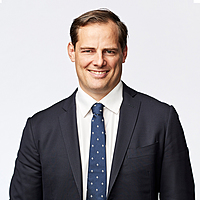
David has more than two decades’ experience investing in global equities. Prior to joining Plato Investment Management he worked for JP Morgan Asset Management in London for fifteen years becoming one of the youngest managing directors in the firm’s history. He managed the JP Morgan Europe Equity Plus active-extension fund which was closed to new investors after growing to €6 billion, generating 4% p.a. net alpha over ten years. He also launched and managed the JP Morgan Europe Equity Absolute Alpha Market Neutral fund. In its first twelve months of operation, the fund returned over 20%, and grew assets to €1 bn. In 2014 he was the European Hedge Fund Manager of the Year (UCITS).
........
This communication is prepared by Plato Investment Management Limited (‘Plato’) (ABN 77 120 730 136, AFSL 504616) as the investment manager of the Plato Global Net Zero Hedge Fund (ARSN 654 914 048) (‘the Fund’). Pinnacle Fund Services Limited (‘PFSL’) (ABN 29 082 494 362, AFSL 238371) is the product issuer of the Fund. PFSL is not licensed to provide financial product advice. PFSL is a wholly-owned subsidiary of the Pinnacle Investment Management Group Limited (‘Pinnacle’) (ABN 22 100 325 184). The Product Disclosure Statement (‘PDS’) and Target Market Determination (‘TMD’) of the Fund are available via the links below. Any potential investor should consider the PDS and TMD before deciding whether to acquire, or continue to hold units in, the Fund.
Link to the Product Disclosure Statement: https://plato.com.au/wp-content/uploads/Plato-Global-Net-Zero-Hedge-Fund-PDS.pdf
Link to the Target Market Determination: https://plato.com.au/wp-content/uploads/Plato-Global-Net-Zero-Hedge-Fund-TMD.pdf
For historic TMD’s please contact Pinnacle client service Phone 1300 010 311 or Email [email protected]
This communication is for general information only. It is not intended as a securities recommendation or statement of opinion intended to influence a person or persons in making a decision in relation to investment. It has been prepared without taking account of any person’s objectives, financial situation or needs. Any persons relying on this information should obtain professional advice before doing so. Past performance is for illustrative purposes only and is not indicative of future performance.
Whilst Plato, PFSL and Pinnacle believe the information contained in this communication is reliable, no warranty is given as to its accuracy, reliability or completeness and persons relying on this information do so at their own risk. Subject to any liability which cannot be excluded under the relevant laws, Plato, PFSL and Pinnacle disclaim all liability to any person relying on the information contained in this communication in respect of any loss or damage (including consequential loss or damage), however caused, which may be suffered or arise directly or indirectly in respect of such information. This disclaimer extends to any entity that may distribute this communication.
Any opinions and forecasts reflect the judgment and assumptions of Plato and its representatives on the basis of information available as at the date of publication and may later change without notice. Any projections contained in this presentation are estimates only and may not be realised in the future.

1 topic
David has more than two decades’ experience investing in global equities. Prior to joining Plato Investment Management he worked for JP Morgan Asset Management in London for fifteen years becoming one of the youngest managing directors in the...
Expertise
David has more than two decades’ experience investing in global equities. Prior to joining Plato Investment Management he worked for JP Morgan Asset Management in London for fifteen years becoming one of the youngest managing directors in the...
Expertise
Comments
Comments
Sign In or Join Free to comment