Stagnation might be OK at this point
 Add us as a preferred Google source
We have frequently commented on the lack of ambition in Australia, the poor productivity, the flawed policy settings and the slow creep into mediocrity. In our view, nothing on that front has changed. If anything, it has become even more entrenched.
Notwithstanding those somewhat ‘sanguine’ thoughts, it’s worth noting that the composition of the Australian equity market (ASX 200) actually maps very differently to that of the domestic economy. Conveniently (and this won’t always be the case) the sectors under the greatest amount of pressure in the economy are under-represented on the stock market.
By way of example:
- The Consumer (under-represented) – the Australian consumer is under extreme pressure (i.e. high interest rates, inflation, energy prices, falling property prices, miserable confidence) and it likely already feels like a 'consumer recession' for many. The sector is 52% of GDP, but represents less than 10% of the ASX 200 (by market capitalisation). In fact, BHP (ASX:BHP) is more important to the ASX than all consumer related stocks put together. Myer and David Jones might attract a lot of headlines, but neither company sits inside the ASX 200.
- Housing Construction (under-represented) – the sector is consistently between 3-6% of GDP and heading into a policy induced slump, but conveniently the building materials sector is less than 1% of the ASX 200. The transmission of a weak housing market (i.e. falling prices and volumes) is pretty limited through the ASX 200 outside of what it means for Consumer stocks. It will crimp Bank credit growth (we still believe mortgage credit quality is robust), but is unlikely to create a banking crisis.
- Offshore Education & Tourism (under-represented) – Australia's #2 and #3 exports are under severe pressure and that will be further compounded by migration cuts (particularly in university education), but these two sectors are barely present on the ASX (<1%).
- Mining & Energy (over-represented) – while clearly important to the economy at 13% of GDP, these sectors are twice as important to the market at almost 30% of the ASX 200. We believe the general outlook is promising, with demand resilient, supply constrained and capex inflation/delays favouring incumbent low cost producers (which Australia is spoilt with).
- Financial Services (over-represented) – the outlook for Australian banks is uninspiring but not dangerous, meanwhile the insurers look completely boring. They currently represent 30% of the ASX 200 vs. <10% of the economy which could prove to be a distinct advantage.
- Australia Companies with Material Offshore Earnings (over-represented) – these businesses clearly don’t feature in GDP numbers but are north of 20% of the ASX 200 (e.g. ResMed (ASX:RMD), CSL (ASX:CSL), QBE Insurance (ASX:QBE)). Overall, they have promising prospects and the potential to outgrow Australia's mediocre short-term prospects.
- Data Centers & AI (not relevant) – clearly a raging debate has emerged around the sector, with politicians oscillating between its virtues and evils (sometimes even on the same day). In any event, even if you round up, its directly listed cohort represents less than 1% of the ASX 200.
In a world where wars rage, French bond yields are literally melting up, 'revolutionary' business models like neoclouds look broken and real fragility has crept into AI stocks (the world’s most crowded trade), Australian equities could look like a port in a storm. It’s clearly a tactical rather than structural argument, but one which could carry some weight amongst global asset allocators in the period ahead. Being underweight Australia has been consensus – it’s easy and somewhat obvious – but that might now change.
The key driver the ASX's underperformance vs. global markets has been its underrepresentation in IT hardware/AI and earnings stagnation. However, these factors may actually be a catalyst for outperformance if the stress we are currently observing persists or accelerates. It comes as the ASX 200 is approaching fair value and realistic F27 earnings expectations are in place (refer below).
Chart 1. The ASX 200 is approaching fair value

Source: Goldman Sachs Investment Research.
Table 1. Realistic F27 earnings expectations are in place

Source: Goldman Sachs / YCM Research, as at 31 August 2026.

Managed Fund
Yarra Ex-20 Australian Equities Fund
Australian Shares
View
Never miss an update
Enjoy this wire? Hit the ‘like’ button to let us know.
Stay up to date with my current content by
following me below and you’ll be notified every time I post a wire
Dion is Executive Chairman and Head of Australian Equities. He is responsible for leading the Australian Equities team, and is a Porfolio Manager focussed on large cap equities.
Prior to transitioning to Yarra Capital Management, Dion was the Head of Australian Equities of Goldman Sachs Asset Management, a position he held since July 2007.
He was previously a Fund Manager at Citadel Investment Group based in New York where he managed a long/short portfolio. He also worked as an Analyst and Fund Manager for Boston-based Fidelity Investments, where he was responsible for managing a diversified fund.
........
Yarra Funds Management Limited (ABN 63 005 885 567, AFSL 230 251) (‘YFM’) is the issuer and responsible entity of a range of registered managed investment schemes, which includes those named in this document (‘Funds’). YFM is not licensed to provide personal financial product advice to retail clients. The information provided contains general financial product advice only. The advice has been prepared without taking into account your personal objectives, financial situation or particular needs. Therefore, before acting on any advice, you should consider the appropriateness of the advice in light of your own or your client’s objectives, financial situation or needs. Prior to investing in any of the Funds, you should obtain and consider the product disclosure statement (‘PDS’) and target market determination (‘TMD’) for the relevant Fund by contacting our Investor Services team on 1800 034 494 or from our website at www.yarracm.com/pdsupdates/. The information set out has been prepared in good faith and while Yarra Funds Management Limited and its related bodies corporate (together, the “Yarra Capital Management Group”) reasonably believe the information and opinions to be current, accurate, or reasonably held at the time of publication, to the maximum extent permitted by law, the Yarra Capital Management Group: (a) makes no warranty as to the content’s accuracy or reliability; and (b) accepts no liability for any direct or indirect loss or damage arising from any errors, omissions, or information that is not up to date. No part of this material may, without the Yarra Capital Management Group’s prior written consent be copied, photocopied, duplicated, adapted, linked to or used to create derivative works in any form by any means. YFM manages each of the Funds and will receive fees as set out in each PDS. To the extent that any content set out in this document discusses market activity, macroeconomic views, industry or sector trends, such statements should be construed as general advice only. Any references to specific securities are not intended to be a recommendation to buy, sell, or hold such securities. Past performance is not an indication of, and does not guarantee, future performance. Information about the Funds, including the relevant PDSs, should not be construed as an offer to any jurisdiction other than in Australia. With the exception of some Funds that may be offered in New Zealand from time to time (as disclosed in the relevant PDS), we will not accept applications from any person who is not resident in Australia or New Zealand. The Funds are not intended to be sold to any US Persons as defined in Regulation S of the US federal securities laws and have not been registered under the U.S. Securities Act of 1933, as amended. References to indices, benchmarks or other measures of relative market performance over a specified period of time are provided for your information only and do not imply that the portfolio will achieve similar results. Holdings may change by the time you receive this report. Future portfolio holdings may not be profitable. The information should not be deemed representative of future characteristics for the strategy. There can be no assurance that any targets stated in this document can be achieved. Please be advised that any targets shown are subject to change at any time and are current as of the date of this document only. Targets are objectives and should not be construed as providing any assurance or guarantee as to the results that may be realized in the future from investments in any asset or asset class described herein. If any of the assumptions used do not prove to be true, results may vary substantially. These targets are being shown for informational purposes only. © Yarra Capital Management, 2026.

Never miss an update
Get the latest insights from me in your inbox when they’re published.
1 fund mentioned
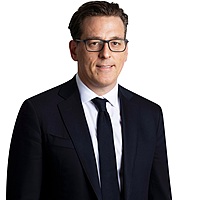
Dion is Executive Chairman and Head of Australian Equities. He is responsible for leading the Australian Equities team, and is a Porfolio Manager focussed on large cap equities. Prior to transitioning to Yarra Capital Management, Dion was the...
Expertise
Dion is Executive Chairman and Head of Australian Equities. He is responsible for leading the Australian Equities team, and is a Porfolio Manager focussed on large cap equities. Prior to transitioning to Yarra Capital Management, Dion was the...
Expertise
Comments
Comments
Sign In or Join Free to comment
most popular
Equities
Navigating the AI boom: Who we think is best placed to win
Auscap Asset Management