The IPO that fizzled: The 30 Firmus red flags (and the one green flag)
The key red flags that got in the way of Australia's most anticipated IPO.
 Add us as a preferred Google source
Editor's note: Since this article was written, Firmus has cancelled its plans to list on the ASX. The analysis below offers valuable lessons for investors on what to look out for when assessing a new float.
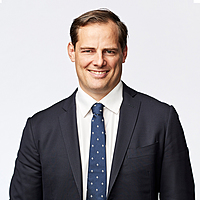
By Dr David Allen
At the time of writing, Plato has no position in Firmus.
On Monday, a client asked me what Red Flags we were seeing for Firmus. I explained that, with the IPO still a few weeks away, Firmus had not yet populated the Red Flags in Plato's PRISM system.
So our team had a quick brainstorm. It didn't take long to get to 30. Here are our top ten.
1. Extreme valuation
Firmus generated just US$50.8 million of operating revenue in FY2026. At the original A$11 IPO price, the float valued its equity at roughly US$30 billion, or about 600 times last year's revenue.
That makes SpaceX look like deep value.
Yes, projected revenue is dramatically higher. Firmus has pointed investors to US$12.9 billion of revenue in 2029.
Call us old-fashioned, but we are not in the habit of valuing what is arguably still a start-up on the assumption that it will execute almost flawlessly and grow revenue by roughly 25,300% in three years.
When this much of the valuation sits in the future, small changes to assumptions can have very large consequences in the present.
2. Fixation on EBITDA
Much of the pre-IPO discussion has focused on Firmus's projected EBITDA.
Valuing a neocloud on an EBITDA multiple is a bit like valuing an airline while pretending the planes are free and last forever.
GPUs are extraordinarily expensive and rapidly depreciating assets. Firmus's expansion will also require enormous amounts of capital and debt. Interest expense, depreciation, replacement capex and ultimately free cash flow therefore matter enormously.
EBITDA conveniently ignores much of that.
3. Termination of the CDC partnership
Greg Boorer, CEO of CDC Data Centres, is one of Australia's most experienced data-centre operators, with more than a gigawatt of capacity contracted.
The partnership therefore reduced Firmus's execution risk and added considerable credibility.
When Firmus and CDC announced Project Southgate in October 2025, they said it could scale to 1.6 GW of AI infrastructure by 2028, starting with up to 150 MW at CDC's Melbourne campus.
That partnership has now ended after about 42 MW was deployed, less than 3 per cent of the original ambition.
CDC's Boorer has said Firmus's decision to pursue its own data-centre developments was different from what CDC had originally envisaged and that the companies' approaches had become "misaligned". While the precise reasons for parting ways are unclear, the reported flooding of CDC’s Melbourne data centre caused by a leak in Firmus’s liquid-cooling system and the AFR's report that Firmus missed its first rent payment and needed chasing cannot have helped.
Firmus says the decision was mutual (sounds like how I describe most of my break-ups) and does not affect its current development plans, contracted customer capacity or strategy.
Whatever the explanation, for a company asking investors to underwrite an infrastructure build-out of extraordinary scale, losing an experienced development partner warrants attention.
4. Limited industry experience at the top
Much has been written about Oliver Curtis's past, so I won't rehash it here.
More relevant to us is the limited track record of Firmus's senior leadership in delivering data-centre infrastructure at anything approaching the scale now contemplated.
Firmus was founded in 2019, initially focused on crypto and high-performance computing, and has since pivoted aggressively into AI infrastructure. It currently has two operational facilities, while the overwhelming majority of the capacity underpinning its forecasts is still being developed.
This does not mean management cannot execute. Outsiders disrupt established industries all the time. As for me, I am best if I stay in my lane. If you put me in charge of a restaurant everyone would have food poisoning within a week.
But execution risk tends to rise when the scale and complexity of what is being attempted bears little resemblance to what has previously been delivered.
5. Extreme customer concentration
Meta has reportedly contracted all of the compute capacity at Firmus's 84 MW Launceston AI factory and has rights of first refusal over capacity at several other planned Australian sites.
Over the years, I have watched more than one thriving company fade into oblivion because of extreme customer concentration.
Remember GT Advanced Technologies?
GTAT entered a huge agreement to manufacture sapphire for Apple. It then built a highly specialised, capital-intensive production operation around that relationship.
According to GTAT's subsequent bankruptcy disclosures, the company incurred approximately US$900 million of costs on the Apple project, of which US$439 million was funded through Apple prepayments.
Production costs proved higher than expected and GTAT said it was selling sapphire material to Apple at a substantial loss. Apple did not make the fourth and final US$139 million prepayment.
GTAT suffered a liquidity crisis and filed for Chapter 11 bankruptcy in October 2014.
Customer concentration is one thing.
Customer concentration combined with enormous sunk capital is something else entirely.
6. Social licence for data centres
Cathie Wood of ARK Invest is among the most optimistic of the technology evangelists.
In its bull case, ARK's 2021 Tesla model contemplated US$327 billion of autonomous ride-hailing revenue by 2025. ARK also estimated that, if 60% of eligible Teslas participated as robotaxis, autonomous ride-hailing could generate an additional US$160 billion of EBITDA in 2025.
Neither came remotely close to occurring.
In September 2021, Wood also said she believed Bitcoin could rise from around US$45,000 to more than US$500,000 within five years. As I write this, Bitcoin is around US$83,000.
So I took notice when the AFR reported in August that the "political movement to ban data centres" was the main thing keeping Wood up at night, even more than ballooning AI capital expenditure.
The risk is particularly relevant for Firmus.
When billions of dollars of capital are committed on the assumption that capacity becomes operational on a particular timetable, planning, power, construction or community delays can materially alter project economics.
7. Dad, it's like a mine!
Co-CEO Oliver Curtis has pitched AI token production as Australia's next great commodity boom, one that could rival iron ore.
If tokens are the new iron ore, a neocloud is a mine. It is actually a very good analogy.
Large amounts of debt and equity are used to finance expensive equipment and infrastructure today to produce a commodity several years into the future.
But the metaphor cuts both ways.
Commodity industries are inherently cyclical. Today there is a shortage of AI compute amid seemingly insatiable demand. Mining history tells us what often happens next. High prices attract enormous amounts of new capacity. That capacity takes years to arrive. Occasionally, everyone arrives at the party at once.
Shortage becomes surplus. Prices fall.
There is another problem with the mining analogy. A good mine can operate for decades. The expensive GPUs underpinning a neocloud may become technologically obsolete within a handful of years.
The chart below shows the extraordinary decline in the cost of achieving a given level of AI performance over the past few years.
I have used a logarithmic axis because otherwise today's cost would barely be visible.
Epoch AI estimates that since 2023 the cost of achieving a given level of AI performance has fallen by approximately 47% per quarter, or 13 times per year.
That does not mean Firmus's realised prices will fall at the same rate. But it does illustrate the extraordinary deflation occurring in the underlying technology.
Firmus therefore needs enormous growth in AI demand simply to outrun enormous improvements in the cost and efficiency of producing intelligence.

8. The IPO price is reportedly being cut
This week, reports emerged that Firmus's proposed IPO price could be reduced from A$11 to around A$9, a cut of approximately 18%. Subsequent reporting suggested A$8.25 was also being considered.
That is a notable shift from the earlier signals.
The original term sheet said indicative orders were already above the size of the offer at A$11. Reuters reported this on 1 October.
Subsequent reporting suggested advisers believed the deal was largely covered, including substantial support from existing strategic investors.
The bookbuild itself appears to have told a more nuanced story.
Reports now suggest demand has been weaker than anticipated, particularly among some offshore and Australian retail investors. At least one retail broker reportedly described demand as "very light", while the latest reports suggest Firmus has sought additional support from Nvidia.
There is an important distinction here.
A book can be genuinely "covered" by indications of interest and cornerstone commitments while still lacking deep demand from marginal investors at the proposed price.
For investors, that distinction matters.
Coverage tells you whether a deal can get done. Price discovery tells you what the marginal buyer will pay. And once the shares start trading, it is the marginal buyer who sets the price.
9. Massive pre-IPO shareholder overhang
The AFR reported this week that escrow arrangements cover only 42.4 per cent of Firmus's shares at listing, leaving 57.6 per cent free to trade from day one.
At the original A$43.7 billion valuation, that is roughly A$25 billion of stock outside escrow. Some of it will be shares bought in the float itself, but much of it belongs to investors who came in at far lower prices.
Obviously, that does not mean A$25 billion will be sold. Most of it almost certainly will not be.
But it illustrates the potential scale of the overhang.
The Australian separately reported speculation that some pre-IPO investors could sell up to 20% of their holdings from day one, with one source estimating that this could leave as much as US$5 billion of stock potentially available.
The overhang matters because many of these investors entered Firmus at dramatically lower valuations.
As recently as August, Firmus raised US$2 billion at a post-money valuation above US$10.5 billion. Less than two months later, the A$11 IPO price implied an equity valuation of approximately US$30.6 billion.
The relevant question is not whether all these shareholders will sell. They won't.
It is:
At what price do investors sitting on enormous paper gains become willing sellers?
That question becomes even more important when the IPO price itself is reportedly being cut because marginal demand is weaker than expected.
10. Extreme reliance on Nvidia
Firmus's greatest asset, and its one very large Green Flag, is its relationship with Nvidia.
Nvidia owns approximately 7% of Firmus and has participated in multiple funding rounds. Firmus's infrastructure is built around Nvidia's AI computing architecture.
The importance of Nvidia's support for the broader neocloud sector was made unusually explicit by Nvidia CEO Jensen Huang earlier this year.
Speaking specifically about CoreWeave, Nscale and Nebius, Huang said:
"If we didn't support CoreWeave to exist, these neoclouds, these AI clouds, wouldn't exist."
He went on to say that without Nvidia's support, Nscale and Nebius would not be where they are today.
That is a remarkable statement from the CEO of the industry's dominant supplier.
For Firmus, Nvidia's backing provides credibility, technology access and capital. It is difficult to overstate its importance.
But dependence cuts both ways.
What happens if Firmus ever falls out of favour with Nvidia?
The Lord giveth, and the Lord taketh away.
The Green Flag
After 30-plus Red Flags, it would be easy to conclude that we are irredeemable Firmus bears.
We're not.
There is one very large Green Flag: Nvidia.
Nvidia is not merely a passive shareholder. It is central to the technology ecosystem on which Firmus depends, and its willingness to invest alongside Firmus provides a degree of validation that should not be dismissed.
That does not eliminate the risks above. But it is probably the strongest argument on the other side of the ledger.
Australia desperately needs a successful technology industry, particularly in AI. I genuinely hope Firmus overcomes the formidable challenges ahead and becomes the next shining light of Australian technology.
But hope is not an investment process.
At the valuation being discussed, investors aren't merely being asked to believe that AI has an extraordinary future.
They're being asked to believe that Firmus will execute extraordinarily well within it.
Post Script: As we went to publish this piece, the AFR reported that the IPO had been pulled entirely… interesting times indeed.

ETF
Plato Global Alpha Complex ETF (PGA1)
Global Shares
View
Never miss an update
Enjoy this wire? Hit the ‘like’ button to let us know.
Stay up to date with my current content by
following me below and you’ll be notified every time I post a wire
David has more than two decades’ experience investing in global equities. Prior to joining Plato Investment Management he worked for JP Morgan Asset Management in London for fifteen years becoming one of the youngest managing directors in the firm’s history. He managed the JP Morgan Europe Equity Plus active-extension fund which was closed to new investors after growing to €6 billion, generating 4% p.a. net alpha over ten years. He also launched and managed the JP Morgan Europe Equity Absolute Alpha Market Neutral fund. In its first twelve months of operation, the fund returned over 20%, and grew assets to €1 bn. In 2014 he was the European Hedge Fund Manager of the Year (UCITS).
........
This communication is prepared by Plato Investment Management Limited (‘Plato’) (ABN 77 120 730 136, AFSL 504616). Stock-specific commentary in this document is illustrative only, it should not be represented or considered in any way as a recommendation to buy, hold, or sell any security. Nothing in this document is a statement of opinion intended to influence a person or persons in making a decision in relation to investment. This communication is for general information only. It has been prepared without taking account of any person’s objectives, financial situation or needs. Any persons relying on this information should obtain professional advice before doing so. Past performance is for illustrative purposes only and is not indicative of future performance. Whilst Plato believe the information contained in this communication is reliable, no warranty is given as to its accuracy, reliability or completeness and persons relying on this information do so at their own risk. Subject to any liability which cannot be excluded under the relevant laws, Plato disclaim all liability to any person relying on the information contained in this communication in respect of any loss or damage (including consequential loss or damage), however caused, which may be suffered or arise directly or indirectly in respect of such information. This disclaimer extends to any entity that may distribute this communication. Any opinions and forecasts reflect the judgment and assumptions of Plato and its representatives on the basis of information available as at the date of publication and may later change without notice. Any projections contained in this communication are estimates only and may not be realised in the future.

3 topics
1 stock mentioned
1 fund mentioned
David has more than two decades’ experience investing in global equities. Prior to joining Plato Investment Management he worked for JP Morgan Asset Management in London for fifteen years becoming one of the youngest managing directors in the...
Expertise
David has more than two decades’ experience investing in global equities. Prior to joining Plato Investment Management he worked for JP Morgan Asset Management in London for fifteen years becoming one of the youngest managing directors in the...
Expertise
Comments
Comments
Sign In or Join Free to comment