Three global shocks, one policy error
There have been some interesting quarters over the past decade, but nothing quite compares with the first quarter of 2026.
 Add us as a preferred Google source
We now have three large exogenous global shocks at hand; Iran, AI, and private credit. Most central banks have taken the sensible route and paused all regular programming until the implications of, what is a highly fluid environment, becomes clearer. However, our own central bank has taken a different path and hiked twice and threatening to hike further in coming months. Interest rate markets are priced for a further 3 hikes before the end of calendar 2026. For our perspective, this is the wrong path and looks and feels like policy error.
How can we be sure? We the truth is that we can’t be too sure of very much at all at the moment, but neither can the RBA. In many ways, that is the point. The nature of the shocks that are hitting the economy are large and the usual safeguards for the Australian economy are either diminished or not working as they have in the past. We also have serious reservations about the frameworks currently being used and interpretations being made by the RBA.
Let’s begin with shocks. There are three things that have been historically identified as useful predictors of recession: (i) oil price spikes, (ii) confidence shocks and excessive and (iii) unanticipated tightening of financial conditions.
This morning the WTI oil price is $US100/bbl, the highest since the War commenced. We mentioned last quarter that the initial developments in Iran could be the most consequential since 1979, yet the range of possible outcomes was wide. After four weeks of strikes by the US, we don’t appear to any closer to a regime change, securing the strait of Hormuz, or seizing Iran’s nuclear material. Whether US soldiers put boots on the ground will likely be known in coming days and that could have a very binary outcome for financial markets and for future of the Middle East.
At this stage our working assumption is the US declares its objectives have been met withing the next 2-3 weeks, albeit these objectives have been pretty interchangeable since the outset, and a staged withdrawal commences. Financial markets likely stage a solid recovery even if this leads the regime still entrenched and the future of transit in the Strait of Hormuz unclear.
The main alternative of boots on the ground, an attempt to overthrow the regime and seize any nuclear material is a far riskier prospect for Trump. The sight of dead US soldiers is never good politics, but in an election year it is poison. Nevertheless, the Trump may decide that this is more about his legacy than the fate of the mid-terms and see the chance of remaking the Middle East, securing cheaper oil, removing an emerging nuclear threat and the world’s largest state sponsor of terrorism. This may yield a ‘better’ net outcome for the world in the medium term, but the risk of the US getting stuck in another forever war in the middle east would likely see oil prices materially higher and financial markets lurch lower. A fall of a further 10-15% could not be ruled out, and a correction of that size would almost certainly have very real economic effects.
Even if our base case of de-escalation comes to pass, it is worth noting that we have already witnessed a collapse in local consumer confidence over the past four weeks (refer Fig 1).
Figure 1. Consumer Confidence and the RBA Cash Rate

Source: RBA, ANZ, March 2026.
Indeed, consumer confidence has plummeted to be below that recorded at the worst of COVID. At that time, the policy response was to cut interest rates aggressively and throw 10% of GDP of fiscal stimulus at the problem. This time we are being conditioned for further monetary and fiscal austerity. Our views are currently very much out of consensus, but those with long memories might recall that we were also very much out of consensus in calling the size of stimulus in response to COVID as disproportionately large and that a quick V-shaped recovery would ensue.
Amid these series of current economic shocks, a combination that is perhaps harder to analyse and predict the economic consequences than COVID, it is curious that the RBA and the strong consensus of economists believe that more rate hikes and fiscal austerity are the solution. The main reason why economists are terrible at forecasting recessions ahead of time is the tendency to extrapolate the recent past and fail to recognise that expectation shocks can cause non-linear shifts in spending and saving patterns. By the time the economic data prints reveal the shift, the recession had already commenced.
The RBA Governor was asked about the sharp decline in confidence at the March rate decision. It was concerning to us that the Governor merely noted that confidence had been low for some time and people still seemed to be spending. Well, no, confidence has fallen precipitously and the fallout in the economic data will follow in time.
Anyone that has watched these video briefings will have seen me referencing financial conditions on a regular basis. So, I was interested that the RBA gave a speech recently outlining how they see financial conditions currently. We seem to have very different interpretations of what a Financial Conditions Index should and should not include. The RBA prefer to use a large number of indicators and, in essence, ‘nowcast’ financial conditions. Using over 40 variables with a heavy weighting to historical credit growth and leverage measures, the RBA’s measure of financial conditions is by definition is a lagging indicator.
For instance, there is a lag between current market conditions to credit originations to credit extended and then there is a lag to the publication of the data. It was notable that the RBA’s speech delivered on 26 March was called “Reassessing Australian Financial Conditions” and concluded with their updated FC Index as at the end of January. A lot has changed since January.
By contrast our Financial Conditions Index is updated daily and is designed as forward-looking indicator, with its inputs weighted to the extent they explain future movements in economic activity. The RBA concluded that financial conditions had only tightened modestly and that “overall financial conditions are currently within the range of neutral”.
Our conclusion could not be more different.
Financial conditions were around neutral in mid-2025, however today they have tightened appreciably and are now at the tightest level in 12 years (refer Fig 2). Should the RBA hike a further three times, as per market pricing, and/or asset prices continue to retreat sharply, then financial conditions could easily have moved sufficiently to be consistent with a recession.
At present, we believe financial conditions are consistent with economic growth slipping below 1%yoy in 12-18 months’ time. It won’t take too much further tightening, either by the RBA or by financial markets, for this to be consistent with an economy in contraction mode. That might come via the equity market falling further, it might come via private credit woes spilling beyond its own asset class or it might come from policymakers’ own hand.
Figure 2. Australian Financial Conditions Index

Source: Yarra Capital Management, March 2026.
In summary, we have an oil price shock, a confidence shock and financial conditions shock.
But the greatest shock of them all may well be the rapid development of AI.
Even a back-of-the-envelope scenario analysis where an assessment of the size of potential labour market displacement is assessed by industry and the implications for activity and productivity are calculated, albeit under broad rules of thumb, reveals that any scenario where higher interest rates are part of ‘the solution’ to the AI shock are difficult to envision.
AI is now threatening a disinflationary shock of the highest order and crucially this is now plausibly set to occur within the next two years. It is no longer a ‘nice-to-have’ ancillary to labour. It is now an unregulated and direct competitor with labour, with rapidly declining marginal cost and exponentially rising capability. It is difficult to be prescriptive on the outcomes at this early stage. However, in thinking through the range of scenarios we believe that if AI is indeed deployed at scale in Australia over the next two years, our base case would be an unemployment rate closer to 6% (vs. the current 4.3%), productivity would likely grow at double its long run average and wage and inflation outcomes would be printing well below the RBA’s targets. AI will more likely compound the next economic downturn, since the first instinct of firms will be to seek to protect revenues via cost-out labour shedding strategies.
So why is the RBA hiking?
The RBA is raising interest rates because it has assessed that the Australian economy cannot grow more than 2%pa without generating inflation. They have determined that Australia has a large positive output gap and that, by virtue that Australia’s economic growth expanded at a 2.6%yoy pace into the end of 2025, that inflation is increasingly an excess demand story. The last hike in March was also partly attributed to wanting to get ahead of rising inflation expectations.
We have covered some of this ground before, but much of the basis of the RBA’s argument can be disputed. I am yet to see an official research or position paper justifying the RBA’s 2%pa speed limit assessment of potential growth in Australia. It is after all, a pretty big deal to drop the potential growth rate assessment from ~2.5%-2.7% to 2%. It is not clear the RBA sought the Treasury, academia, or the markets’ input in making the change. It was more a mic drop moment rather than consultation with all relevant stakeholders and it seems that the rest of us just have to live with it. Who knew the staff in the economics department at the RBA had such power?
It matters because it colours the interpretation of all events and data that follow. Economic growth of 2.6%yoy is now seen as excessive vs. the minimal acceptable rate of growth. High annual inflation is interpreted as excess demand driven rather than a function of tax increases, subsidy removals and some one-off factors that are likely to dissipate. A small lift in job ads and the hiring rate is seen as a threat to wages rather than merely a partial recovery from depressed levels. Indeed, given the surge in permanent arrivals in 2H25, if there weren’t signs of a pick-up in hiring then one should be more concerned about the unemployment rate rising rather than wages reaccelerating.
Confusingly, the RBA selectively chooses when to include or exclude the resources sector in its analysis. When it comes to assessing productivity, it is included. When it comes to looking at capacity utilisation, it is out. The issue here is that Australia’s productivity growth (ex-mining) is relatively close to its long run average and inclusive of mining (the one sector that does have plenty of spare capacity) Australia’s capacity utilisation rate is trending close to its historical average. Perspective matters.
Moreover, alternative measures of calculating the output gap show Australia still operating with a small negative output gap, not a large and persistent positive output gap that the RBA publishes. The kicker is that this version of the output gap mirrors the AIG’s measure of capacity utilisation. That is, an economy that is not operating at its productive capacity–not currently and not at any time in recent years.
Importantly, it appears to us that the peak in Australia’s economic growth this cycle was around November 2025 (a function of strong household cashflow growth, wealth effects, tax cuts and modest interest rate relief). Since then, the evidence has been accruing that household cashflow growth is slowing sharply, wealth gains more fleeting, tax hikes are being flagged, and interest rates are of course rising quickly. In other words, the RBA is tightening months after the economic cycle had likely peaked.
But what about inflation I hear you ask?
Prior to the Iran War, inflation had printed uncomfortably high in annual terms. I would be more on-board with the need to raise interest rates if one could not easily see that the root cause of the inflation was base effects, the removal of the electricity subsidies, tobacco excise increases (perversely the ABS are still not adjusting measured inflation for the vast market share gains achieved by cheap illegal tobacco resulting in inflation being overstated), and property rates. Excluding these tax increases, inflation is rising at far more modest pace of around 2.7%yoy.
Thankfully, the impact of electricity subsidies distorting inflation are now behind us and wholesale futures suggest electricity prices should fall in 2026-27. Precious metals price spikes have spilled over to accessories inflation, and seasonal issues have contributed to high meat prices, but these forces should be viewed more as one-off rather than persistent forms of inflation.
Trimmed mean inflation has been steady between 3.2-3.3% over the past six months and has done its role of filtering out some of the one-off factors. On this measure there were few signs of a breakout in underlying inflation that warranted aggressive tightening of policy prior to the oil shock. Of particular interest is that the composition of inflation inside the basket has not altered materially since the time the RBA started to ease in Feb 2025.
So, 20% of the basket was in deflation in Feb 2025, and 20% is in deflation today (refer Fig 3). The proportion of items rising by 2% or less is exactly the same and the proportion that is rising by 2.5% or more is actually lower. There has been a slight increase in items growing above 3% but these are the one-off items and tax increases mentioned above.
Figure 3. Distribution of inflation and the RBA Cash Rate

Source: Yarra Capital Management.
The question really is: where is the evidence of excess demand driving inflation? It is everywhere in the RBA language, but it is pretty difficult to observe in the data.
Historically, Australia has had some natural advantages that have mitigated the chance of falling into recession. However, this is less true now. For instance, the $A is no longer providing its traditional role as an absorber for large exogenous shocks. Further, Australia’s lack of a strategic oil reserve and refining capacity has left it more exposed to an extended conflict in the Middle East, Australia’s government debt levels have crept higher in general, and at the State level there is far less capacity to provide meaningful counter-cyclical fiscal policy. And there are now genuine questions of just how robust a 70% service-based labour heavy economy will be as AI is more widely deployed in coming quarters.
The lack of meaningful progress on productivity enhancements, taxation reform, labour market reforms, historically high undersupply of housing, low share of private investment as a share of the economy and the cessation of volume growth from the resources sector have all left Australia a less dynamic economy capable of adjusting quickly to economic shocks. In short, Australia’s ‘luck’ might well be running out.
Currently, we would ascribe the risk of Australia entering a recession in 2026 as high as 40-45%, particularly if market pricing for a further 75bps of hikes prove correct.
We said that 2026 was going to be a bumpy ride for risk assets but that, ultimately, we were expecting equities to finish the year to finish with a 10% return. The range of uncertainty is naturally higher, and the risk of a more pernicious economic cycle are higher, however, our base case is to utilise the next couple of weeks to add risk rather than retreat. There are going to be earnings downgrades over coming months to navigate, so for now I would preference commodities, real assets and defensive earnings streams over cyclical or financial leverage.
De-escalation in Iran would help matters, but we suspect that as weaker economic data prints both here and abroad, interest rate expectations will shift. A retracement from multiple rate hike expectations will provide a decent fillip for financial markets, especially in the areas of the market where there has been clear indiscriminate selling.
Best of luck for the quarter ahead, we might need all the luck we can get.
Never miss an update
Enjoy this wire? Hit the ‘like’ button to let us know.
Stay up to date with my current content by
following me below and you’ll be notified every time I post a wire
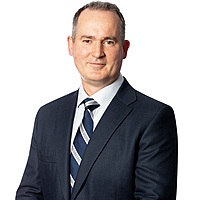
Tim works closely with the investment team, advising on both the outlook for financial markets and asset allocation.
Prior to joining Yarra Capital Management, Tim was Chief Economist of Ellerston Capital’s Global Macro team. With more than 25 years’ industry experience, Tim is one of Australia’s most highly regarded economists. He previously spent 15 years as Chief Economist and Head of Macro Strategy Australia and New Zealand at Goldman Sachs, during which time he was named Australia’s number one economist in the Greenwich survey for 13 consecutive years from 2003-2016.
Tim has a Bachelor of Commerce degree from the University of Melbourne (Honours in Economics) and a Masters of Economics also from The University of Melbourne.
........
Yarra Funds Management Limited (ABN 63 005 885 567, AFSL 230 251) (‘YFM’) is the issuer and responsible entity of a range of registered managed investment schemes, which includes those named in this document (‘Funds’). YFM is not licensed to provide personal financial product advice to retail clients. The information provided contains general financial product advice only. The advice has been prepared without taking into account your personal objectives, financial situation or particular needs. Therefore, before acting on any advice, you should consider the appropriateness of the advice in light of your own or your client’s objectives, financial situation or needs. Prior to investing in any of the Funds, you should obtain and consider the product disclosure statement (‘PDS’) and target market determination (‘TMD’) for the relevant Fund by contacting our Investor Services team on 1800 034 494 or from our website at www.yarracm.com/pdsupdates/. The information set out has been prepared in good faith and while Yarra Funds Management Limited and its related bodies corporate (together, the “Yarra Capital Management Group”) reasonably believe the information and opinions to be current, accurate, or reasonably held at the time of publication, to the maximum extent permitted by law, the Yarra Capital Management Group: (a) makes no warranty as to the content’s accuracy or reliability; and (b) accepts no liability for any direct or indirect loss or damage arising from any errors, omissions, or information that is not up to date. No part of this material may, without the Yarra Capital Management Group’s prior written consent be copied, photocopied, duplicated, adapted, linked to or used to create derivative works in any form by any means.
YFM manages each of the Funds and will receive fees as set out in each PDS. To the extent that any content set out in this document discusses market activity, macroeconomic views, industry or sector trends, such statements should be construed as general advice only. Any references to specific securities are not intended to be a recommendation to buy, sell, or hold such securities. Past performance is not an indication of, and does not guarantee, future performance. Information about the Funds, including the relevant PDSs, should not be construed as an offer to any jurisdiction other than in Australia. With the exception of some Funds that may be offered in New Zealand from time to time (as disclosed in the relevant PDS), we will not accept applications from any person who is not resident in Australia or New Zealand. The Funds are not intended to be sold to any US Persons as defined in Regulation S of the US federal securities laws and have not been registered under the U.S. Securities Act of 1933, as amended.
References to indices, benchmarks or other measures of relative market performance over a specified period of time are provided for your information only and do not imply that the portfolio will achieve similar results. Holdings may change by the time you receive this report. Future portfolio holdings may not be profitable. The information should not be deemed representative of future characteristics for the strategy. There can be no assurance that any targets stated in this document can be achieved. Please be advised that any targets shown are subject to change at any time and are current as of the date of this document only. Targets are objectives and should not be construed as providing any assurance or guarantee as to the results that may be realized in the future from investments in any asset or asset class described herein. If any of the assumptions used do not prove to be true, results may vary substantially. These targets are being shown for informational purposes only.
© Yarra Capital Management, 2026.

Tim works closely with the investment team, advising on both the outlook for financial markets and asset allocation. Prior to joining Yarra Capital Management, Tim was Chief Economist of Ellerston Capital’s Global Macro team. With more than 25...
Tim works closely with the investment team, advising on both the outlook for financial markets and asset allocation. Prior to joining Yarra Capital Management, Tim was Chief Economist of Ellerston Capital’s Global Macro team. With more than 25...
Comments
Comments
Sign In or Join Free to comment