US CPI data unlikely to alter the Fed's course
 Add us as a preferred Google source
The December CPI was compiled after the shutdown using standard data collection methods, so the shutdown's impact is far smaller than in October, when no data were collected, and November. As a result, today’s release reflects the usual month-over month comparison.
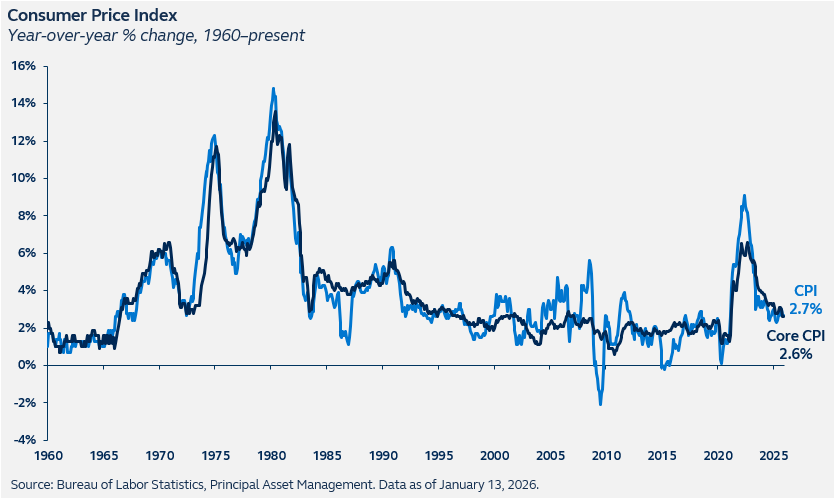
Consumer prices in December came in as expected, with the annual headline rate holding steady at 2.7%, unchanged from the prior reading. Core inflation, which excludes food and energy, rose 2.6% year-over-year, slightly below the expected 2.7% and also flat versus the prior reading.
While today’s release may still carry residual data collection distortions, the broader trend of gradual cooling in inflation, with core CPI sitting near a four-year low, should ease concerns about runaway prices and is likely to allow the Federal Reserve to keep its policy steady at their next meeting.
Report details
- Headline inflation rose 0.3% from the prior month, and the year-over-year rate held steady at 2.7%, both in line with expectations. Overall, today’s reading reflects some price stability and shows no signs of a tariff-driven sharp reacceleration, at least for now.
- Core inflation, which excludes food and energy, rose 0.2% from the prior month, slightly below the expected 0.3%. The annual rate came in at 2.6%, unchanged from the prior month and slightly below expectations. Although still above the Fed’s target, this marks the lowest level in almost four years.
- While monthly figures should still be interpreted with caution, the broader trend in headline and core inflation reflects a gradual cooling in price pressures.
- Energy prices posted a modest 0.3% monthly increase, a sharp contrast to September’s 1.5% gain. Utility-piped gas services surged 4.4%, the highest reading in two years, but were offset by declines in gasoline (-0.5%) and electricity (-0.1%).
- A sharp increase in food offset the smaller rise in energy, climbing 0.7% from the prior month, the largest increase since August 2022. Both food at home and food away from home posted sharp gains, with food at home driven by higher prices for bakery, dairy, fruits and vegetables. The year-over-year trend in food inflation has been rising since last year, a development worth monitoring, given its sensitivity to tariffs.
- Core inflation, driven by services prices, came in softer than expected, with shelter driving the bulk of the increase. Shelter prices rose 0.4%, though rent inflation, recorded at zero in October due to the lack of data collection, may be understating the actual figure. Even so, the year-over-year downtrend since spring 2023 continues to signal a gradual cooling in shelter inflation.
- Tariff-sensitive categories showed mixed but ongoing price pressures. Apparel has posted consistent month-over-month gains, reflecting tariff –pass-through. Conversely, some household items—furniture/bedding and appliances—cooled from prior-month levels. These mixed trends suggest that tariffs remain a factor, though there are no signs of broad-based runaway inflation.
- The Fed's preferred supercore inflation measure rose 0.3% from the prior month, continuing its gradual cooling since the summer months. The year-over-year figure was unchanged at 2.7%, notably lower than the 3.2% in September, and sharply lower than the 6.5% peak in September 2022. This decline underscores ongoing labor market softness, as supercore inflation is primarily driven by wage costs.
Policy outlook
While some skepticism around today’s data remains due to spillover effects from the government shutdown, the December inflation report confirms that disinflation is continuing, albeit gradually and with some stickiness. The Fed is likely to keep monitoring signs of tariff-driven price pressures.
For now, today’s softer-than-expected core inflation reading is unlikely to alter the FOMC’s expected policy course, even if it remains above its target. The Fed will likely hold rates steady this month and potentially over the next few meetings, supported by a backdrop of solid economic growth, fiscal stimulus, and stable employment.
Looking further ahead, if the disinflationary trend persists, the Fed could shift toward a stance where one or two additional rate cuts this year become justified, particularly if labor market conditions weaken further. That said, the Fed is expected to remain data-dependent, absent any external political pressures that would challenge this dynamic.
Never miss an update
Enjoy this wire? Hit the ‘like’ button to let us know.
Stay up to date with my current content by
following me below and you’ll be notified every time I post a wire

1 topic

Expertise
Expertise
Comments
Comments
Sign In or Join Free to comment