TOL - 27th Feb, 2026
Agentic AI is the catalyst. The real money may be in the shovels
As agentic AI shifts value from applications to infrastructure, we see compelling opportunities in semiconductor testing, optics and tooling
 Add us as a preferred Google source
For much of the past year, the investment community has debated whether the massive capital expenditure flowing into Artificial Intelligence would ever find a credible path to monetisation. We have shared those concerns, wary of the "subsidy phase" of AI development. However, we believe we have reached a structural turning point.
The shift from passive Large Language Models to active AI Agents – tools that don't just suggest code but execute autonomous, multi-step tasks – is fundamentally changing the competitive moat for software incumbents.
As the intelligence layer shifts from static databases to dynamic agents, we are seeing a dual-speed reality emerge: a commoditisation of traditional software and a relentless escalation in the physical infrastructure required to power the next generation of autonomy.
Following a recent deep-dive research trip across Asia, we have adjusted our own positioning to capture the emerging bottlenecks in the semiconductor supply chain.
Below, we outline why "Agentic AI" is the catalyst for this shift and the four specific positions where we have high conviction in the current environment.
The Agent Inflection Point
While we have previously expressed concerns about the economics of AI, recent developments suggest that capital expenditure may prove more durable than we initially expected. In particular, the introduction of Claude Code appears to mark a meaningful inflection point.
Claude Code offers a practical glimpse into how AI agents may function at scale. It is a command-line interface tool capable of reading an entire codebase, planning multi-step tasks, and executing them autonomously. With access to a user’s system environment, it can assess context, formulate a plan, and iteratively complete objectives while incorporating feedback along the way.
Importantly, Claude Code extends well beyond traditional coding assistance. It operates as a digital agent directed through natural language. Rather than specifying detailed technical instructions, users describe desired outcomes and allow the system to determine how best to achieve them.
The broader implication is that agent-based AI may fundamentally change how humans interact with technology. If widely adopted, it could materially reduce the cost and complexity of software development while enabling digital assistants to take on a growing share of routine cognitive work.
To understand the magnitude of this shift, it is helpful to reconsider what traditional software actually is. At its core, software is deductive logic: defined inputs are processed through fixed algorithms to generate defined outputs. An AI agent, however, operates with both deductive and inductive reasoning. It can analyse, transform, and synthesise underlying data in ways that static software cannot. In effect, many forms of software risk becoming commoditised databases, with the intelligence layer shifting to the agent sitting on top.
This creates a structural challenge for incumbent software providers. Most do not control the agents. Meanwhile, Anthropic, OpenAI and Google must find viable ways to monetise their large language models. Google, in particular, combines frontier models with infrastructure such as BigQuery, enabling flexible data architectures integrated directly with agents. Together, these forces introduce significant competitive pressure into a sector where scale previously conferred durable advantages.
As AI agents improve, it will become cheaper and easier to build customised software in-house or through third parties. In many instances, it may prove more efficient to build entirely new systems designed for AI integration from the outset rather than try to retrofit legacy platforms. Software was once described as “eating the world.” Increasingly, AI appears set to commoditise large portions of software itself. Competitive intensity has risen to near-existential levels in some segments, and margins are likely to compress. In our assessment, Google and Anthropic are emerging as early structural leaders, while many others risk becoming followers.
The second major implication is workflow automation. AI agents are now capable of handling a growing range of routine tasks for both consumers and enterprises. This materially expands the addressable use cases of AI and, importantly, provides a more credible pathway toward sustainable monetisation. If AI can replace or augment labour in measurable ways, willingness to pay likely increases significantly.
The Second Order Beneficiaries
At the same time, Big Tech companies have recently reported earnings and, almost without exception, increased their AI-related capital expenditure guidance. This ongoing escalation in capex is likely to ripple through the semiconductor ecosystem as new bottlenecks emerge across different parts of the supply chain.
Given that much of the semiconductor manufacturing and supporting infrastructure is concentrated in Asia, this is where we are increasingly directing our capital. We recently completed a research trip to Asia, meeting with a number of companies we have been diligencing in order to test our theses and address several outstanding questions. The trip was highly productive. We returned with greater clarity and increased conviction in a number of businesses and have since built meaningful positions across the portfolio.
- Metasurface Technologies - Greater chip demand implies greater demand for chip-making equipment. We are already seeing this dynamic play out, with Taiwan Semiconductor Manufacturing Company reporting a sharp lift in both capex and sales in Q1 2026. This acceleration benefits upstream suppliers of critical components used in fabrication equipment, including companies such as Metasurface Technologies, which we established a position in during January.
- Japan Electronic Materials - But there will be other beneficiaries as well. In our view, the next supply chain pinch point is likely to emerge in semiconductor testing, specifically testing equipment and probe cards. Each chip must undergo rigorous testing to ensure it is not defective, especially given that a meaningful percentage of advanced chips fail to meet required specifications. This testing relies on specialised machines and probe cards that interface directly with the chip. We believe demand for probe cards is likely to rise sharply for two reasons. First, volumes are increasing as AI drives more chips through the system. Second, complexity is rising quickly, with more layers and more advanced packaging increasing test intensity and time per unit. We expect probe card demand to outstrip supply, and believe Japan Electronic Materials, one of the world’s larger probe card manufacturers, is well positioned to benefit.
- Seikoh Giken - Another trend we are watching is the replacement of copper interconnects inside data centres with fibre optic interconnects. Fibre enables higher bandwidth and lower latency, which improves GPU utilisation and overall system efficiency. The next generation of architectures is increasingly moving toward co-packaged optics, where chips connect more directly into optical infrastructure, reducing reliance on multiple intermediate switching layers. If this shift accelerates, it is likely to drive a step change in both the volume of fibre connections and the complexity of optical testing and finishing. In Japan, Seikoh Giken manufactures optical connector polishing machines that ensure fibre connections are free of defects and able to transmit data efficiently. As co-packaged optics scales, the number of high precision fibre terminations should rise materially. We believe Seikoh Giken’s strong position in this niche could make it a key beneficiary of the transition.
- Ta Liang Technology Co - We are also looking at bottlenecks in the tooling required to manufacture and assemble increasingly complex hardware. Ta Liang Technology, based in Taiwan, produces high precision CNC machines used to drill microscopic holes in printed circuit boards and to cut boards into final shapes. It also manufactures inspection systems that test components for defects in shape, flatness and thickness, as well as equipment used in advanced packaging, an area where capacity remains tight. As design tolerances tighten and packaging becomes more complex, we believe Ta Liang’s capability set becomes increasingly valuable.
Wrapping Up
The transition from "Software eating the world" to "AI commoditising software" is a profound shift that necessitates a move away from legacy winners and toward the "shovels" of the next fabrication cycle. The escalation in Big Tech capex is no longer just a theoretical forecast; it is manifesting in tangible bottlenecks across semiconductor testing, optical interconnects, and high-precision tooling.
Our own conviction in the names mentioned in this wire has not been built on momentum, but on a rigorous cross-examination of the global supply chain. By engaging directly with technical experts, investigative journalists and specialised analysts on the ground in Asia, our focus is on ensuring our thesis is insulated from the broader market noise.
As the "Agent Inflection Point" continues to unfold, we believe that compelling opportunities are emerging across this niche which market participants are yet to fully recognise. We believe that investors who can proactively seek out these opportunities and position their portfolios accordingly can stand to be rewarded as the hardware landscape evolves.
Never miss an update
Enjoy this wire? Hit the ‘like’ button to let us know.
Stay up to date with my current content by
following me below and you’ll be notified every time I post a wire
Xinyu Ru is the founder and portfolio manager of Fawkes Capital Management, a discretionary global macro hedge fund. Prior to founding Fawkes, Xinyu spent 10 years at Westpac Banking Corporation within the Chief Investment Office in Sydney and London. During this time he was responsible for managing an unconstrained portfolio of macroeconomic risks, predominantly across foreign exchange and interest rates. Prior to Westpac, Xinyu spent time in mergers and acquisitions and equity research in Investment Banking. Xinyu holds a Bachelor of Finance and Law from the Australian National University.
........
The information contained in this report has been prepared by Fawkes Capital Management Pty Ltd (“Fawkes”). Fawkes is a Corporate Authorised Representative of One Wholesale Fund Services Ltd (“OWFS”), ACN 159 624 585, AFSL 426503, CAR number 1308574. Fawkes offers financial services in Australia only to ‘wholesale clients’ as defined by the Corporations Act 2001. Fawkes is the investment manager for the Fawkes Capital Fund (the “Fund”). The issuer and trustee of the Fund is One Funds Services Limited (“OFSL”), ACN 615 523 003, AFSL 493421, which is only available to wholesale clients. The information in this article is current as at the date of publication and is subject to change. Fawkes and/or the Fund may hold or intend to hold positions in any of the securities mentioned in this report. Fawkes has no obligation to inform anyone of any changes to its view of, or holdings in any securities mentioned in this report. This information is general in nature. It doesn’t take into account a person’s objectives, financial situation or needs. Because of that, any persons relying on this information should consider obtaining independent advice before making any investment decisions based on this information. The reader agrees not to invest based on this article, and to perform his or her own due diligence and research before taking a position in any securities mentioned. Information in this article may constitute Fawkes’ judgement at the time of publishing and is subject to change. Whilst Fawkes believes this information is correct, no warranty is made as to its’ accuracy or reliability. Fawkes doesn’t accept responsibility for any loss or liability incurred by you in respect of any error, omission, reliance, or misrepresentation in the information contained in this article. Past performance is not a reliable indicator of future performance. The value of an investment may rise or fall with the changes in the market. Any projection or forward-looking statement in this article is provided for information purposes only. Whilst reasonably formed, no representation is made as to the accuracy of any such projection or that it will be met. Actual events may vary materially. Investors should consider the Fund’s Information Memorandum (“IM”) dated 24 May 2024 issued by OFSL before making any decision regarding the Fund. The IM contains important information about investing in the Fund and it is important investors obtain and read a copy of the IM before deciding about whether to acquire, continue to hold or dispose of units in the Fund.

2 topics
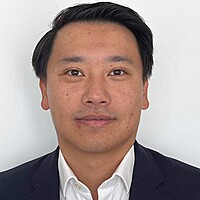
Xinyu Ru is the founder and portfolio manager of Fawkes Capital Management, a discretionary global macro hedge fund. Prior to founding Fawkes, Xinyu spent 10 years at Westpac Banking Corporation within the Chief Investment Office in Sydney and...
Expertise
Xinyu Ru is the founder and portfolio manager of Fawkes Capital Management, a discretionary global macro hedge fund. Prior to founding Fawkes, Xinyu spent 10 years at Westpac Banking Corporation within the Chief Investment Office in Sydney and...
Expertise
Comments
Comments
Sign In or Join Free to comment