
TOL - 9th Apr, 2026
Dr Don Hamson: The pivot that built a $25bn business
A GFC-era setback forced Dr Don Hamson to rethink his strategy. That decision shaped Plato into a $25bn income-focused investment business.
 Add us as a preferred Google source

Every investment career has a point where things don’t go to plan. For Dr Don Hamson, that moment came early.
In 2006, Hamson founded Plato Investment Management with a clear strategy. It was a quantitative long/short approach designed to deliver consistent returns. Two years later, the GFC hit and regulators banned short selling - the strategy was no longer viable.
That period could have ended the business. Instead, it led to a change in direction that would shape what Plato has become.
Hamson turned his attention to a feature of the Australian market that was not widely used at the time. Franking credits. The idea was straightforward. Retirees value income and consistency, and the tax structure in Australia can enhance both.
It took time to gain traction. Much of the early work involved explaining the approach to advisers and investors. But the strategy proved effective. Today, Plato manages around $25 billion and runs a range of income and global equity strategies built on a systematic process.
In this episode of Success and More Interesting Stuff, Hamson walks through that journey, his introduction to Pinnacle founder Ian Macoun, and how he positioned Plato as a specialist provider of tax-effective income solutions.
Interview summary prepared from a transcript with the assistance of AI
The GFC pivot and meeting Ian Macoun
Plato’s origin story is less about foresight and more about how Hamson responded when things went wrong.
The business launched in 2006 with a quantitative long/short strategy. Within two years, the GFC hit and regulators banned short selling. The core strategy was effectively shut down.
“No one expected shorting to be banned, but you just have to play the cards you have.”
What followed was a period of real pressure. Funds under management halved, profitability was out of reach, and the business was still in its infancy. The support of Pinnacle, and its founder Ian Macoun, proved critical.
Rather than retreat, Hamson and the team leaned in. They hired staff, built new products and rethought the direction of the business.
“We basically doubled down… and became an overnight success after about seven years.”
The pivot itself was not random. It drew on earlier work Hamson had done on franking credits and tax-aware investing. But it took the shock of the GFC to bring that thinking into focus and turn it into a scalable strategy.
Quant versus fundamental investing
Plato is sometimes described as a quant manager, but Hamson pushes back on that label.
The process is grounded in fundamental analysis. Balance sheets, cash flow, earnings quality and governance all sit at the core. The difference is in how those inputs are used.
“We analyse balance sheets, profit and loss statements, cash flows… but we do it in a very systematic way.”
The goal is to remove the behavioural biases that come with discretionary investing. Over time, Hamson saw how easily analysts could anchor to views, fall in love with stocks, or avoid names that had previously disappointed.
“You see all the behavioural biases… analysts fall in love with a stock or fall out of love with it.”
A systematic approach enforces discipline. It ensures that decisions are repeatable and consistent, rather than driven by sentiment.
“The beauty of doing it systematically is you don’t personally fall in love with the stock.”
How the strategy actually works
The income strategy that emerged from the GFC pivot is built on a simple but often overlooked insight. Not all investors value tax outcomes in the same way.
Hamson’s earlier experience highlighted how difficult it is to build a “tax-effective” fund for a broad audience.
“It’s very hard to run a fund that’s tax effective for everybody.”
The solution was to focus on a specific cohort. Retirees.
For this group, franking credits are particularly valuable. In many cases, they are tax-exempt, which means those credits translate directly into higher income.
“They’re tax exempt… it’s a free kick because companies have paid the tax, but they get the credit back.”
The strategy combines long-term stock selection with active management around dividend events. But a key part of the process is avoiding what Hamson calls “dividend traps”.
“You want to buy good high yield stocks, but you want to avoid the bad high yield stocks.”
Simply screening for the highest yield is not enough and often leads to poor outcomes. The result is a strategy designed to deliver consistent income, rather than chasing headline yield.
AI, markets and what comes next
Despite running a data-driven business, Hamson takes a measured view on the impact of AI.
There are clear efficiencies to be gained. Faster processing, better coding, and broader access to information. But he is cautious about overstating its impact.
“It’s not the great white hope… it’s incremental.”
Plato has been working with large datasets for decades. In that context, AI is an extension rather than a transformation. There is also risk. Without experience and context, AI outputs can be misleading or simply wrong.
“In the hands of beginners, AI can be disastrous.”
The competitive edge, in Hamson’s view, still comes from how data is used. Having a process, understanding the limitations, and applying judgement where it matters.
Looking forward, he sees AI as a tool that will improve efficiency but not replace the core disciplines of investing.
Personal reflections: loss, resilience and staying engaged
Hamson also reflects on a more personal chapter. The loss of his wife after more than 35 years of marriage. It was, by his own admission, a difficult period. The circumstances, during COVID, made it harder, with limited access to hospitals and normal support networks.
“It was an extremely tough period… I’d be lying if I said otherwise.”
What stands out is how he approached this difficult time. Rather than stepping away completely, he made a conscious decision to stay engaged, particularly through work.
“If you just sit at home and do nothing, that’s worse… I had to throw myself into work.”
That decision was not about distraction for its own sake. It reflects a broader philosophy that runs through both his personal and professional life. Stay active, keep learning, and maintain structure.
He also points to the importance of routine and small things. Exercise, fresh air, staying connected and continuing to challenge yourself.
“You need to keep occupied… learn new skills, get out, meet people.”
It ties into a broader reflection on longevity, both in life and in markets. As he sees it, experience continues to build over time, even as other aspects slow.
“Experience keeps growing… and that matters.”
There is no suggestion of stepping away anytime soon. If anything, the experience has reinforced the value of staying engaged, both intellectually and socially.
Never miss an update
Enjoy this wire? Hit the ‘like’ button to let us know.
Stay up to date with my current content by
following me below and you’ll be notified every time I post a wire
Matthew is the Principal and Portfolio Manager at Centennial Asset Management. Prior to this, Matthew was the CIO at Wilson Asset Management between 1998 and 2011, achieving 18% p.a. over the period.
Featuring

Dr Don Hamson,
Plato Investment Management
Don has over 25 years investment management experience. He founded Plato Investment Management Limited in 2006.
Prior to Plato, Don was Head of Active Equities, Asia Pacific and a member of the global Senior Management Group at State Street Global Advisors, responsible for over $10B in active and enhanced equity investments. Earlier he held various positions at Westpac Investment Management, including Chief Investment Officer, Head of Equities. During his time at Westpac he was also instrumentally involved in the mergers of BT and Rothschild.
Don has a strong interest in responsible investment and governance. He has a PhD in Finance and a Bachelor of Commerce with First Class Honours from UQ, and a University Medal.
........
Livewire gives readers access to information and educational content provided by financial services professionals and companies ("Livewire Contributors"). Livewire does not operate under an Australian financial services licence and relies on the exemption available under section 911A(2)(eb) of the Corporations Act 2001 (Cth) in respect of any advice given. Any advice on this site is general in nature and does not take into consideration your objectives, financial situation or needs. Before making a decision please consider these and any relevant Product Disclosure Statement. Livewire has commercial relationships with some Livewire Contributors.

1 stock mentioned
1 contributor mentioned
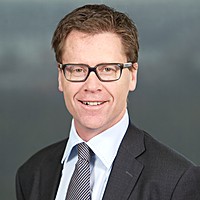
Matthew is the Principal and Portfolio Manager at Centennial Asset Management. Prior to this, Matthew was the CIO at Wilson Asset Management between 1998 and 2011, achieving 18% p.a. over the period.
Expertise
Comments
Comments
Sign In or Join Free to comment
most popular
Shares
Are Australia’s highest dividend companies worth buying?
Livewire Markets