Finding value in a $2.4 trillion market
 Add us as a preferred Google source
Government bond yields have moved higher while credit spreads have remained tight. In this video, I explain where we are finding value, what we are steering away from, and which sectors and parts of the capital structure are driving income in the Yarra Higher Income Fund.
Transcript
Tony Andronaco: Hi everyone, and welcome to the Built on Conviction Series. My name's Tony Andronaco, and I'm the Southern Regional Manager at Yarra Capital Management.
Today, I'm joined by Phil Strano, Head of Credit Research at Yarra, and PM of the Higher Income Fund. We're going to be talking about the fund, where Phil’s seeing credit markets, as well as the outlook for 2027.
Welcome, Phil.
Phil Strano: Thanks, Tony. Lovely to be here.
Tony: Now, before we dive into the fund, why don't we set the scene for the macro at the moment. So, government bond yields globally have pushed higher on persistent inflation, as well as heavy debt loads, and credit spreads on the other hand have remained relatively tight.
So how do you currently read state of play?
Phil: All times are interesting, and this is certainly one of those.
We've gone through a period now where in the Australian context, the RBA's raised interest rates by five times in terms of this cycle. And so it's generated a bit of volatility, especially in terms of rate markets. Overall, when we think about the economy right now, it is slowing, and we it's an economy that's going to generate those inflationary expectations that the RBA is really concerned about.
As Michelle Bullock herself has said, the inflationary expectations remain well anchored. And given the environment that we're in, in terms of slowing growth, likely to see higher unemployment.
Our latest forecast is unemployment to finish the year next year around about 5.5%. That's an environment for us that means that potentially we've likely hit the top of the rate cycle now, and likely to see some rate adjustments lower in the second half of next year.
From that environment, it's actually quite conducive to have portfolios that are generating pretty strong income and maintaining a bit of duration. Now, in terms of credit spreads, the credit spreads are a bit tighter than where were three years ago. They're still roughly – in the Australian context – still around long-term averages. And from our perspective, they're nowhere near where they were prior to the GFC in Australia. The US is a bit different.
From an investor's perspective, when I think about credit spreads in Australia, yes they're certainly tighter than they were three years ago, but they're still around long term averages which should provide a bit of confidence in terms of still being willing to allocate the credit, especially in the hands of an active manager that's positioning portfolios accordingly for the times to maximize those risk-adjusted returns that we talk about through a cycle.
Tony: So you've got a solid base of income and that's giving you a great starting point. But what are some of the other areas across your portfolio or within active management that you're really leaning into at the moment?
Phil: With the Higher Income Fund, which is a multi-sector credit fund with a really large opportunity set of $2.4 trillion, from our perspective it's really about maintaining a base of liquidity. So having access to corporate public markets in terms of senior, subordinated, tier twos, a bit of tier ones, these are all really relevant because they're the stuff that provide the core part of the liquidity.
And in terms of the higher income point, it accounts for roughly about 70% of AUM, hence why we're able to provide that T+7 liquidity through a cycle. That is key, but in addition to that, it's also very additive for us to think about how we can add income on a risk-adjusted return basis and still provide a really diversified portfolio.
We have an allocation to private credit and from our perspective it's exclusively warehousing around the mortgages, autos and consumer side. And then we think about layering on some levered loans as well. So, all very, very diversified. There's circa 180 securities in the fund. So you can see how we're trying to generate a blend of higher returning assets and income that is actually not only attractive, but really defensive.
Tony: And to that end, obviously you've got great diversity and flexibility within the fund, but are there certain areas that you're steering away from at the moment?
Phil: Probably the two broad areas I would say at the moment that certainly haven't really added value is RMBS and ABS.
That is a sector of the market that blew really wide back in 2022-23 when we had the normalization of interest rates and a lot of investors fretting about the housing market blowing up.
Spreads were incredibly attractive then, and the fund actually went effectively limit long in RMBS and ABS and we had about 25% of AUM invested in that space back then because spreads were just so attractive.
But since then, spreads have really come in, obviously it’s been really additive to performance through 2023-24 in particular, but where we stand right now, spreads are pretty uneconomic.
And what you see in the Higher Income Fund is our exposure to that space has gone from being 25% to now being under 3%. So it's a great position to be in when you have a housing market that's correcting at the rate that it is. I'm pretty comfortable that we will get set again in that space at really attractive levels, which will then help us drive returns in the coming years.
Outside of that, AI and hyperscaler exposure data centers, we've been very discerning which again comes back to the Higher Income Fund and its flexibility to be discerning. From our perspective, the hyperscalers coming to this market thus far – we've had Alphabet and others that will come – for us it's not about what their credit rating is now and what their spread should be based on their credit rating, but it's where they're going to be in three years’ time because they are borrowing a lot of money for CapEx and turning their balance sheets into something that they weren't before.
Their gearing is likely to go higher as a consequence of that, and their returns are probably likely to diminish over time. And that's probably consistent with their credit rating declining. So for us, it's about getting compensation based on where we think that credit rating will end in three years’ time, not necessarily now.
Tony: You've mentioned in the past, one of the benefits of your fund is that flexibility. Do you just want to elaborate a little bit further on the opportunity set for the fund?
Phil: I've been in the market 26 years, which is quite a long time, and have been managing multi-sector portfolios for the last 16.
For me, coming out of the GFC and actually understanding the environment in terms of how best to manage Australian credit, it became apparent to me that multi-sector credit was the way to go. Because you had a lot of flexibility, because the opportunity set was so large. We talk about 2.4 trillion opportunity set when you're mixing the best of public and private together.
And you're also following Australians who are offshore and happy to buy USD and Euro in particular and swapping out that currency risk. It does give you an unbelievable array of securities in which to represent your views and achieve that optimal blend of risk, return and liquidity.
I think the Higher Income Fund does that and more.
Tony: And so to that end, what are some of the sectors that are driving the portfolio at the moment? Or what are some of the security types that are doing some of the heavy lifting within the portfolio?
Phil: So, we have a 20% cap on what we call the warehousing component, which is our illiquid component where we extract some illiquidity premia. Currently we're sitting at roughly about 13%. And what's really attractive about that space is that you've got really strong downside protection through the collateral quality, but then also through the subordination that's in the structures. And you're actually achieving investment grade average ratings, facility ratings for high yield spreads. The illiquidity premia over the relevant public structured credit deal is between 200-250 basis points at the moment. So you're really getting paid for it, and it's really attractive. It’s part of the portfolio, obviously we can't go above 20% because we do want to maintain that liquidity through a cycle of T+7.
In addition, we've also got the levered loan space, which is another important component. That's where we're taking more credit risk because these are all sub-investment grade style assets. We've got a soft cap there of 20% – we don't go above that – and we're currently sitting at about 16%. The asset mix there is loans to businesses that we wouldn't necessarily get access to. So it’s pretty diversified, and they're all positioned accordingly. So you've got 16% across 18 loans, and the average positioning size is under 100 basis points. So what you have is a really idiosyncratic profile, because a lot of these businesses are not correlated in terms of how they move and perform. And it provides a really additive mix because you've got assets that average low double-B-credit-rating-generating spreads of circa 500. So, once again, an important part of the portfolio, but we remain really discerning.
When I think about levered loans over the course of this year, we've done roughly one in every four loans. We don't have to do every single loan, and we’re able to pick and choose and cherry-pick the best loans and the best assets across all the sectors that the Higher Income Fund plays in.
Tony: So when you think about making that portfolio decision, how do you think about balancing the portfolio from an income perspective and from a risk perspective?
Phil: We have our proprietary credit risk model, which I've been developing over the better part of 20-25 years. And we do all our internal credit ratings. We forecast all our credit ratings forward three years. So, we come to an assessment around whatever the rating is, it is pretty consistent with the external rating agencies as well, which is really important. So we get our credit rating, forecasting out three years. We forecast out the earnings, the CapEx requirements, the needs for cash and, in sum, what that means in terms of debt levels and are they paying back debt or are they raising more debt, that sort of thing.
And we end up with a credit rating, like I said, forecast out three years, , and then we put it through a relative value. So we know what the risk is, and we ask is the return equivalent to the risk? Are we factoring in any issues around documentation? Are we unnecessarily exposed to equity risk which isn't priced in? These are all factors that we consider. And ultimately, , investments that we decide to go into obviously have returns that compensates us for the risk, otherwise we wouldn't do it. We also size them appropriately as well. So the more risk we take, the smaller the position size. And that's really important. And this is how you get that blend of assets where, for instance, if you've got an investment grade asset, your overall exposure will tend to be higher for that issuer than for a sub investment grade asset.
And there are guidelines that dictate how much risk we can actually take in a particular issuer.
Tony: You spoke briefly about AI and hyperscalers. I do recall the NextDC deal that I believe that the team initially didn't participate in. Can you talk through the rationale there and sort of what gave you that confidence to now look at that issue?
Phil: One of our better calls, Tony.
The issue with NextDC was that for us, it felt like we were being exposed to equity risks that weren't priced in. The fact that the business was intent on funding all of its CapEx on balance sheet with a lot of debt, with earnings that would come through, but would come through later. And the execution risk associated with that was heightened as a consequence.
We decided that the return wasn't commensurate to the risk. We had a level at which we would potentially participate at issue. We didn't get anywhere near that. They happily issued much lower.
But the issues that we talked about back in April when we didn't participate came to fruition not that long ago. It gave us an opportunity to, to have another look and because the returns now on the bonds were much wider of not only the issue level, but also much wider of our initial area where we would've participated at issue.
We've got a small position now, and we'll continue to monitor. From our perspective now, we were able to get a return that was commensurate to the risk, and we'll monitor it accordingly, but we're already in the money on that, so it's been great.
Tony: Now, we might look forward the next 12 months to how the fund is positioned. Obviously you've got quite a few different alpha drivers: you've got income, you've got spreads, you've got duration. And your active management and selection. If spreads widen from here, which one of these alpha drivers would you lean on most to protect the yield?
Phil: So the first thing to note right now is that you've got really strong income. The running yield on, on the Higher Income Fund now is approaching 8%.
Now that's a level that's akin to average equity market returns over the last 10 years in Australia. It’s really attractive. So as we always say, those returns at these levels now are not only attractive, but they're also defensive because you're banking 60-65 basis points of income a month.
That's your starting point. So it makes it pretty improbable to have that many negative months, and certainly makes it really improbable to have a negative 12-month period. When you're sitting there and you've got a running yield sitting at 8%, for starters, you can say to yourself, "Well, it's pretty improbable that I'm going to get a negative return over a 12-month period." That's number one.
Two, as we talked about, spreads are tight, but they're roughly around long-term averages, unlike the US market. And we're comfortably above where they were pre-GFC in Australia. So that provides us with confidence.
Duration, as we sit here right now, thinking that we are at the top of the rate cycle, that will provide the necessary ballast in terms of performance as well. So, the fund is running about 1.8 years of duration, which is probably the highest it's ever run. And if you recall April 2025, which was the last meaningful risk-off period that we had the month when Trump put his liberation tariffs on, we had a period there where outright yields were basically pretty constant throughout the whole month. What you saw about was the return composition changed. So you had bond yields rallied by 50 basis points and credit spreads pushed out by 50 basis points.
Now, the Higher Income Fund was running roughly about one and a half years of duration going into that, deliberately so, because we thought there was a risk-off coming. And the fund generated 65 basis points of positive return in a month where spreads blew out by 20-30 basis points in the fund. So, that shows that we do have the levers in addition to having duration at 1.8 years that should provide confidence given we're at the top of the rate cycle. And we've also got a bias towards the front end of the curve.
So we've got the potential steepener that will happen because the RBA will potentially cut next year. And the curves will steepen because the longer part of the curve is unlikely to rally to the same degree, because there is a lot of demand for capital right now, whether it's across AI, defense, the aging profile around the world etc. You're likely to see that the shorter end of the curve as we go into next year outperform the longer end.
Tony: In the case of the local economy entering a recession and we do see credit spreads widen significantly from here, how would the Fund cope in that type of environment? How resilient would the Fund be?
Phil: Well, it depends on if you're telling me there's a recession that pushes credit spreads up 100 basis points, then there's a good chance in that kind of environment that the bond yields are rallying 100 basis points. And given that we've got a running yield that's starting at roughly close to 8% right now, if we keep our risk measures in place where we have duration in about 1.8 years and spread duration just over three, you’d still be looking at a pretty positive return of somewhere in the order of 6%.
Tony: And that's obviously not our base case?
Phil: No, it's certainly not our base case. But we are heading for a slowing of the economy and, whether we have a technical recession or not, it's not going to feel great right now.
But a portfolio like this, generating this kind of income from an average investment grade credit rating across the portfolio, it should provide confidence that we should be able to generate reasonably strong returns in this kind of environment.
Tony: And finally, Phil, just seeing the announcement that Yarra will become part of RBC Global Asset Management. What does that mean for your team and for the fixed income business at Yarra?
Phil: It's a really exciting development. For us, obviously, it's business as usual. We are busy managing portfolios and managing client relationships. But, having access to a global player like RBC GAM is certainly going to be additive over time to ensuring that clients get the best risk-adjusted returns from us.
And the way the market's globalized right now in terms of our market, I think it's fantastic to be able to lean on an international player like RBC GAM as well to help us navigate that and lean on their global resources. It will only make us better over time.
Tony: Great. Well, thanks, Phil. It's been a really insightful discussion. Great to hear that the Fund's so well positioned going into 2027. And for all our viewers out there, if we haven't touched on any of your questions, please reach out to a member of the Yarra staff.
Thanks again for your interest and goodbye.

Managed Fund
Yarra Higher Income Fund
Australian Fixed Income
View
Never miss an update
Enjoy this wire? Hit the ‘like’ button to let us know.
Stay up to date with my current content by
following me below and you’ll be notified every time I post a wire
Phil is the lead portfolio manager for Yarra Capital Management’s Higher Income Strategy. A credit specialist, Phil has more than 20 years experience in financial markets across asset management and institutional banking.

Never miss an update
Get the latest insights from me in your inbox when they’re published.
1 fund mentioned
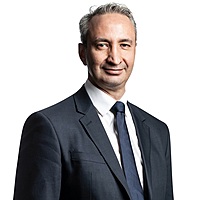
Phil is the lead portfolio manager for Yarra Capital Management’s Higher Income Strategy. A credit specialist, Phil has more than 20 years experience in financial markets across asset management and institutional banking.
Expertise
Phil is the lead portfolio manager for Yarra Capital Management’s Higher Income Strategy. A credit specialist, Phil has more than 20 years experience in financial markets across asset management and institutional banking.
Expertise
Comments
Comments
Sign In or Join Free to comment
most popular
Shares
Australia’s top 20 stocks – the price of conformity
Spheria Asset Management
Buy Hold Sell
Buy Buy Buy: 6 one-of-a-kind ASX growth stocks
Livewire Markets