TOL - 21st Aug, 2026
Gold in a world where trust is becoming scarce
In a fracturing world, gold’s appeal increasingly reflects how investors value diversification, resilience and trust.
 Add us as a preferred Google source
Gold’s extraordinary rally through 2025 and into January 2026 did not begin as a momentum trade. Its foundations had been laid over several years.
We can trace rally beginnings back to 2009, post the global financial crisis, when central banks became net buyers of gold for the first time in two decades. That trend accelerated dramatically in 2022 amid Russia's invasion of Ukraine, very high global inflation, aggressive monetary tightening and heightened geopolitical uncertainty. Central banks roughly doubled their share of annual gold demand to around 20%, as reserve diversification and protection against geopolitical and financial risk became increasingly important considerations.
Investment demand has since strengthened globally, notably expanding across China, India, Turkey and other emerging markets, as investors sought more effective diversification.
Momentum became increasingly powerful as the rally matured.
By the fourth quarter of 2025, virtually every major source of investment demand - ETFs, bars and coins and over-the-counter investment - was moving in the same direction. Western investors had joined demand that was already well established among central banks and emerging-market buyers. Gold-backed ETFs went from marginal net selling in 2024 to buying about 800 tonnes in 2025.
The result was a 65% gain in US dollar terms during 2025 and an acceleration towards its record high of US$5,405/oz on 28 January. Despite the notable correction that followed, the gold price still returned 6% in Q1.
Those are not the returns investors should expect from gold over the long term. Our research points to something closer to the US inflation rate plus 2 to 3% as a more reasonable long-run assumption. Momentum and FOMO clearly amplified the latter stages of the move, and some investors became “too exuberant” about the strength of recent returns.
Over the course of H1 2026 much of that momentum dissipated. Gold corrected sharply from its January peak - ETF demand weakened, technical levels broke and investor positioning normalised.
That correction leaves today’s gold market looking much like it did before the recent rally, with the price appearing to have stabilised above US$4,000 and many of the fundamentals supporting strategic demand for gold remain firmly in place.
What remained after the rally cooled
The World Gold Council’s Gold Demand Trends Q2 2026 report shows that the underlying sources of demand remained substantial even as price momentum faded.
First-half demand rose 2% to 2,522 tonnes, worth a record US$380 billion. Central banks bought 289 tonnes in Q2, while OTC demand reached 327 tonnes for the quarter and 571 tonnes across the first half, helped by strong Asian investment.
Bar-and-coin investment also needs to be viewed in context. While Q2 demand fell sharply from the exceptional first quarter, it returned to levels close to the longer-term average. At 784 tonnes, first-half demand was still one of the strongest on record.
But it is continued central bank buying that is most telling. These institutions are generally not trading gold around the next inflation print or cash-rate meeting. Their decisions are shaped by longer horizons and the need to preserve liquidity and purchasing power across a wide range of economic and geopolitical scenarios.
Our 2026 Central Bank Gold Reserves Survey found, 89% of respondents expect global official gold reserves to rise over the next year, while a record 45% expect their own institutions to increase holdings. Reserve diversification, protection against geopolitical and financial uncertainty and gold’s role as a long-term store of value continue to feature prominently in their thinking.
A more multipolar gold market
The geography of gold demand is changing.
For many years, Western ETF flows and US macroeconomic conditions were regarded as the dominant forces in short-term gold price discovery, with flows typically rising in response to lower real yields (thus lower opportunity costs) and a weakening USD. This is now a smaller part of gold’s demand profile.
Asian investors, many from markets where gold already has deep cultural roots as a store of wealth and consumer good, have become increasingly influential across physical investment, ETFs and OTC markets. In China, demand has been supported by subdued domestic yields, weakness in the property sector, concerns about the economic outlook and limited alternative stores of value. India has also seen strong investment demand, with investors frequently using price corrections as opportunities to add exposure.
The growing influence of Asian investors on price discovery, supported also by market policy and infrastructure developments, helps explain gold’s strong performance since 2023 despite historically restrictive US real rates. Coupled with consecutive years of central-bank buying, this shows how different pools of capital are allocating to gold for different reasons and responding to different economic and political pressures.
What crisis?
The first half of 2026 has been a useful reminder that gold does not respond mechanically to every geopolitical shock.
The conflict in the Middle East, which escalated late February, pushed oil prices higher, raised inflation fears and contributed to increased expectations for higher interest rates. Yet gold fell from its January peak.
A key reason for this is that broad equity markets did not behave as though investors were facing a crisis that presented a risk to their wealth. Western investors continued to pursue AI, technology and other growth assets, while gold was potentially sold to realise profits and fund allocations to these assets. Higher oil prices fed through to inflation expectations, yields and the US dollar, increasing the opportunity cost of holding gold.
So, this geopolitical uncertainty created more of an inflationary supply shock than a genuinely feared crisis. Further, this was accompanied by resilient equity markets and expectations of tighter monetary policy at a time of record high gold prices. Together, these proved a major headwind.
It is worth pointing out a nuance that applies to inflation and its relationship with gold. Gold has historically been most effective as a hedge against monetary expansion, currency debasement and periods when inflation begins to undermine confidence in policy. It is not a perfect hedge against every rise in consumer prices. Our latest analysis suggests gold’s relationship with inflation strengthens once US inflation rises above 4% and when that inflation is more structural. The impact on gold will still depend partly on how monetary policy and the US dollar respond.
Trust as a regime driver
The broader investment environment is becoming more fragmented.
The previous era was shaped by deepening globalisation, increasingly integrated supply chains and broad confidence in the institutions underpinning the international financial system. Today, countries are prioritising resilience, strategic control and security of supply. Defence spending is rising, supply chains are being duplicated, and governments are competing for energy, critical resources and technological leadership. Governments are also playing a more interventionist role in economies through fiscal policy, industrial policy and strategic investment.
This has contributed to what some describe as a ‘low-trust’ world, where resilience increasingly competes with efficiency as an economic and investment priority.
Trust is becoming a useful way to think about gold’s strategic appeal.
Gold has no issuer. It carries no sovereign credit risk and no counterparty risk when held outright. Its supply cannot be expanded rapidly in response to demand. These characteristics are longstanding, while their value can rise as confidence in currencies, fiscal trajectories, institutions and traditional portfolio relationships becomes less assured.
We observe this in conversations with central banks, family offices and high-net-worth investors. More of them are thinking about preserving wealth over decades and across generations. Their interest is less about the next tactical move and more about protecting capital through a wider range of political, monetary and market outcomes.
Even modest reallocations from these large pools of capital can have a meaningful impact on a relatively constrained market.
Investment returns, selectively
July offered early evidence that some investors were beginning to rebuild exposure.
Global gold-backed ETFs attracted US$3 billion, reversing two consecutive months of outflows. Every region recorded inflows, led by Europe, and total holdings rose by 23 tonnes.
This did not resemble the exuberance of late 2025. COMEX positioning remained close to neutral and trading volumes continued to normalise. The flows appeared more consistent with selective re-entry around US$4,000, portfolio diversification and some reassessment of concentration following volatility in technology and momentum-sensitive equities.
Gold will remain sensitive to rates, the US dollar, growth and investor positioning. Another period of negative momentum cannot be ruled out, just as a new positive catalyst could bring momentum back into play.
The market now provides a clearer view of the structural demand that helped build the rally in the first place: central-bank diversification, a growing Asian investment market, demand for more effective portfolio resilience and concern about monetary and geopolitical instability.
In a world where trust is becoming scarcer, an asset capable of carrying value across borders, currencies and generations may command a more enduring place in portfolios.
Never miss an update
Enjoy this wire? Hit the ‘like’ button to let us know.
Stay up to date with my current content by
following me below and you’ll be notified every time I post a wire
John Reade joined the World Gold Council in February 2017 as Chief Market Strategist. He is responsible for producing strategy and developing insights on the gold market; leading our global dialogue by engaging with leading economists, academics, policy makers, fund managers and investors on gold; and leading our research team.
John has over 30 years’ experience in the gold industry and related fields, most recently as a partner and gold strategist with Paulson & Co for the past seven years. Prior to that, he worked as a precious metals strategist at UBS for 10 years; a gold equity analyst in South Africa for 5 years; and over 8 years held various positions in production and project evaluation in the gold division of Gencor, then a leading South African mining house.
John has a degree in Mining Engineering from the Royal School of Mines, a constituent of Imperial College, London.
........
(1) https://www.gold.org/goldhub/research/gold-and-foreign-reserve-diversification-emerging-market-central-banks

1 topic
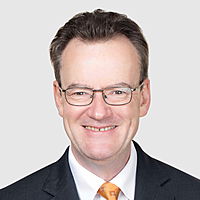
John Reade joined the World Gold Council in February 2017 as Chief Market Strategist. He is responsible for producing strategy and developing insights on the gold market; leading our global dialogue by engaging with leading economists, academics,...
Expertise
No areas of expertise
John Reade joined the World Gold Council in February 2017 as Chief Market Strategist. He is responsible for producing strategy and developing insights on the gold market; leading our global dialogue by engaging with leading economists, academics,...
Expertise
No areas of expertise
Comments
Comments
Sign In or Join Free to comment
most popular
Buy Hold Sell
Buy Hold Sell: The ASX's top management teams
Livewire Markets
Equities
Seneca's Special Situation #2: a golden takeover and an upcoming IPO
Seneca Financial Solutions