How to invest $5 million in today’s market: The Anchor & Engine Strategy
$5 million is called the new retirement number. Spending $250,000 a year, it needs to target around 10% to stand still. Seven steps.
 Add us as a preferred Google source
You may have read that you now need $5 million in total assets to retire. As far as we can tell, the figure comes from American commentary rather than research: an Investopedia estimate of the lifetime cost of the “American dream”, and opinion pieces on net worth. Surveys point lower. Americans told Northwestern Mutual in 2026 that they need about US$1.5 million, and affluent Americans told HSBC about US$2.6 million. In Australia, the ASFA “comfortable” standard for a couple who own their home is $730,000.
Still, we wouldn’t dismiss it. When America sneezes, Australia tends to catch a cold, usually a year or two later. Affluent Americans lifted their retirement number by 26% in a single year, and in our view the pressure here is heading the same way. The real question isn’t the number. It’s how hard the money has to work.
The Anchor & Engine Strategy, in one minute
The traditional 60/40 portfolio splits money by asset type, the bucket approach by time, and core-satellite by passive versus active. The Anchor & Engine Strategy splits it by job, and the income distributions help pay for the growth. It has three parts.

How it works, and the part most people miss: the anchor’s income doesn’t just pay the bills. It helps pay for growth.

In a 60/40 portfolio, the defensive half largely sits there. Here, the income side is designed to feed the growth side: corrections give the reserve a chance to turn some of the anchor’s distributions into good growth assets at lower prices. Over time, the aim is to convert income into long-term growth, ideally without having to sell anything at the wrong time.
The catch: anchor assets can lock money up, are valued by their managers rather than a market, and can suffer defaults. Many are open only to wholesale investors.
How much goes into each part depends on the family: what they spend, when they need the money, their age and how much risk they can live with. It suits families with a long horizon and steady spending who can live with some money being locked up. It doesn’t suit anyone who may need most of their money at short notice.
A family we meet often
Picture a couple in their early sixties who built a business over thirty years and still run it. The home is paid off. The children are grown, and the first grandchild has arrived. Separately from the home and the business, they have put $5 million aside to invest, spread across their super fund, a trust, the company and their own names.
That separation matters. A total-assets number counts the home and the business, but a family home doesn't pay the grocery bill. A business does, but only while you are running it. Once you step back, it is worth what a buyer will pay, when they pay it, and that can take years to arrange. $5 million made up of a $2 million home, a $1.5 million business and $1.5 million invested is a very different retirement from $5 million invested. What matters is the money that can produce an income without you, measured against what you spend.
They want four things: an income they can rely on when they step back, a business that either keeps going without them or is sold on the right terms, help for the children to get into the property market, and something to hand on. For this illustration, they plan to spend about $250,000 a year.
Here is the uncomfortable number, using a simple rule of thumb. Drawing $250,000 a year is 5% of the portfolio. Add headline inflation: the ABS figures released on 25 November put it at 4.9% for the year to October, up from 4.3% a month earlier. That is 9.9%. That 9.9% is the target each year, after all costs, just to keep the $5 million whole in real terms.
For a sense of scale, J.P. Morgan’s latest long-term forecast for a traditional 60/40 portfolio is about 7% a year. That figure is in US dollars and before fees, so it isn’t a like-for-like comparison, but it suggests the gap is real. In our view it can be managed, but probably not by doing what most portfolios were built to do.
Step 1: Work out the return you actually need
Take what you spend each year as a share of the portfolio, then add inflation. That is your target return, after all costs, just to stand still. Spending matters more than the size of the balance:


Then add the lump sums. For many families the bank of mum and dad is now part of the plan. Helping two children with a $250,000 deposit each takes $500,000, a tenth of the portfolio, and that money stops earning for the family the day it leaves. Decide early whether it is a gift, an early inheritance or a loan, when it will be needed, and which structure it comes from. Then paper it. A written loan agreement stands a better chance of being treated as a debt, not a gift, if a child’s relationship ends, and a will that records what each child has already received helps keep things fair between siblings. Speak with a lawyer to make sure it is papered properly. A known lump sum two years away probably shouldn’t sit in an investment that can lock its money up for a year.
And remember that the inflation that matters is the one you pay.

Step 2: Count the business as part of the portfolio
This is the step most business owners skip. The business is often the family’s largest asset: concentrated, illiquid and tied to one industry and one economy. In investment terms it can behave like a concentrated, higher-risk growth holding. So the $5 million should not repeat the same bet. If the business depends on construction, the portfolio may want to go easy on property lending. If it rises and falls with the Australian economy, it may make sense to lean global. The question is not “what is a good investment?” but “what does this family not already own?”
If the plan is to sell, think about the day the money arrives before it arrives, and keep room to invest the proceeds in stages. In our experience, the decisions made in the first ninety days after a sale tend to stay with a family for years, and the smoothest sales we see are usually planned two or three years out.
Step 3: Don’t rely on the old defences alone
The traditional answer is shares and bonds, topped up with term deposits and a little gold. It made sense when inflation was low and stable.

None of these is wrong to own. The issue is relying on them alone to protect a family’s purchasing power.
Step 4: Build the anchor
The anchor’s main job is to pay a regular income and, as far as possible, hold its value. That income funds the pension, family goals and the costs of running the portfolio. It comes from several sources, and no single one should dominate:

Across all four, money can be locked up for months, and managers can delay redemptions when markets are stressed. Valuations are usually set by the manager rather than a market, which is why unit prices can look smoother than the risk underneath. Much of the lending is at floating rates, so if interest rates fall, so does the income.
These assets cost more to run than an index fund, but the returns managers report are after their fees. What’s left has to be high enough to justify the risks, or the investment isn’t worth making. For investors who aren’t wholesale, listed vehicles and retail funds can do a similar job, with different trade-offs.
Where a manager offers the same strategy both unlisted and listed on the ASX, whichever is cheaper relative to its asset value is usually the better way in. For credit funds, though, a listed discount can be the market recognising losses before the fund’s own valuation does, so treat it as a question to ask, not a bargain to assume.
Step 5: Build the engine, across different styles
The growth comes mainly from global shares, run largely by Australian managers with global mandates, with selected growth alternatives where they suit the family. Unlike much of the anchor, most engine funds are available on the major investment platforms and are usually priced daily, which makes them simpler to hold, report on and rebalance. We prefer global mandates to a separate Australian share fund: a global manager can still buy Australian companies when they are the best value on offer, but isn’t forced to own them when they aren’t. The ASX is a small market, heavy in banks and miners, and a business-owning family is usually exposed to the Australian economy already.
The recent sell-off showed why style matters.

We combine managers with different approaches so that one theme turning doesn’t drive the whole portfolio. For a business owner whose company is already a concentrated bet, this matters twice over. Global shares also bring currency exposure, and whether to hedge is part of the decision.
Step 6: Fill the reserve, and use it to fund growth
What isn’t needed for spending, or to pay a pension from the super fund, is held back in cash and in the most liquid part of the anchor. That reserve is the portfolio’s dry powder.
Cash comes first: enough for the next year’s commitments, including any help planned for the children, because the liquid part of the anchor can be harder to reach in a downturn, which is exactly when you want it. Hold it across an at-call account and staggered term deposits, so it earns something while it waits.
After a meaningful fall in share markets, the reserve adds to good assets at lower prices, in two or three stages, without trying to pick the bottom. Business owners understand this instinctively: it is the same discipline as keeping cash on the balance sheet to buy cheaply when a competitor is forced to sell. And if years pass without a correction, the reserve doesn’t sit idle. Above a set level, it moves into the engine on a schedule.

Do this structure by structure. We manage the super fund, the trust, the company and personal names as one portfolio, deciding the overall mix first and then placing each investment where it fits best. But each structure has its own rules to follow. The super fund must invest under its own investment strategy and meet superannuation law, the trust works within its deed, and the company answers to its directors. Each also pays its own bills: pension minimums, trust distributions, the company’s working capital. So keep enough cash in each, match any lock-up to when that structure will need the money, and work through the set-up with your accountant.
Step 7: Know what you own, and judge it after all fees
What looked defensive five years ago may not be today, and two investments with similar labels can hold very different things underneath. The collapse of the Bathla Group this year was a reminder that private credit funds with similar headline yields can carry very different risks. Five questions to ask any lending fund:
- Who are the borrowers, and does the fund lend to developers?
- What are the loans secured against, and how much is lent against each property?
- Who values the loans, and how often?
- Is the income paid out coming from interest actually received?
- How much can you withdraw, how quickly, and can the manager delay it?
Expect those answers in writing. The same applies to shares: a global index fund, a technology fund and a “quality” fund can all hold the same handful of AI-linked companies. And judge every investment on what you actually keep, after all fees, including the adviser’s.
Not set and forget: the macro overlay
Some readers will take all this as set and forget: collect the income, top up the growth, repeat. It isn’t.
Think of it like Fantasy Premier League. You can pick the best players in the league, but if you field the wrong formation for the game in front of you, the team still struggles. Fund managers are the players. Asset allocation is the formation, and over time, in our view, it matters more. You can own excellent funds and still struggle if you’re in the wrong assets for the conditions.
So the mix moves as conditions change. When rates rise, floating-rate lending earns more; when they fall, the anchor’s income shrinks and the engine may need to do more of the work. When one style of share market runs hot, the engine leans the other way. We call this the Rate of Change approach, after our podcast: we listen to the managers deploying capital, test what they say against the data, and adjust the mix gradually rather than trying to time markets. In our experience, performance is increasingly determined not by what markets do, but by where capital is positioned.
In that sense the strategy is more bonsai than set-and-forget. It grows on its own, but it needs regular, patient pruning to keep its shape as conditions change. That ongoing care is the work we do alongside the families we look after.
An example mix for our family
Here is one way the strategy could look for this family today. Think of it as the Anchor & Engine answer to 60/40: roughly half working for income, half for growth. It is an illustration, not a recommendation, and the macro overlay would move it over time.

The cash covers about a year of spending; if help for the children is due within the year, it would be larger. Warehouse lending is usually the most liquid anchor holding, so it doubles as the reserve’s second layer; royalties add income linked to commodities and inflation. Each asset would be spread across more than one manager, and in the engine, value and growth sit side by side so no single theme drives the result.
What can go wrong

Our thoughts
For a business-owning family, the old playbook isn’t wrong so much as incomplete. It was built for low inflation and a single pool of money. In our view, today’s family needs its portfolio to do more work, to complement the business it already owns, and to stay patient enough to use corrections rather than fear them.
In coming pieces we’ll apply the Anchor & Engine Strategy to a $2 million SMSF, a family that has just sold its business, and a multi-generational family with $20 million.
Note: The family and example mix are illustrative, not a real client or a recommendation. The 10% target is a rule of thumb, not a forecast, and we don’t claim the strategy will earn it. “Income” means fund distributions, which may include capital.
Sources: ABS Consumer Price Index (October 2026, released 25 November 2026); Reserve Bank of Australia (3 November 2026); ASFA Retirement Standard (2026); Northwestern Mutual (2026); HSBC/Ipsos (2026); Investopedia (2025); J.P. Morgan Asset Management, 2027 Long-Term Capital Market Assumptions (US dollars); Real Investment Advice (31 October 2026); COMEX gold futures via Yahoo Finance (25 November 2026).
Never miss an update
Enjoy this wire? Hit the ‘like’ button to let us know.
Stay up to date with my current content by
following me below and you’ll be notified every time I post a wire
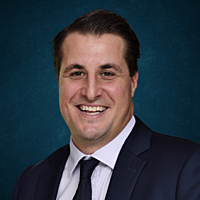
Murdoch Gatti is the founder of York Wealth Management and a private wealth adviser to families, business owners and professionals.
York helps clients make better long-term decisions about how their capital is invested, structured and passed on. That covers portfolio construction, retirement and superannuation strategy, and planning for the transfer of wealth between generations.
Murdoch also hosts The Rate of Change, a podcast where he interviews fund managers, investors and business leaders, then tests what he hears against the data.
Outside work, Murdoch and his wife Yasmin have two young children.
........
York Wealth Management Pty Ltd ABN 46 605 610 679 is a Corporate Authorised Representative (No. 001007972) of AD Advisory Services Pty Ltd ABN 68 005 830 802, AFSL No. 237058. Murdoch Gatti is an Authorised Representative (No. 001007979) of AD Advisory Services Pty Ltd.
This article contains general advice only. It has been prepared without taking into account your objectives, financial situation or needs. Before acting on it, you should consider whether it is appropriate to you in light of your objectives, financial situation and needs, and seek professional advice where appropriate. If a financial product is referred to, you should obtain and consider the relevant Product Disclosure Statement and Target Market Determination before making any decision about it.
Every reasonable effort has been made to ensure the information is accurate at the time of publication, but no representation or warranty is given as to its accuracy, completeness or currency. Views of podcast guests and other third parties are their own. Links to third-party websites are provided for convenience only; we do not endorse and are not responsible for their content. Past performance is not a reliable indicator of future performance.
York Wealth Management, AD Advisory Services and their representatives may receive fees or other benefits in relation to financial products and services. Please refer to our Financial Services Guide, available from York Wealth Management, for more information.

4 topics
Murdoch Gatti is the founder of York Wealth Management and a private wealth adviser to families, business owners and professionals. York helps clients make better long-term decisions about how their capital is invested, structured and passed...
Murdoch Gatti is the founder of York Wealth Management and a private wealth adviser to families, business owners and professionals. York helps clients make better long-term decisions about how their capital is invested, structured and passed...
Comments
Comments
Sign In or Join Free to comment