Is 2027 a sweet spot or a turning point for credit?
 Add us as a preferred Google source
With the RBA cash rate at its highest in 18 years, I ask whether the bond sell-off has further to go and explain why we are running around two years of duration. I also look at what’s fuelling growth in Australia’s public credit market and share the one risk that could tip my view.
Transcript
Tony Andronaco: Hi, everyone. My name's Tony Andronaco, and I'm the Southern Regional Manager at Yarra Capital. I'm joined today by Roy Keenan, co-head of Yarra Australian Fixed Income and Portfolio Manager of the Yarra Enhanced Income Fund. Today, we're going to tackle some of the hard-hitting questions we receive from advisors in market, as well as the outlook for the fund over the next 12 months. Welcome, Roy.
Roy Keenan: Hey, Tony. Thanks for having me.
Tony: So let's start with some of the macro issues affecting the credit markets. The US and Australian 10-year bond yields have hit multi-year highs in October, but recently eased. Is that pricing largely done or do we have further to go?
Roy: Yeah, it's a really tough question to answer because it was one of the quickest selloffs I've seen in my career. And we had like Australian 10-year bonds peak of 5.4%, US Treasuries 10-year peaked at 5.3%. I think you step back and go, why, why did rates get up that high? Because They've now rallied 40 basis points back to sort of the 5% range is that the bucket was concerned about the sheer size of issuance from hyperscalers, the prolonged war, the size of the US debt problem. And in some ways, we've had this rally off the back of probably the Democrats winning the Congress and oil price coming back, and inflation in some ways stepping back a little bit from that point.
But you would say that the fundamental issues that drove bonds higher are still there and need to be tackled. And that's mainly US debt and then the size of the debt burden that they have and the ongoing refinancing that needs to take place.
So in some ways you've probably had this relief rally. I think that probably continues, but then at some point, over the sort of next year or so, I would not be surprised if long end bonds start to sell off again.
Tony: And you, you touched a bit on inflation. So how much of the current inflation impulse is driven by oil versus say domestic demand?
Roy: Yeah, it's a great debate because I look back to the RBA, virtually the market was saying the RBA was done back in August. And we had that sort of 0.1% miss on inflation, GDP missed by 0.1% and then the oil price went from the high $70s up to a peak of $105. And I think the RBA was shocked by the rise in oil so much more so than probably the small misses that we had in the market. So, I think their argument has been that it's more demand-driven inflation and that we have capacity issues in Australia. I think it's probably the opposite. We've had now oil pull back to the sort of $90 level.
And some of the great work that Tim Toohey's done for those that want to follow it up on our website, he's done some really nice work on trying to break up between demand and supply and testing that thesis that the RBA has. And our argument is it's probably more energy driven, which is the rising oil price, but also that the government charges on, things like services, tobacco, all those sort of things have actually probably been a contributor as well. And, and in some ways, the actual demand driven from the consumer hasn't been there.
So I think it's a real test for what the RBA has done, tightening five times in 2026. It’s going to be a real test of who's right, who's wrong, because at risk is basically growth.
Tony: Sure. And I guess the RBA cash rate now sits at 4.85%, but it looks as though the Fed might still be hiking. So how do you compare Australian credit to say offshore?
Roy: Well, first of all, we probably thought that the RBA was done a while ago, but having a 4.85% cash rate has its benefits for income. We think the Fed will tighten one more time in December and that'll probably be it from the Fed. The market's got a bit more priced into it. In Australia, we think that we probably start a cycle in 2027 where the RBA are cutting rates.
But the one thing you can't ignore from a credit point of view if you compare Australia to the US is, fundamentally, we look attractive. At higher base rates, we have much higher credit spread on offer. And if I refer to, say, a US versus Aussie in the sort of five-year triple B spread, you pick up around 80 basis points around 6.35% versus the US at about 5.55%.
So Australia looks pretty darn attractive and the amount of income generation you do in, in Australian credit today is quite exciting.
Tony: Yeah, great. It's probably a good segue to talk to the Enhanced Income Fund. So how are you currently positioned within the fund?
Roy: Yeah, so leading up to this whole process we've sort of been a bit risk averse from a credit point of view. We wanted to stay in higher quality credit, because you weren't getting paid for taking risk in some respects. From the point of view of how we're positioned... we're sort of defensive. From that mindset, we've also had a bit of interest rate duration in our fund. And that has been to protect against any sort of sell-off in credit spreads to get that right marriage between a slowing economy and credit spreads selling off a bit. Having that duration is really beneficial. And in some ways we saw that in the October returns where interest rates have, believe it or not, even with the RBA tightening twice, interest rates have actually rallied.
So, from that point of view, when we sort of look at the next 12 months and beyond, we're quite prepared to add risk, but we want to get paid for it.
And there's sort of some few idiosyncratic opportunities that are presenting at the moment where, yes, it's adding a bit more risk into the portfolio, but it means we're getting paid for it. We're pretty excited by those opportunities.
Tony: Great. And just in terms of the Australian public credit market, it obviously continues to expand. What does that mean for the fund and the opportunities you have?
Roy: Yeah, in my career, it's probably never been a better time in credit markets. I probably didn't think I'd ever see the day where offshore issuers would be able to get the sort of tenor that they want and offshore credits get out to 20-30 year credit. Not that we've invested out there, but also getting size, being able to do senior sub debt or tier two versus tier one for foreign issuers into the country. That's so exciting to see, Australian issuers who have historically gone to the US coming back to Australia. That's another benefit that we're seeing.
But why does that happen? It's because ultimately, offshore investors have been the main driver of the demand for Australian credit. In the past I've spoken about it. Today, if it's the right sort of deal, Asian investors or foreign investors will be around 45 to 50% of a deal.
Why are they attracted to Australian credits? Because as I mentioned earlier, you pick up 80 basis points versus US credit, you have an economy which looks fundamentally pretty sound, a very diversified economy.
We have a stable political system, a stable legal system. So Australia, I suppose in geographical terms, we're also a long way from everywhere. So a lot of foreign investors look into Australia and say, "Well, it's a pretty safe place to invest.” Plus you're picking up return. So that's created demand, which now means that issuers can get a good size away.
And that means, for our fund, more diversification, more ability to add alpha. There's a lot more work that you have to do in covering more credits, but that's a great thing to have.
Tony: That's great. And I guess one element of the issuance we're seeing is with the hyperscalers. So it wouldn't be an interview if we didn't mention AI, but how are you guys thinking of the hyperscalers and, and credit on offer here in Australia?
Roy: In some ways, the way we're thinking about hyperscalers is probably the lessons that we learned back in the dot-com boom. And it reminds us a lot of 3G when, people probably laugh now and say, "3G, what was that?" But 3G was the next best thing. We could watch videos on mobile, and what happened was a lot of telcos back then just invested in it because it was the next best thing.
And what really happened is they overdid their CapEx. You had really strong companies that were highly rated but didn't get paid for that CapEx spend. And essentially, what happened was their credit rating deteriorated. So when we look at a hyperscaler coming to the market, we have that in the back of our minds, that they have massive CapEx programs.
And if they get it wrong what's their credit profile gonna look like? And our number one is get paid for the risks that we're taking. So from our point of view, with something like an Alphabet (Google) that came, we were happy to buy it, but there is a point where we're happy to miss out.
It's pretty similar to the example of NextDC (ASX: NXT). That's a company we know very well from our equity team, but also 10 years ago we participated in their bond programs. When their sub deal first came to the market in early 2026 we sort of thought, from a risk-reward point of view it was around 450 over the deal and essentially got priced at 350 over, and we were happy to miss it.
There's been a lot of noise about data centers and NextDC recently, and we took that as an opportunity because a lot of the things that the market was worried about recently were a lot of the issues why we thought we should have been getting paid 450 over: execution risk and build risk. When the NextDC deal went above 450 or essentially went from 280 out to about 550 over, we were very happy to re-enter the market. We know the credit well, and all of a sudden you're getting paid for that execution risk. We were very happy to add across our funds. So that's our mindset – we understand that there's risks, we're happy to take them, but making sure that we get paid for that outcome is very, very important to us.
Tony: Now a big change in the Australian credit market was APRA's announcement of phasing out the AT1 hybrids by 2032. Obviously that's a big change for a fund like yours. How have you approached that change and what are some of the other investment options available to the fund?
Roy: Yeah, anyone knows me knows I love the Australian hybrid market!
What's been really interesting, since APRA announced that – and it's nearly two years ago and it's getting implemented on the 1st of January of 2027 – is that whilst we had about $45 billion of AT1 disappearing, we actually don't lose that to the market. It becomes tier two paper. There's not a loss of supply.
But what we've seen in our market from an opportunity point of view, particularly for the Enhanced Income Fund, is we've seen large growth in the corporate hybrid market.
Since APRA announced the ceasing of the AT1 market, the corporate hybrid market has done about $17-18 billion of new issuance. And that means that we're getting access to a greater range of issuers, so we're getting more diversification in our fund.
So, in some ways, what happened with AT1s has been a positive for that market, but we've also seen the likes of UBS, Barclays, BNP issue foreign AT1 Aussie dollars into the Australian market. So, we've been able to replace that major bank AT1 with that. From an investor point of view, we're getting a lot of questions around, should I stay or should I go? And it's horses for courses. I think fundamentally AT1s look still attractive. Some people who have AT1 redemptions coming up have been just rolling in up the bank capital structure into tier two. I think that's fine. And we've seen benefits into our funds where people have said, "Well, I just want to get a similar type of return and a more diversified approach to credit” and are coming to funds like the Enhanced Income Fund. So, whilst it was devastating for me personally at the start, I think it's been great for the marketplace.
Tony: We should probably move now to outlook for the fund over the next 12 months. , Obviously the RBA's at its highest rate it's been in a long time. How does that impact your fund and the base case for performance?
Roy: Yeah, we didn't think they'd be tightening in September and October. In some ways it's been a benefit from an income point of view, with a 4.85% cash rate we've actually seen our income across the fund sitting at around 6.8% over the next 12 months, which is probably one of the highest I can remember. It probably goes back to four or five years ago where we had similar income, except back then it was low base, high credit spread. This time it's actually high base and credit spreads a bit lower but the actual overall opportunity, whether it be yield to maturity or income is very similar. How we want to play it is we think that in 2027 that the RBA will pivot.
The market has started to price it for 12 months out. They've got a 50% chance of rate cut in December 2027. We think it's more likely earlier in the year. Probably the mid-May to June period, and if we think that they are going to cut around that period, the market will start thinking about it earlier in 2027.
So, we want to set the fund to benefit from that. We think that the RBA pivoting, lowering the cash rate into the future, will mean that yield curves will steepen. That goes back to that first question we had on the 10-year bond. As the RBA starts to cut rates, the actual yield curve will steepen from the front end rallying and probably the longer end holding its current levels.
And that will be driven more by US rates. So we're positioning ourselves for that. And as I mentioned earlier, probably taking a little bit more credit risk if the opportunities present, we'll be more than happy to do into that type of environment.
Tony: Now, I know that Tim Toohey has hinted at unemployment rising and peaking at 5-5.5% in 2027. What would that mean for rates and would that potentially cause a pivot?
Roy: No doubt. I think the RBA forecasting that the unemployment rate will peak at around 5%. They've sort of gradually, through 2026, lifted their peak in unemployment. If we're right at 5.5% by the end of next year, it means they cut earlier. And it probably means they cut two or three times next year.
The problem will be about growth. And we've got growth getting down to 1%. There's a lot of people starting to talk about recessions, and I think the RBA and Governor just recently spoke about the chances of recession. From a credit point of view, that's not our base case but I think from our point of view, looking at the credits we invest in, balance sheets are really strong.
And a lower growth environment whilst not the best outcome for credit, balance sheets and particularly the companies we're investing in will be able to weather that storm because if it is negative, it'll be a shallow negative growth environment.
Tony: Now, in the past, you've warned about the wave of money going into private credit and how that's now causing credit spreads to tighten. How do you see that dynamic at the moment? And do you still think credit markets, particularly public credit markets, are still offering good value at these levels?
Roy: I won't say demise of private credit because it's not the demise, but the slowing in activity in private credit has meant that some parts of the private credit market have credit spreads have actually moved out wider, which at Yarra we're taking advantage in other funds.
I think that's a good thing because you're getting much more balance of risk and reward there. I think from a public credit point of view, you can do 7-8% returns in public credit markets, whether it's going into a triple B rated AT1 and getting close to 8% for five years or going into an A minus tier two, a major bank and, whether you do five or 10 years and get somewhere between 6.5-7%. They have fantastic returns.
And I think the one thing in public versus private, the lessons that investors will take is that liquidity. There's a reason why you actually pick up a greater return in private markets over public and it comes down to liquidity. But I think gap between what's on offer in public versus price is still too narrow for that illiquidity risk. From my point of view, I think public markets still offer the best opportunities.
Tony: And obviously last week you had the Democrats win the US midterms and have won both houses in Congress. And obviously the Treasury's rallied off the back of that. Do you think that relief is sustainable? What does it actually mean for credit?
Roy: Even though Democrats are controlling Congress, it’s still divided by having a Republican President. I think there will be a short-term sugar hit because one of the reasons why we saw bonds sell off was because of the sheer, and probably in some ways why bonds have also rallied, has been the negative news we've heard around hyperscalers and AI in particular.
I think that combination has driven rates lower. I think ultimately though we've still got two years of Trump, and for rates to go further you need to see the resolution in Iran or Ukraine and then some sort of follow-up improving of the budget deficit over there. Highly unlikely under Trump, I would've thought.
I think the true longer term good news for bonds will be if there’s a victory by the Democrats in 2028 because that's when they can really do more in actually correcting the balance sheet in the US. And I think that's why you'll probably see over the coming months a bit of a rally in bonds still, but then ultimately you'll see that long-ended yield curve sell-off, off the back of that. And until something's done more structurally over the longer term, it's hard to see how bonds, as the longer end of the yield curve, will outperform.
Tony: So looking ahead for 2027 with what we've just spoken through, is it a bit of a turning point for credit? Is it a bit of a sweet spot at the moment?
Roy: When you've got a 6.8% income starting point, it protects you against a lot of things that can go wrong. But I think in the way we're positioned at the moment to take advantage, especially the front end of the yield curve with the RBA cutting rates in 2027, taking advantage of that by being able to add a bit more risk into the credit portfolio, some of those idiosyncratic risks come into the portfolio.
I'm really confident about the types of returns that we can deliver in the Enhanced Income Fund. But as I said, with a 6.8% starting point you don't need a lot to go right to then start to drive bigger returns on a 12- 18 month viewpoint. So, I'm really confident the way we're positioned.
Tony: And is there anything that might sort of be at risk to that view?
Roy: I think escalation in any war is not good. The starting point of where oil is and how we've already seen with central banks, with anything prolonged, because you have to remember that inflation is a measure of 12 months on 12 months. And you can have oil stay where it is over a 12-month period, and that's not inflationary, right? So, in some ways any escalation on that front that drives the oil price higher, I think would be a concern. But we've also got to watch growth as well in Australia. No one wants to hear the recession word, but I think that's one of the key things that we need to keep an eye on.
The RBA now has plenty of ammunition to cut rates in response to a slowing economy and rising unemployment, especially in the face of what we're seeing in housing prices, right? So I think it's something that we need to be mindful of, but it's not our base case.
Tony: And finally, Roy just seeing the announcement that Yarra will be joining the RBC Global Asset Management business, what does that mean for fixed income and for the business overall?
Roy: Look, I think it's exciting news for us. In some ways, for me I've gone full circle in that the business has come out of Goldman Sachs Asset Management, moving into a large organization. I think the most important thing is that from day one, it's business as usual. For us, we've built an amazing fixed income business at Yarra. Nothing changes from when we become part of RBC. I think that foundation that we've built is what will drive us into the future.
I just talked about how the Australian market's become a bit more global and we have a lot more foreign issues into the country. Having a global partner now will mean that that ability to delve into their network, talk to them about these issuers that are coming to the Australian market, how they view that and it all comes back to what I was saying earlier about pricing risk, right? Having that extra amount of ability to do that research is going to be fantastic for us.
Tony: Thanks, Roy. Thanks for your time and sharing all your insights today. And for everyone watching, if we didn't reach your question and, or if you've got any other burning questions, please reach out to a member of the Yarra staff. Thanks again.

Managed Fund
Yarra Enhanced Income Fund
Australian Fixed Income
View
Never miss an update
Enjoy this wire? Hit the ‘like’ button to let us know.
Stay up to date with my current content by
following me below and you’ll be notified every time I post a wire
Roy is a senior leader within the Fixed Income team at Yarra Capital Management, focusing on Australian Fixed Income and Credit. He has over 30 years’ investment experience both in asset management and trading, specialising in credit products since 1995. He has been part of the investment management team for the Yarra Enhanced Income Funds since the Funds’ inception in 2002 and continues to manage these Funds. Roy is also co-portfolio manager to the Yarra Income Plus Fund. Before transitioning to Yarra Capital Management, Roy was Head of Australian Credit at Goldman Sachs Asset Management.

1 stock mentioned
1 fund mentioned
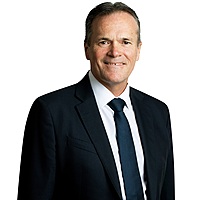
Roy is a senior leader within the Fixed Income team at Yarra Capital Management, focusing on Australian Fixed Income and Credit. He has over 30 years’ investment experience both in asset management and trading, specialising in credit products...
Expertise
Roy is a senior leader within the Fixed Income team at Yarra Capital Management, focusing on Australian Fixed Income and Credit. He has over 30 years’ investment experience both in asset management and trading, specialising in credit products...
Expertise
Comments
Comments
Sign In or Join Free to comment
most popular
Shares
The only 3 "Buys" in the ASX 10
Livewire Markets