Is the data arms race over?
In the data arms race of investing, judgement has never been so important.
 Add us as a preferred Google source
In 1980, Sanford Grossman and Joseph Stiglitz published a paper with an inconvenient conclusion for anyone selling market data: information earns a return only while it is scarce.
If share prices reflected all possible information and the efficient market hypothesis was true, nobody would be paid to do research, and alpha generation would be improbable, if not impossible. The market needs inefficiency to fund the people who make it efficient.
Almost half a century later, the funds management industry is determined to test the theorem again. Global spending on market data and analysis has set a record nearly every year for more than a decade. Over roughly the same period, the performance scorecard is somewhat underwhelming: return outcomes are dispersed, and many active funds underperform their benchmark over ten years.
More information is available today than at any point in history, yet greater outperformance is not being consistently delivered.
I make the argument that more information doesn’t necessarily make better investors. Industry spending is encouraged and yet the results should make us question its worth.
It makes me question its worth.
A certain level of data spend is rational, and arguably necessary, but it would appear that we have approached a point of diminishing returns.
And the explosion in data hasn’t solved for one key factor: the need to make good investment decisions. Twenty years ago, the scarce and valuable resource was access to information. Today, this data is available by subscription to virtually anyone.
I pose that the judgement and analysis of data are vastly more important than a diminishing data edge.
What is valuable now is the wisdom to decide what data deserves attention, how data is used, and the temperament to act even if the market disagrees with you.
This is the biography of every information edge the industry has ever adopted. A Bloomberg terminal was an edge in 1982, until almost every desk had one. Quant factors were an edge, until the processes were replicated. Satellite imagery and credit card data were an edge a decade ago: today they are line items in budgets.
Each edge decayed with adoption. Grossman and Stiglitz would not be surprised.
Enter artificial intelligence, which the industry is greeting the way it greets every new tool, as the next data edge to be procured.
I believe this is wrong: AI should not be viewed as another data feed. It is a tool or system that is changing how we work, and that has two consequences worth taking seriously.
The first is that answers are becoming virtually free. Screening, summarising, analysis, modelling: this work is being automated right now, in real firms, including ours.
When competent answers cost nothing, the scarce asset becomes the questions asked, and the judgement on how to act. That has always been true in investing. AI massively augments this fact.
The second consequence is less comfortable for large businesses.
For most firms, the advantage in this environment isn’t a bigger budget, someone else will always have a bigger cheque book. Advantage comes from the ability to iterate fast on data that is now available to all. This iteration speed is a function of organisational design and process, rather than budget.
A small, empowered team can move an investment tool from idea to production in days, if not hours. Most large businesses need steering committees, approval processes, and their timelines are measured in months, if not years. Great quantitative houses may prove the point. Their edge was never the data they bought, it was the machinery they built around it.
Blackwattle, a 20-person firm, cannot outspend on data, yet I do not believe we need to, because the data isn’t the edge. It’s how we utilise the data: hypothesise, design, build, fail, build again, and deploy, and it’s how we do it fast.
The kitchen (the process) matters more than the ingredients (the data). Finally, I argue that trust will also become a critical moat.
When plausible analysis can be generated instantly, provenance will become a battleground. Firms will suffer in the next five both because they fail to adopt AI, and because they let AI systems touch data, numbers, and output without verification.
Trusted data is no longer a marketing phrase. It has become an operating necessity, and allocators should ask investment managers to demonstrate it. In five years, most AI tools will look the same across the industry, just as the terminals do today.
What will matter is a firm’s ability to adapt, disrupt and evolve its own tools, systems, and processes, and its ability to maintain investment clarity in a world of increasing speed and noise.
The data arms race may well be over, because we all won it.
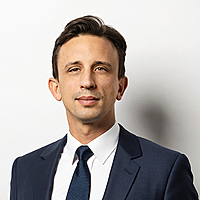
Michael Skinner, Managing Director and Chief Investment Officer
Blackwattle Investment Partner
Never miss an update
Enjoy this wire? Hit the ‘like’ button to let us know.
Stay up to date with my current content by
following me below and you’ll be notified every time I post a wire
Blackwattle is a new generation Australian Fund Manager that is dedicated to delivering exceptional investment outcomes. At Blackwattle, we will always invest our own capital alongside our clients.
Our skin-in-the-game approach ensures that we are personally invested in the portfolios we manage, demonstrating our unwavering alignment to our clients' success.
To date, we have committed $10m of our own personal capital. With a combined investment experience of over 135 years across our team, averaging 19.5 years per person. In aggregate, our teams have previously invested +$18.5bn of capital. Our investment philosophy centres investing in ‘Quality’ businesses and people, ensuring that our clients' capital is positioned for success.
........
This document is issued by Blackwattle Investment Partners Pty Limited (ABN 24 663 839 094) (BIP) corporate authorised representative of Blackwattle Licensing Pty Limited (ACN 665 711 839 AFSL 547 617) (corporate authorised representative no. 001304362) the investment manager of the Blackwattle Funds. Equity Trustees Limited (ABN 46 004 031 298, AFSL No. 240975) (EQT) is the responsible entity of the Fund. Equity Trustees is a subsidiary of EQT Holdings Limited (ABN 22 607 797 615), a publicly listed company on the Australian Securities Exchange (ASX: EQT). This document is intended to provide
general information only and is subject to change. It does not constitute an offer to subscribe for units in the Fund. The information does not consider the investment objectives, financial situation, or particular needs of any individual. You should seek advice from your licensed financial adviser and read the product disclosure statement (PDS) before making an investment decision. The PDS and target market determination (TMD) for the Fund can be obtained for free by visiting our website www.blackwattlepartners.com. A TMD describes who this financial product is likely to be appropriate for (i.e. The target market), and any conditions around how the product can be distributed to investors. It also describes the events or circumstances where the Target Market Determination for this financial product may need to be reviewed. Neither BIP, EQT or their related body corporates guarantee repayment of capital or any particular rate of return. An investment may achieve a lower-than-expected return and investors risk losing some or all of their principal investment. BIP has obtained information from sources it considers to be reliable but does not represent that such information is accurate or complete, or that it should be relied upon. Neither BIP nor EQT make any representations or warranties, express or implied, as to the accuracy or completeness of the information it provides and to the maximum extent permitted by law, neither BIP, EQT nor its directors, employees or agents accept any liability for any loss caused by using this information

4 topics
Blackwattle is a new generation Australian Fund Manager that is dedicated to delivering exceptional investment outcomes. At Blackwattle, we will always invest our own capital alongside our clients. Our skin-in-the-game approach ensures that we...
Expertise
No areas of expertise
Blackwattle is a new generation Australian Fund Manager that is dedicated to delivering exceptional investment outcomes. At Blackwattle, we will always invest our own capital alongside our clients. Our skin-in-the-game approach ensures that we...
Expertise
No areas of expertise
Comments
Comments
Sign In or Join Free to comment