Pressing play on Sony
Where the market sees a tired Japanese conglomerate, Contrarius sees something rare: an AI-Proof and AI-Winner at an attractive price.
 Add us as a preferred Google source
This article is based on quarterly commentary from Contrarius’s global investment team.
Buried within Sony Group is a film and television library of real pedigree. Sony Pictures owns Columbia and a vast film catalogue that includes the Spider-Man film franchise and Jumanji, an extensive television library, and an underappreciated jewel—Crunchyroll, the world's leading streaming service built purely for anime fans, with more than 21 million subscribers, a library of over 50,000 episodes, and first-window access to almost every major Japanese studio. Last year Demon Slayer: Kimetsu no Yaiba Infinity Castle became the highest-grossing anime film ever made, grossing around $740 million at the global box office, and ranked among the biggest films of any kind for the year.

Content is, of course, a hit-driven business, and not every movie is a success. But the value here is not in any single release; it is in the catalogue and the royalty base beneath it—the annuity that keeps paying long after the premiere—and in the arms-dealer model that lets Sony profit from the boom in demand for content without straining its balance sheet by entering the streaming wars.
Importantly, we are of the view that as generative AI potentially drives the marginal cost of producing content towards zero, the scarcity premium on authentic, human-created intellectual property (IP) with genuine emotional resonance does not shrink—it widens. This brings us to an even more valuable asset that Sony owns.
The Song Remains the Same
A music catalogue is one of the most enviable assets an investor can own—a growing annuity income stream. A royalty is collected when a song is streamed, covered or used on screen, for decades after a song is written. Sony owns two such annuities, and both are among the best in the world. In recorded music it is the oldest name in the business, tracing its roots to Columbia Records in 1887, and is one of three global majors alongside Universal Music and Warner Music Group (a prior holding of the Contrarius Global Equity Strategy); and in music publishing—the rights to the songs themselves—it is the largest operator in the world.

The names tell the story. Sony's recording business is home to Beyoncé, Adele, Bruce Springsteen, Billy Joel and Bob Dylan. Through its publishing arm it has interests in millions of compositions, including songs from Lennon-McCartney and Michael Jackson. Sony continues to purchase more rights—its 2024 purchase of the Queen catalogue includes both recorded and publishing royalties (excluding ownership of the North American recorded masters). And a new partnership with the Singaporean sovereign-wealth fund GIC means Sony stands ready to keep buying.
We believe these assets will become more valuable over time. A large language model can generate a million new songs by lunchtime; what it cannot generate is Bohemian Rhapsody, or the emotional attachment that sends a stadium singing the same chorus thirty years on. And it appears that the market agrees with us. Listed pure-play music companies such as Universal Music Group and Warner Music Group currently trade at P/FCF multiples of 21x and 19x respectively.
From Console to Platform
Sony’s third business is PlayStation which is quietly turning from a hardware-cycle business into a platform with recurring, high-margin economics. Monthly active users reached a record 132 million, the PS5 installed base has passed 93 million, and content (PlayStation Store) and services (PlayStation Plus subscriptions)—the recurring, high-margin engine—already accounts for the majority of the segment's profits. In addition to hosting third party game franchises (such as the upcoming Grand Theft Auto VI) Sony's studios own very valuable franchises including God of War, The Last of Us, Horizon, Gran Turismo and Ghost of Tsushima. Some of this IP is also making its way onto television and film screens.
While console makers are facing challenges due to the level of memory prices, we believe that these are attractive businesses. The Contrarius Global Equity Fund also owns Nintendo, which faces the same memory-cost pressure but likewise sits on extremely valuable IP.
Buy Three, Get One Free
Despite this collection of enviable assets, Sony’s market cap is $120bn and it trades on a mid-teens earnings multiple. We believe that Sony is currently trading below the value of its core content assets—with the market completely ignoring what may be its most valuable business.
The Eyes Have It
Sony makes roughly 53% of every dollar of global image-sensor revenue. An image sensor is the small silicon chip that turns light into a picture—the part inside every phone, camera and car that does the actual seeing. The evidence of the quality of this business is the customer list: the most demanding, most vertically-integrated companies on earth buy from Sony rather than build their own. Apple has never made its own sensor. Tesla runs Sony made sensors in its self-driving cars. Even Samsung, which manufactures its own sensors, still fits Sony's silicon in its flagship phones.

For most of its life the sensor has been a smartphone component, beholden to the handset cycle. But cameras are fast becoming the way machines see—for vision-based autonomous driving, machine vision and humanoid robotics. If physical AI is to perceive the world, it will largely do so through sensors—and the company that supplies most of the world's best image sensors is Sony.
In May, Sony and TSMC signed a preliminary (non-binding) agreement to form a JV, with Sony as majority and controlling shareholder, to develop and manufacture next-generation image sensors at Sony's newly built fab in Kumamoto. The partnership gives Sony access to TSMC's leading-edge logic, letting it stack an advanced logic layer (the brains) onto its world-class pixel layer (the eyes), so the sensor runs AI on-chip rather than in central compute—considered essential for physical AI in automotive and robotics. This moves Sony from selling pixels to selling perception: higher value and stickier.
The market appears focused on near term concerns. A handful of premium phone makers account for an outsized share of sales, and this year Samsung prised open Sony's old monopoly on the iPhone sensor—an inroad which in our view is likely owed as much to Samsung’s Texas fab and the threat of chip tariffs as to merit. In our view the market is missing the truly large opportunity—physical-AI sensors for autonomous cars and humanoid robots. While a nascent industry today, we believe this business could one day dwarf Sony’s other businesses in value. And yet we don’t believe that we are paying for this substantial optionality.
A CEO With a Scalpel
A cheap collection of assets can stay cheap for years; what can change that is a management team determined to unlock the value. The company, under new CEO Hiroki Totoki, a 38-year Sony veteran with a finance background, is steadily transforming itself. His early actions have been positive: the financial-services arm spun off, the commoditised television business folded into a joint venture with TCL, the loss-making AFEELA electric-car venture abandoned, the underperforming studios cleaned up. The capital freed is being redirected to music catalogues, gaming IP and sensors. And cash is being returned to shareholders.
Summary
Sony trades on a mid-teens earnings multiple—a conglomerate rating for what is becoming a focused owner of irreplaceable IP, alongside the world's pre-eminent image-sensor business, all underpinned by a fortress balance sheet. Most of its current value sits in AI-Proof assets—scarce, human-created IP. In addition, we believe we are getting a potential AI-Winner—a sensor business that is likely to be a major beneficiary of physical AI, manufacturing the eyes through which the coming generation of robots and autonomous vehicles may see.
Never miss an update
Enjoy this wire? Hit the ‘like’ button to let us know.
Stay up to date with my current content by
following me below and you’ll be notified every time I post a wire
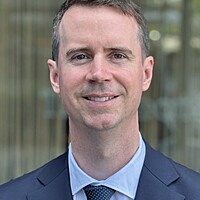
Chris joined Contrarius Australia in January 2021. He was previously a director of Contrarius Investment Advisory Limited ("CIAL") in the United Kingdom from June 2017 until June 2018. He was employed by CIAL as an investment analyst from April 2012 until June 2018. Chris also previously worked for Allan Gray Ltd, South Africa’s largest privately-owned investment firm. He holds a Bachelor of Business Science (Quantitative Finance) from the University of Cape Town. Chris is a CFA and a CMT charterholder.
........
This article is based on a commentary prepared by Contrarius Investment Advisory Pty Limited (“Contrarius Australia”, AFSL 506315), distributor of the Contrarius Global Equity Fund (Australia Registered) (ARSN 625 826 075). The investment manager of the Fund is Contrarius Investment Management Limited. Equity Trustees Limited (“Equity Trustees”) (ABN 46 004 031 298), AFSL 240975, is the Responsible Entity for the Fund. Equity Trustees is a subsidiary of EQT Holdings Limited (ABN 22 607 797 615), a publicly listed company on the Australian Securities Exchange (ASX: EQT). Information is valid as at 30 June 2026. This information is general in nature and has been prepared without taking into account your personal objectives, financial situation, or needs. Before acting on this information, you should consider its appropriateness and should read the relevant Financial Services Guide (FSG), Product Disclosure Statement (PDS) and Target Market Determination (TMD) available at www.contrarius.com.au. The article is for educational purposes only. While all reasonable care has been taken by the author in the preparation of this information, neither Contrarius Australia, Equity Trustees, nor any of their related parties, directors or employees, nor Livewire Markets Pty Ltd. as publisher, provide any warranty of accuracy or reliability in relation to such information, or accept any liability to any person who relies on it. Interested parties should seek independent professional advice prior to acting on any information presented. Past performance is not a reliable indicator of future performance. Funds managed or distributed by Contrarius Australia may have a position in any of the securities referred to in this article, and such positions are subject to change at any time without notice.

5 topics
1 stock mentioned
Chris joined Contrarius Australia in January 2021. He was previously a director of Contrarius Investment Advisory Limited ("CIAL") in the United Kingdom from June 2017 until June 2018. He was employed by CIAL as an investment analyst from April...
Chris joined Contrarius Australia in January 2021. He was previously a director of Contrarius Investment Advisory Limited ("CIAL") in the United Kingdom from June 2017 until June 2018. He was employed by CIAL as an investment analyst from April...
Comments
Comments
Sign In or Join Free to comment