TOL - 3rd Jul, 2026
Quality just had one of its worst years in decades. This is the moment to be greedy.
Quality stocks have suffered one of their worst relative periods in decades as investors chased AI, momentum and speculative growth.
 Add us as a preferred Google source
Quality stocks have suffered one of their worst relative periods in decades as investors chased AI, military defence, momentum and speculative growth. But history, academic evidence and current valuations all point one way. When profitable, durable compounders are left behind, forward returns tend to improve. For us, this looks less like a broken thesis than a rare opportunity.
Introduction
Every so often the market decides the boring, profitable, well-run businesses we love are exactly the wrong thing to own. The past financial year was one of those moments. It was one of the worst years for quality in decades, and on one well-known dataset the worst relative year since the depths of the GFC in 2009.

For a boutique firm built on owning high-quality, monopolistic compounders, that stings in the short run. But we have lived through enough cycles to recognise the setup. When quality is this unloved and this cheap relative to its own history, the long-run odds shift in its favour. This article is about what happens when the market stops paying for quality, and why we are leaning in rather than running away.
Recent ‘Quality’ Underperformance
After the April “liberation day” sell-off, the market staged a furious risk-on rally led by its lowest-quality corners, the high-beta, unprofitable and speculative names. Junk stocks ripped while companies with high returns on equity and low leverage were left behind. Add AI-fuelled enthusiasm that rewarded growth narratives over present-day profitability, and you had the perfect cocktail for quality to lag. J.P. Morgan ranked 2025 as the fourth most challenging year for the global quality factor in three decades, behind only 2020, 2009 and 2003.
Notice the company those years keep. 2003 was the recovery off the dot-com bust; 2009 the rebound out of the GFC; 2020 the post-COVID melt-up. In every case quality lagged a junk-led rally, and in every case it subsequently reasserted itself. That pattern is the whole point.

Macquarie agrees quality is at capitulation levels
In a March 2026 note, ‘Quality and Growth on Sale’, Macquarie's quant team reached the same conclusion from a different angle. Their 12-month rolling excess returns for global Quality Compounders have fallen into the bottom 1% of all observations since 1995, the most extreme reading in three decades.

“[Quality Compounders] currently reside at the first percentile of [their] excess return distribution, nearly 3 standard deviations from [their] mean… Historical precedent suggests that returns reaching these depressed levels typically mean revert.”
What academic studies suggest about 'Quality'
The quality premium is one of the most rigorously documented effects in modern finance.
The seminal work is Asness, Frazzini and Pedersen's “Quality Minus Junk” (circulated 2013, published in the Review of Accounting Studies in 2019). They define a quality stock as one that is safe, profitable, growing and well managed, and therefore one a rational investor should pay more for. Their central finding is a puzzle. High-quality stocks command higher prices, but only modestly. Because the market underpays for quality, those stocks deliver high risk-adjusted returns. Their long-short QMJ factor earned positive returns in 23 of the 24 countries they studied.

Figure 3. The SSRN listing for Asness, Frazzini and Pedersen’s ‘Quality Minus Junk’, the seminal paper documenting the quality premium.
Three of their findings matter enormously right now.
- First, quality tends to do well in downturns, not badly. QMJ has historically delivered strong returns during market crises, the flight-to-quality protection we expect from our holdings when markets eventually turn.
- Second, and most important right now, the “price of quality” varies over time. It reached a notable low during the internet bubble, when investors stopped paying for safety and profitability and chased speculative growth. Does that sound familiar?
- Third, and this is the line we keep coming back to, a low price of quality predicts a high future return. The cheaper quality gets relative to junk, the better its subsequent performance tends to be. After 2025 the factor trades roughly one standard deviation below its long-run relative valuation, having been more than one standard deviation expensive in late 2024. It has swung from overpriced to underpriced in a single year.
The broader academic lineage points the same way, from Robert Novy-Marx's work on gross profitability as a predictor of future returns, to the Fama-French five-factor framework, in which profitability and investment discipline are rewarded over time. Owning profitable, safe, well-managed businesses works over the long run, and works best when you buy it cheap.
Examples of our 'Quality' stocks, held through the cycle
We do not invest in a factor. We own specific businesses that score extremely well on what academics call ‘quality’. A few portfolio and watchlist examples show what we mean, and why a year of factor underperformance does nothing to dent the thesis.
Microsoft (MSFT) is the archetypal quality monopoly. Windows, Office and Azure are underpinned by recurring subscription revenue, deep switching costs and best-in-class margins. At its dot-com peak in December 1999 it traded near US$60 split-adjusted; by late 2000 it had been cut to around US$20, a fall of about 66% that took fourteen years to reclaim. An investor who bought at those lows compounded capital roughly twenty-five-fold over the next seventeen years, about 20% a year before dividends. It is living a milder version of that story today. The stock fell from US$538.66 in October 2025 to around US$353 by June 2026, down roughly 34%, not because the business faltered but because investors recoiled from AI capital spending of close to US$190 billion a year, even as revenue grew 18% and Azure 40%.
Berkshire Hathaway (BRK.A) offers the same lesson from the other side of the dot-com bubble. In June 1998 it traded around US$80,900 per A share; by March 2000, as the market became intoxicated with the internet, it had fallen to roughly US$41,300, a drawdown of about 49% for one of the highest-quality capital allocators in the world, even as the Nasdaq raced toward its peak. Investors were abandoning Warren Buffett’s compounding machine at almost exactly the moment they most needed its discipline. Berkshire then recovered strongly as the bubble burst, returning roughly 26.6% in calendar 2000 while many internet darlings collapsed. Even the best businesses get left behind when the market is consumed by a narrative.

Figure 3. 1999. The headlines about Warren Buffett. "Has Warren Buffett lost his touch?" "Buffett's oracle status questioned." "Berkshire Hathaway's slump casts shadow on Buffett legend." "Former high-fliers take a Buffetting." The greatest investor in history was being publicly written off. Not because his businesses were failing. Because the journey looked terrible relative to what was fashionable. Five years later, Berkshire was up 430%. The Nasdaq had collapsed 80%.
S&P Global (SPGI) is not in the portfolio but sits high on our watchlist. It is one of the essential toll roads of global finance, with dominant positions across credit ratings, benchmarks, indices, data and analytics that sit deep inside the workflows of banks, asset managers, corporates and regulators, creating recurring revenue, exceptional margins and formidable switching costs. Yet the stock is down roughly 25% from its highs in the quality rout, despite reporting 8% revenue growth, 14% adjusted EPS growth and operating margins above 50% in 2025. A business of this calibre compounding while the market marks it down is exactly the sort of target the QMJ research tells us to study closely.
Visa (V) is one half of the global payments duopoly, a capital-light network with extraordinary scale, network effects and pricing power. Its economics are archetypal quality. Revenue grows with global consumer spending, incremental margins are exceptional, and it needs little capital to compound. Yet Visa has not been immune. On closing prices the stock peaked at US$370.38 on 11 June 2025 and troughed at US$294.91 in 2026, a fall of 20.4%, still compounding earnings and cash flow yet marked down by roughly one-fifth. For a company with Visa’s moat and durability, that is precisely the disconnect between price and intrinsic value that appears late in a quality sell-off.
We would add Amazon, Spotify, REA and Salesforce, all with durable competitive positions and improving cash generation that contributed strongly for us in prior years. The common thread is mission-critical products, pricing power and high switching costs. None of that was repealed in the last 12 months; the market simply stopped paying for it.
Why we disagree with the case that ‘Quality is dead’
We should make the bear case properly rather than knock down a straw man. Three arguments deserve to be taken seriously.
- “AI is a structural threat, not a passing narrative.” The strongest objection is that large language models could permanently impair the moats we prize, whether by commoditising software, compressing switching costs, or disintermediating the workflows that businesses like Microsoft, Intuit and S&P Global sit inside. On this view the market is not mispricing these companies but correctly repricing them for a smaller future.
- “Quality is no longer capital-light.” The textbook compounder throws off cash and reinvests little. Yet Microsoft now spends close to US$190 billion a year, and the dominant technology cohort is locked in an arms race for compute. A business that must spend ever more simply to defend its position, the argument runs, is not the high-return-on-capital machine the literature describes.
- "Cheaper is not cheap." Even after a year of de-rating, many of these businesses remain expensive in absolute terms. A factor can sit below its long-run average for years, and "less expensive than 2024" is a long way from a bargain.
We take all three seriously, but are not, ultimately, persuaded by any of them.
On AI, our view is that some moats will be eroded and others reinforced, and the businesses we own look far more likely to be the toll collectors than the toll. Distribution, proprietary data, regulatory entrenchment and customer trust are the assets AI makes more valuable, not less. Microsoft monetises AI through the very channel that already locks customers in, and S&P Global's ratings and indices are franchises a language model cannot conjure into existence.
On capital intensity, today's spending is a deliberate investment in tomorrow's moat, not a symptom of weakness. The market is penalising the near-term hit to free cash flow while ignoring the durability it buys, the short-horizon mispricing the quality research predicts. We would worry far more about a dominant franchise that was not investing to defend itself.
Lastly, we agree cheaper is not cheap, which is why our argument rests on the price of quality relative to junk, not an absolute claim that everything is a bargain. On that relative measure, the swing from expensive to cheap in a single year is the kind of signal that has rewarded patient investors before.
Underneath all three objections sits a single proposition, that this time is different. It is worth recalling Sir John Templeton's warning.
"The four most dangerous words in investing are 'this time it's different'" -- Sir John Templeton. A danger Howard Marks has returned to repeatedly in his memos on market cycles.
Every quality drawdown in history arrived wrapped in a story for why the old rules no longer applied, whether the Nifty Fifty, the dot-com boom or the post-COVID melt-up. In each case the businesses that kept compounding earnings were eventually re-rated by a market that remembered what it was paying for. We see no convincing reason this episode is the exception.
Why we think 'Quality' comes back
Four points for anyone tempted to give up on quality at the bottom of its cycle.
- Valuation has reset in our favour. Quality went into FY2026 expensive and came out cheap. The price of quality, the most reliable predictor of its future return, now sits at levels historically associated with strong subsequent performance.
- The macro backdrop tends to turn. Quality has historically performed best when growth is slowing and earnings visibility is scarce. Junk rallies are funded by optimism about a broadening, accelerating economy; when that optimism fades, investors rediscover businesses that can grow earnings through a downturn.
- Abandoning the factor after a bad year is how investors destroy returns. The worst years for quality have repeatedly been followed by strong recoveries; selling after it has de-rated locks in the underperformance and forfeits the rebound. As Parametric put it, walking away from a factor after a weak year risks missing the very recovery that follows.
- Earnings, not sentiment, win in the end. This is the weighing machine doing its work. Our holdings kept compounding earnings in 2025 while their share prices stalled. That gap between rising intrinsic value and a flat or falling price is not permanent; it is a coiled spring.
Conclusion
FY2026 was a humbling year for quality investors, ourselves included. But humbling is not the same as wrong. The long-term academic evidence, the behaviour of quality coming out of 2003, 2009 and 2020, and the arithmetic of businesses growing earnings while valuations compress all point one way: quality has been repriced, not broken.
We run a concentrated portfolio of the highest-quality monopolistic compounders we can find, bought at sensible prices and held for the long term. After a year in which the market paid up for lower-quality businesses, cyclicals and ignored many durable compounders, those businesses are now cheaper, no less dominant, and still compounding.
We do not believe this is a moment to apologise for owning quality. We believe it is a moment to own more of it.
Thanks for reading.
PRESERVATION. GENERATION. SUCCESSION
Never miss an update
Enjoy this wire? Hit the ‘like’ button to let us know.
Stay up to date with my current content by
following me below and you’ll be notified every time I post a wire
Passionate investor. Founded 5AM Capital (Bondi Beach) following a 15+ year investment career in New York and Sydney with Macquarie and a prominent family office.
We invest in the world’s best companies at attractive prices. We look for monopoly/oligopoly style businesses that have the pricing power required to generate stable revenues and free cash flows.
I am an avid reader, writer, life long learner and father of three. Always happy to connect to discuss investing and our portfolio companies.
www.5amcapital.com.au
........
5AM Capital Pty Ltd. ABN: 84 654 819 619. Corporate Authorised Representative of AFSL Licence 284336
We believe the information provided is reliable, however, 5AM Capital does not warrant that it is accurate and persons relying on the information do so at their own risk. This letter is for general information only. Nothing contained in it or shall be deemed to constitute investment, financial, legal, tax or other advice of any kind, a securities recommendation or statement of opinion intended to influence a person or persons in making a decision in relation to investment. It has been prepared without taking account of any person’s objectives, financial situation or needs. You should form your own assessment on the suitability and merits of any action on the basis of this letter relevant to your particular circumstances and investment objectives and the legal, regulatory, tax and investment consequences and risks of doing so. Neither we, nor our affiliates or any person named on this letter accept any responsibility to any person for the consequences of any person placing reliance on the information within this website for any purpose. This report contains performance figures and information in relation to the 5AM Capital Global Fund. Performance is calculated as actual returns after all fees including administration, brokerage, foreign exchange, management and performance fees. Note that the performance data shown above shows past performance only and that past performance is not a reliable indicator of future performance. We do not guarantee or provide any assurance that our investment capabilities will achieve any target, objective or return on capital.

3 topics
3 stocks mentioned
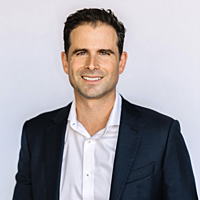
Passionate investor. Founded 5AM Capital (Bondi Beach) following a 15+ year investment career in New York and Sydney with Macquarie and a prominent family office. We invest in the world’s best companies at attractive prices. We look for...
Passionate investor. Founded 5AM Capital (Bondi Beach) following a 15+ year investment career in New York and Sydney with Macquarie and a prominent family office. We invest in the world’s best companies at attractive prices. We look for...
Comments
Comments
Sign In or Join Free to comment