TOL - 17th Mar, 2026
Seven deadly sins of investing: Part 2 - The hot-hand fallacy
We are wired to see patterns in randomness. Sometimes it creates heroes. More often, it destroys capital.
 Add us as a preferred Google source
We continue Plato's seven deadly sins series of investor notes, where we look at behaviours that can quietly and repeatedly destroy wealth.
We know them well. We have committed every one of them, and probably always will. The hope is simple: awareness does not eliminate bias, but it can reduce its influence and improve decision-making.
Our hard-wiring
Humans are hard-wired to search for patterns and impose order on a world that is often chaotic and senseless. Perhaps this springs from a deep desire to feel in control of our lives. Whatever its source, the instinct is powerful enough that we often see structure where none exists.
Consider the following sequences of coin tosses, where H is heads and T is tails.
Which sequence is random, and which is artificial?
Take a moment to study them.
- HHTHTHTTTHHTHTHHTTHTHTHTHTTHTHHTHTHHTTHT
- HTTTTHHHTHHHHHHTTHTHTTTTHTHTHHHTHTHTHTTH
Most people choose the first sequence as random, and the second as artificial, because the second contains too many long runs of consecutive heads and tails.
In fact, the opposite is true: sequence (1) is artificial, while sequence (2) came from a fair coin.
Our intuition about randomness is remarkably poor. We expect it to look more orderly, and more evenly mixed, than it really does.
This tendency was famously documented in the classic 1985 cognitive psychology paper, The Hot-Hand in Basketball: On the Misperception of Random Sequences.
The hot-hand fallacy
Who among us has not watched a game and become convinced that a player is “on fire” and simply cannot miss? Studying hundreds of NBA games, the authors found that the probability of a player making the next shot after making a basket was not any different than after a miss.
This became known as the hot-hand fallacy. Since then, similar illusions of streaks have been documented in baseball, tennis, and many other sports.
The key point is that the chance of winning the next point is driven far more by the player’s long-run base rate than by what happened in the previous few moments.
The hot-hand fallacy is just as pervasive in financial markets. Investors often assume that a fund ranked in the top quartile one year is far more likely to remain a top performer the next.
When was the last time you invested in a bottom quartile performing fund?
In reality, there is very little persistence in annual relative performance, as value and growth styles fall in and out of favour.
Arguably the most dangerous version of this mistake is the belief that exceptional revenue and earnings growth can persist for many years. In competitive markets, companies rarely sustain market-beating growth rates for more than a year or two before competition, saturation, and simple mean reversion take hold.
Revenue growth rates rarely last forever
Many years ago, we conducted a simple piece of research that illustrates the folly of extrapolating growth too far into the future.
The chart below shows the performance of an investment strategy that, at the start of each year, buys the global companies with the highest revenue growth rates.
If you had invested $100,000 in that strategy 30 years ago, by the end of 2025 you would have had virtually nothing left.

Why? Because growth rates mean-revert far more quickly than investors expect, while valuations are driven to unsustainable levels by the assumption that recent success will continue indefinitely. Investors do not merely admire growth; they habitually over-extrapolate it.
That is why one of Plato’s 150 Red Flags is a company with extreme growth expectations.
Market darlings with rosy narratives and heroic long-term assumptions can be especially dangerous. When expectations become too optimistic, even very good businesses can become very poor investments.
Current examples include:
-
Guzman y Gomez (ASX: GYG) - forecasting 10,000 stores, the same as McDonalds, in Australia in 20 years time.
-
Tesla (NASDAQ: TSLA) - targeting 10 billion humanoid robots by 2040
-
Atlassian (NYSE: TEAM) - forecast to grow revenue from $5.7b to $11.3b despite the potential for SaaS-apocalypse to erode software moats). All are shorts and/or underweights for Plato Global Alpha.
Read Part 1 or the series here:
.jpg,https://www.livewiremarkets.com/rails/active_storage/representations/proxy/eyJfcmFpbHMiOnsibWVzc2FnZSI6IkJBaHBBMmlQRGc9PSIsImV4cCI6bnVsbCwicHVyIjoiYmxvYl9pZCJ9fQ==--8a61eb51c1e7437e9b3aa28b77f5e785d5bc12e6/eyJfcmFpbHMiOnsibWVzc2FnZSI6IkJBaDdCem9MWm05eWJXRjBPZ2wzWldKd09oTnlaWE5wZW1WZmRHOWZabWxzYkZzSGFRSmtBbWtDV0FFPSIsImV4cCI6bnVsbCwicHVyIjoidmFyaWF0aW9uIn19--dbcf8d7b6290376ca515990a95f79dcba96deb5c/seven-deadly-sins-investing-part-1%20(1).jpg)
Education
Seven deadly sins of investing: Part 1
View
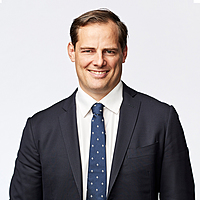
Dr David Allen is Plato Investment Management's Head of Long/Short Strategies and Portfolio Manager of the Plato Global Alpha Fund.
Click here to be taken to the Plato website where you can assess the Fund's performance and other key information.

Managed Fund
Plato Global Alpha Fund
Global Shares
View
ETF
Plato Global Alpha Complex ETF (PGA1)
Global Shares
View
Never miss an update
Enjoy this wire? Hit the ‘like’ button to let us know.
Stay up to date with my current content by
following me below and you’ll be notified every time I post a wire
David has more than two decades’ experience investing in global equities. Prior to joining Plato Investment Management he worked for JP Morgan Asset Management in London for fifteen years becoming one of the youngest managing directors in the firm’s history. He managed the JP Morgan Europe Equity Plus active-extension fund which was closed to new investors after growing to €6 billion, generating 4% p.a. net alpha over ten years. He also launched and managed the JP Morgan Europe Equity Absolute Alpha Market Neutral fund. In its first twelve months of operation, the fund returned over 20%, and grew assets to €1 bn. In 2014 he was the European Hedge Fund Manager of the Year (UCITS).
........
This communication is prepared by Plato Investment Management Limited (‘Plato’) (ABN 77 120 730 136, AFSL 504616) as the investment manager of the Plato Global Net Zero Hedge Fund (ARSN 654 914 048) (‘the Fund’). Pinnacle Fund Services Limited (‘PFSL’) (ABN 29 082 494 362, AFSL 238371) is the product issuer of the Fund. PFSL is not licensed to provide financial product advice. PFSL is a wholly-owned subsidiary of the Pinnacle Investment Management Group Limited (‘Pinnacle’) (ABN 22 100 325 184). The Product Disclosure Statement (‘PDS’) and Target Market Determination (‘TMD’) of the Fund are available via the links below. Any potential investor should consider the PDS and TMD before deciding whether to acquire, or continue to hold units in, the Fund.
Link to the Product Disclosure Statement: https://plato.com.au/wp-content/uploads/Plato-Global-Net-Zero-Hedge-Fund-PDS.pdf
Link to the Target Market Determination: https://plato.com.au/wp-content/uploads/Plato-Global-Net-Zero-Hedge-Fund-TMD.pdf
For historic TMD’s please contact Pinnacle client service Phone 1300 010 311 or Email [email protected]
This communication is for general information only. It is not intended as a securities recommendation or statement of opinion intended to influence a person or persons in making a decision in relation to investment. It has been prepared without taking account of any person’s objectives, financial situation or needs. Any persons relying on this information should obtain professional advice before doing so. Past performance is for illustrative purposes only and is not indicative of future performance.
Whilst Plato, PFSL and Pinnacle believe the information contained in this communication is reliable, no warranty is given as to its accuracy, reliability or completeness and persons relying on this information do so at their own risk. Subject to any liability which cannot be excluded under the relevant laws, Plato, PFSL and Pinnacle disclaim all liability to any person relying on the information contained in this communication in respect of any loss or damage (including consequential loss or damage), however caused, which may be suffered or arise directly or indirectly in respect of such information. This disclaimer extends to any entity that may distribute this communication.
Any opinions and forecasts reflect the judgment and assumptions of Plato and its representatives on the basis of information available as at the date of publication and may later change without notice. Any projections contained in this presentation are estimates only and may not be realised in the future.

1 topic
4 stocks mentioned
2 funds mentioned
David has more than two decades’ experience investing in global equities. Prior to joining Plato Investment Management he worked for JP Morgan Asset Management in London for fifteen years becoming one of the youngest managing directors in the...
Expertise
David has more than two decades’ experience investing in global equities. Prior to joining Plato Investment Management he worked for JP Morgan Asset Management in London for fifteen years becoming one of the youngest managing directors in the...
Expertise
Comments
Comments
Sign In or Join Free to comment