The AI mania hedge: why global listed property deserves a second look
Amid tech disruption & geopolitical uncertainty, the case for adding global REITs to portfolios has rarely been this compelling.
 Add us as a preferred Google source
Global equities have produced spectacular returns in recent years. In comparison, REITs have been a little less exciting.
That relative lag is notable – and it’s very reminiscent of the period during the dotcom boom, when real estate was thought of as an old-world industry. Unloved, overlooked, and left behind while the market chased the new thing.
But when you look under the hood of this ‘old world’ industry, you find something the headlines are missing entirely: the fundamentals are the best they’ve been in years.
Demand is elevated. Supply is constrained. Earnings growth is accelerating. Valuations are discounted. And the industry itself has quietly transformed into something most investors wouldn’t recognise from a decade ago.
Not the REIT index as you might know it
The composition of the global REIT index has changed dramatically over the past six years. The shift demonstrates how the REIT industry adapts to fulfil the needs of the economy.
The office sector (which many investors mistakenly believe is the dominant component of ‘REITs’) has halved from 18% of the index down to 9%.
Notably in the portfolio of the Resolution Capital Global Property Securities Fund – Active ETF (ASX: RCAP), office is only 4%.

ETF
Resolution Capital Global Property Securities Fund – Active ETF (RCAP)
Global Property
View
Meanwhile, data centres have more than tripled from 2% to 7% of the index.
Healthcare REITs have grown from 8% to 13% and the industrial and logistics segment has expanded from 10% of the index to 15% on the back of e-commerce demand.

What this shows is global listed real estate is a very effective way to gain sensible exposure to the structural trends reshaping the economy. And unlike a static thematic bet, the beauty of real estate is that it evolves – as the economy shifts, so does the asset class.
But beyond these interesting benchmark shifts, the key consideration for anyone considering allocating to REITs in 2026, is real estate fundamentals.
Right now, the fundaments have rarely looked better.
The supply-demand setup
Real estate is a simple game. It’s demand versus supply. And right now, the conditions are very good for landlords.
Aggregate demand across the global REIT universe is above its long-term average.
Retail occupancy levels are at 20-year highs, despite the rise of e-commerce and despite the pandemic, when everyone assumed we’d only ever shop online.
Apartments remain strong, with tenants staying put because mortgage rates make it unaffordable to buy. Logistics had a post-pandemic breather but is still tracking above trend.
Office is the outlier on the negative side – which is exactly why Resolution Capital is underweight.

On the other hand, while demand is elevated, supply is moving in the opposite direction. It’s currently below the long-term average and projected to fall to roughly half its historical level.
The reason is straightforward: it’s simply not profitable to build.
Commercial real estate values are still down around 15% from their late-2021 peak. Meanwhile, total replacement cost – construction, land, and financing – is up nearly 40% relative to 2019 levels.

Real estate is trading at a discount to replacement cost. Developers can’t make the numbers work so they’re not building. And when supply stays constrained while demand keeps rising, conditions are ripe for rent growth.
Discounted valuations in a market priced for perfection
This is where the opportunity gets interesting for allocators.
On a P/E basis, REITs are trading a little below their long-term average at a time when global equities are trading well above theirs. So there’s relative safety in listed real estate versus the broader market, even before you factor in accelerating earnings growth.
Then look at public-to-private market values.
In the UK, listed REITs trade at a 27% discount to private market valuations, and those private valuations themselves are already at cyclical lows. For example, in some segments of the UK retail market, private values have been written down by 50–60% from their peaks. And yet the listed vehicles trade at a further discount to those written down values.

The REIT sectors that can’t be ignored
Retail: the comeback nobody expected
Retail real estate might be the single most underappreciated opportunity in the REIT universe today.
Occupancy is at 20-year highs. The post-pandemic e-commerce surge? Its growth rate has actually levelled off below pre-pandemic trends.
Meanwhile, retailers are recognising that a physical store presence, alongside an online channel, is the most cost-effective way to distribute products. It’s expensive to advertise online and deliver to people’s doorsteps.
On the supply side, developers have stayed away from building shopping centres continuously for 17 years. First it was e-commerce fears. Then the pandemic. Now it’s rising construction costs. In the US mall segment, we’re actually seeing net demolitions – negative supply.
One way we’re playing this theme in the Resolution Capital Global Porerty Securities Fund – Active ETF (ASX: RCAP) is through Unibail-Rodamco-Westfield (EPA: URW).
It owns a nearly €50 billion portfolio of flagship shopping malls in key affluent cities across Europe, the UK, and the US. Retailer sales per square foot are 26% above industry peers. Rents are affordable at just 14% of sales. Occupancy is well above 2019 levels. We see EBITDA growth of around 6% per annum over the next three years – and yet it trades on just 10 times earnings and a 6.4% implied cap rate.
For context, a slice of Westfield Sydney sold just before Christmas on a 4.7% cap rate. The value gap is significant.

The ’Westfield Mall of the Netherlands’ in the Hague was created to be the biggest shopping destination in the country. Development completed early 2021. Image: Unibail-Rodamco-Westfield.
Seniors housing: a demographic powerhouse
Nothing in real estate is as predictable as the ageing population. The demand for seniors housing is set to double over the next 15 years. The first baby boomers have already turned 80. And supply is at a cyclical low.
Seniors housing had a terrible time during the pandemic – facilities couldn’t accept new residents. But occupancy has rebounded strongly, and the trajectory points to levels well above the previous peak.
Our preferred way to play this theme is through Welltower (NYSE: WELL), the largest position in our portfolio. Welltower is the leading owner of private-pay seniors housing in the US and the UK, with a fortress balance sheet and 85% exposure to the seniors housing sector. It reported its latest results showing exceptional growth projected for the year ahead. We see at least 15% per annum compound earnings per share growth over the next three years while maintaining a fortress balance sheet – impressive for a real estate company.
Data centres: substance over speculation
Data centres represent about 9% of our portfolio. There’s a lot of speculation in this space right now – newcomers building single-use AI training facilities in rural locations where land is plentiful.
The listed REITs don’t play in that space. They own assets in major urban locations where land is scarce, and with the benefit of low latency, deep connectivity, and a diverse ecosystem of tenants and uses. That’s a fundamentally different business from a speculative, single-purpose facility built for one customer.
We’re confident in the outlook for data centre REITs precisely because they’re the established, high-quality operators – not the speculative fringe.
A simple way to invest in some of the world’s best real estate on the ASX
When you strip away the perception of real estate as an ‘old world’ industry and look at what’s actually happening – elevated demand, constrained supply, accelerating earnings, discounted valuations, and an industry that has quietly repositioned itself towards the secular growth themes of the modern economy – the case for global listed property is as strong as it’s been in years.
In a market that feels increasingly priced for perfection, listed real estate offers something increasingly rare: genuine value, underpinned by real-world fundamentals, with the prospect of meaningful earnings growth ahead.
You can invest in a concentrated portfolio of some of the world’s best property on the ASX via the Resolution Capital Global Property Securities Fund – Active ETF (ASX: RCAP).

Property
The three things to look for when you buy real estate
View
Never miss an update
Enjoy this wire? Hit the ‘like’ button to let us know.
Stay up to date with my current content by
following me below and you’ll be notified every time I post a wire
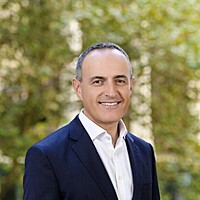
Marco is one of the founding members of Resolution Capital and has over 30 years experience in global financial and property markets. Marco has previously worked as a Senior Valuer at Jones Lang LaSalle and as a Consultant in JLL’s Advisory business where he was involved in valuing and advising institutional clients in regard to commercial real estate portfolios. He also worked as an Equities Research Analyst at BBY, and a Capital Transactions executive at Lend Lease. While at Lend Lease, Marco worked on real estate projects in Japan and Singapore.
........
Resolution Capital Limited ABN: 50 108 584 167 AFSL No. 274491
This communication was prepared by Resolution Capital Limited (“Resolution Capital”). The information in this communication is for general information purposes only. Information in communication is not intended as a securities recommendation or statement of opinion intended to influence a person or persons in making a decision in relation to investment. This communication has been prepared without taking account of any person’s objectives, financial situation or needs, and because of that, reliance should not be placed on the information in this communication as the basis for making an investment, financial or other decision. Any opinions or forecasts reflect the judgment and assumptions of Resolution Capital and its representatives on the basis of information at the date of publication and may later change without notice. Any projections contained in this communication are estimates only and may not be realised in the future. Returns from investments may fluctuate and past performance is not a reliable indicator of future performance. Resolution Capital believes the information contained in this communication is reliable, however no warranty is given as to its accuracy and persons relying on this information do so at their own risk. Unauthorised use, copying, distribution, replication, posting, transmitting, publication, display, or reproduction in whole or in part of the information contained in this communication is prohibited without obtaining prior written permission from Resolution Capital Limited.

4 topics
2 stocks mentioned
1 fund mentioned
Marco is one of the founding members of Resolution Capital and has over 30 years experience in global financial and property markets. Marco has previously worked as a Senior Valuer at Jones Lang LaSalle and as a Consultant in JLL’s Advisory...
Marco is one of the founding members of Resolution Capital and has over 30 years experience in global financial and property markets. Marco has previously worked as a Senior Valuer at Jones Lang LaSalle and as a Consultant in JLL’s Advisory...
Comments
Comments
Sign In or Join Free to comment