The Coming Resources Supercycle: Five Forces Reshaping the Global Economy
 Add us as a preferred Google source
Years of underinvestment, geopolitical competition and changing patterns of global consumption are creating a significant shift in the economics of natural resources. For investors, the next decade could present opportunities well beyond the traditional commodity cycle.
While financial markets remain focused on technology valuations and artificial intelligence, a much broader economic transformation is taking place. Governments are rebuilding supply chains, securing energy supplies and investing in infrastructure, while industrial demand for essential materials continues to evolve.
The result is a growing imbalance between the world's resource requirements and its ability to deliver additional supply.
1. The return of commodity scarcity
Years of limited investment in new mining capacity have left several commodity markets facing ageing operations, declining ore grades and increasingly expensive developments.
Bringing new mines into production can take many years, meaning supply cannot quickly respond when demand accelerates.
This creates an interesting environment for investors.
Companies controlling high-quality, long-life deposits could become increasingly valuable as competition for reliable resources intensifies.
2. Geopolitics is changing the investment landscape
Globalisation is giving way to a greater emphasis on economic independence and supply-chain security.
The United States, Europe and their strategic partners are increasingly looking to diversify critical mineral supplies and reduce dependence on concentrated overseas production.
This is creating opportunities for countries with established mining industries and substantial geological resources.
Australia is particularly well positioned, with significant exposure to iron ore, copper, lithium, uranium, gold and rare earths.

3. Copper and the global infrastructure challenge
Copper could become one of the defining commodities of the next decade.
Electricity networks, transportation, construction, manufacturing and expanding digital infrastructure all require substantial quantities of the metal.
However, declining mine grades, limited discoveries and lengthy development timelines are creating potential supply constraints.
If demand continues to expand faster than production, higher prices may be required to incentivise new investment.
For Australian investors, established producers and well-funded developers offer different ways to gain exposure to this opportunity.
4. Energy security and strategic minerals
Energy security has returned to the forefront of government policy.
Nuclear power, renewable generation, electricity storage and modernised transmission networks are attracting substantial investment. Uranium, lithium, nickel and rare earths are consequently becoming increasingly important to the global industrial landscape.
Defence spending is another emerging demand driver, with advanced military technologies relying on specialised materials and secure mineral supply chains.
The investment opportunity therefore extends beyond traditional commodity demand and increasingly incorporates national security and industrial policy.

5. Gold and the changing financial landscape
Gold offers a different dimension to the resources investment thesis.
Central-bank purchases, geopolitical uncertainty, sovereign debt concerns and diversification of international reserves have strengthened its strategic importance.
Unlike industrial commodities, gold is influenced by monetary conditions and investor confidence as well as physical demand.
For investors, gold producers can provide exposure to a different set of economic drivers and potentially complement industrial commodity holdings.
The investment opportunity for Australia
Australia has an opportunity to strengthen its position as a critical supplier to the global economy.
Beyond traditional mining, the development of domestic processing and refining capabilities could allow the country to capture more value from its resource base.
For Australian Securities Exchange (ASX) investors, opportunities exist across established producers, emerging developers and specialist critical mineral companies.
However, selectivity remains essential. Investors should prioritise asset quality, production costs, balance-sheet strength, realistic development timelines and management's ability to allocate capital effectively.
The lithium market has already demonstrated that attractive long-term demand themes do not guarantee attractive investment returns.

Conclusion: A structural opportunity is emerging
The next resources cycle could be driven by a much broader collection of forces than previous commodity booms.
Industrial rebuilding, electricity demand, defence requirements, geopolitical competition and years of underinvestment are reshaping the global supply and demand equation.
Not every commodity will benefit equally, and not every mining company will create shareholder value.
However, the strategic importance of natural resources is increasing, while the development of new supply is becoming more challenging.
For investors, the opportunity lies in identifying scarce, high-quality assets and companies capable of converting these structural trends into sustainable earnings and long-term returns.
Having spent more than 35 years in the investment industry and witnessed multiple resource cycles first-hand, including through my previous experience managing natural resources UCITS funds, I remain particularly encouraged by the current investment landscape. Now, utilising the Singapore Variable Capital Company (VCC) structure to pursue investment opportunities, I believe the natural resources sector offers an increasingly compelling proposition. The combination of structural demand, constrained supply and shifting geopolitical priorities presents an opportunity that I believe warrants serious consideration from investors.
Natural resources may be entering a period where scarcity, rather than simply economic growth, becomes one of the defining drivers of value.
Never miss an update
Enjoy this wire? Hit the ‘like’ button to let us know.
Stay up to date with my current content by
following me below and you’ll be notified every time I post a wire
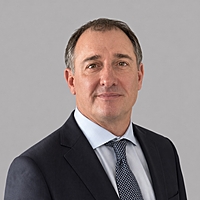
Chief Investment Officer & Director, Janah Capital | Portfolio Manager, ICM Global Funds
Nicholas Boyd-Mathews has more than 35 years of international investment management experience spanning portfolio management, natural resources, institutional asset management, capital markets and corporate finance.
He currently serves as Chief Investment Officer and Director of Janah Capital, where he is responsible for investment strategy, portfolio construction and risk management. He is also a Portfolio Manager at ICM Global Funds, contributing to the firm’s global investment platform and institutional investment
........
The information provided on this website is for use of a general nature only and is not intended to be relied upon as, nor to be suitable for, specific professional advice.
No responsibility for loss occasioned to any persons acting on or refraining from action as a result of any material in this publication can be accepted. Links are provided for your convenience. This does not mean that we endorse, or are associated with those sites and their information.

Never miss an update
Get the latest insights from me in your inbox when they’re published.
5 topics
Chief Investment Officer & Director, Janah Capital | Portfolio Manager, ICM Global Funds Nicholas Boyd-Mathews has more than 35 years of international investment management experience spanning portfolio management, natural resources, institutional...
Chief Investment Officer & Director, Janah Capital | Portfolio Manager, ICM Global Funds Nicholas Boyd-Mathews has more than 35 years of international investment management experience spanning portfolio management, natural resources, institutional...
Comments
Comments
Sign In or Join Free to comment
most popular
Equities
Question everything
Schroders
Equities
The Anthropic IPO is on! We looked under the hood, here are the Red Flags...
Plato Investment Management