TOL - 26th May, 2026
The death of aspiration: how Australia is punishing success and our young people
There is more at stake than the economic future of our country – this is a battle for the very soul of Australia.
 Add us as a preferred Google source
The proposed removal of the capital gains tax discount does not merely change a tax setting. It changes the incentives that underpin entrepreneurship, innovation, investment, and aspiration itself. It sends a message to Australians, particularly younger Australians, that risk-taking and wealth creation are no longer things to be encouraged, but things to be punished.
For decades Australia prospered because people were willing to take risks. Small business owners mortgaged homes, skipped salaries, worked weekends, and sacrificed family time to build companies from nothing. They accepted enormous uncertainty (only 33% of new companies survive ten years) because there was at least the prospect that if they succeeded , they would share meaningfully in the rewards.
Now the government appears determined to move the goalposts.
For many founders and small business owners, removing the CGT discount on exit means they are effectively working for the government two-and-a-half days every week. After years, often decades, of stress and sacrifice, the state simply arrives at the finish line with its hand out for an even larger share of the proceeds.
And let us not romanticise what building a business actually involves. Starting a business is not glamorous. It is blood, sweat, and tears. It is paying yourself last while employees and suppliers are paid first. It is lying awake at night grinding your teeth wondering how you are going to stay afloat. It is risking personal savings, relationships, time with the kids, reputations, and mental health on an uncertain dream.
Yet rather than being celebrated, increasingly small business owners and investors alike are being demonised.
The political narrative today too often treats successful Australians not as contributors to national prosperity, but as convenient revenue sources. The result is obvious: fewer people will take the leap.
Frankly, under these settings, you would need your head read if you started a business in Australia.
This matters because entrepreneurship is not some abstract economic concept. It is the engine room of job creation, productivity growth, and innovation. The next Atlassian, Canva, Cochlear or WiseTech does not emerge from a government department. It emerges because someone decides to take a risk. If you reduce the reward for success while leaving all the risk intact, rational people simply stop trying.
The tragedy is that younger Australians are already under extraordinary pressure. Housing affordability has deteriorated dramatically. Immigration, among other factors, has added substantial demand pressure to already constrained housing supply. Whatever one’s views on migration policy, the arithmetic is undeniable: population growth without sufficient housing construction pushes prices higher.
At the same time, Australia’s tax system increasingly punishes aspiration.
The top marginal income tax rate of 47% kicks in at $190,000. In Sydney, that income is nowhere near enough to comfortably service a mortgage on a property worth even two-thirds of the city’s average house price. Yet this threshold is treated as though it captures only the ultra-wealthy. It does not. Even Labour’s greatest Treasurer, Paul Keating describes the 47% tax rate as “confiscatory”. In the US, the cradle of innovation and growth, the top-rate of 37% kicks in at USD $640,000. In China, the top rate is 45% kicking in at $210,000 putting us to the left of our communist friends to the north!
The punitive 47% rate captures everyday people, professionals, business owners, and dual-income families trying to get ahead.
So the strivers among our younger generations adapted. They looked elsewhere to build a deposit. Shares. ETFs. Managed funds. Crypto. Long-term investing became one of the few remaining ladders of social mobility available to ordinary Australians locked out of housing markets. And now even that ladder is being yanked up in front of their eyes.
The message being delivered is stark: work harder, save more, invest prudently, and we will simply tax more of the outcome away.
One is reminded of Ronald Reagan’s famous line: “If it moves, tax it. If it keeps moving, regulate it. And if it stops moving, subsidise it.”
Humour aside, there is an uncomfortable truth embedded in that quote.
Australia does not have a revenue problem. Australia has a spending problem. Government spending has surged from roughly 21% of GDP in 2014 to closer to 28% today. That is an extraordinary expansion in the size of government relative to the productive economy. Every dollar absorbed by government is a dollar that cannot be invested by the private sector into businesses, technology, infrastructure, or innovation. Milton Friedman might have quipped, if you put the federal government in charge of Bondi Beach, in five years there would be a shortage of sand. Excessive public spending crowds out private investment and fuels inflationary pressures that are already battering Australian families through higher living costs, rents, and mortgage repayments. Another Friedmanism: “inflation is taxation without legislation”. And once spending reaches these levels, governments inevitably search for new pools of capital to tax. Today it is investors, entrepreneurs, and death taxes. Tomorrow it will be our primary residence.
The deeper issue is cultural. Nations become wealthier when they reward ambition, thrift, risk-taking, and innovation. They stagnate when success becomes politically unpopular and the private sector is viewed primarily as a funding mechanism for ever-expanding government.
As Margaret Thatcher famously observed: “The problem with socialism is that eventually you run out of other people’s money.”
Australia is not yet on the edge. But policies like these move us ever closer.
The danger is not merely slower economic growth. It is something more corrosive: the gradual destruction of belief among younger Australians that effort and sacrifice will be rewarded.
And once a country loses that belief, it loses far more than tax revenue.
This morning, I implored my Federal MP to fight these changes. If enough Australians, particularly those in marginal seats, do the same, perhaps there is still a chance to staunch the bleeding before lasting damage is done to jobs, investment, innovation, and aspiration in this country.
Never miss an update
Enjoy this wire? Hit the ‘like’ button to let us know.
Stay up to date with my current content by
following me below and you’ll be notified every time I post a wire
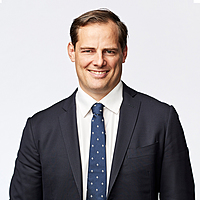
David has more than two decades’ experience investing in global equities. Prior to joining Plato Investment Management he worked for JP Morgan Asset Management in London for fifteen years becoming one of the youngest managing directors in the firm’s history. He managed the JP Morgan Europe Equity Plus active-extension fund which was closed to new investors after growing to €6 billion, generating 4% p.a. net alpha over ten years. He also launched and managed the JP Morgan Europe Equity Absolute Alpha Market Neutral fund. In its first twelve months of operation, the fund returned over 20%, and grew assets to €1 bn. In 2014 he was the European Hedge Fund Manager of the Year (UCITS).
........
This communication is prepared by Plato Investment Management Limited (‘Plato’) (ABN 77 120 730 136, AFSL 504616) as the investment manager of the Plato Global Alpha Fund (ARSN 654 914 048) (‘the Fund’). Pinnacle Fund Services Limited (‘PFSL’) (ABN 29 082 494 362, AFSL 238371) is the product issuer of the Fund. PFSL is not licensed to provide financial product advice. PFSL is a wholly-owned subsidiary of the Pinnacle Investment Management Group Limited (‘Pinnacle’) (ABN 22 100 325 184). The Product Disclosure Statement (‘PDS’) and Target Market Determination (‘TMD’) of the Fund are available via the links below. Any potential investor should consider the PDS and TMD before deciding whether to acquire, or continue to hold units in, the Fund.
Link to the Product Disclosure Statement
Link to the Target Market Determination
For historic TMD’s please contact Pinnacle client service Phone 1300 010 311 or Email [email protected]
This communication is for general information only. It is not intended as a securities recommendation or statement of opinion intended to influence a person or persons in making a decision in relation to investment. It has been prepared without taking account of any person’s objectives, financial situation or needs. Any persons relying on this information should obtain professional advice before doing so. Past performance is for illustrative purposes only and is not indicative of future performance.
Whilst Plato, PFSL and Pinnacle believe the information contained in this communication is reliable, no warranty is given as to its accuracy, reliability or completeness and persons relying on this information do so at their own risk. Subject to any liability which cannot be excluded under the relevant laws, Plato, PFSL and Pinnacle disclaim all liability to any person relying on the information contained in this communication in respect of any loss or damage (including consequential loss or damage), however caused, which may be suffered or arise directly or indirectly in respect of such information. This disclaimer extends to any entity that may distribute this communication.
Any opinions and forecasts reflect the judgment and assumptions of Plato and its representatives on the basis of information available as at the date of publication and may later change without notice. Any projections contained in this presentation are estimates only and may not be realised in the future.
Unauthorised use, copying, distribution, replication, posting, transmitting, publication, display, or reproduction in whole or in part of the information contained in this communication is prohibited without obtaining prior written permission from Plato. Pinnacle and its associates may have interests in financial products and may receive fees from companies referred to during this communication.

4 topics
David has more than two decades’ experience investing in global equities. Prior to joining Plato Investment Management he worked for JP Morgan Asset Management in London for fifteen years becoming one of the youngest managing directors in the...
Expertise
David has more than two decades’ experience investing in global equities. Prior to joining Plato Investment Management he worked for JP Morgan Asset Management in London for fifteen years becoming one of the youngest managing directors in the...
Expertise
Comments
Comments
Sign In or Join Free to comment