The rise of the family office: The new power players in global capital markets
Family offices can be attractive prospective investors because some have greater flexibility than traditional institutional allocators.
 Add us as a preferred Google source
Family offices are becoming an increasingly influential force in global investment markets. Driven by entrepreneurial wealth creation, intergenerational transfers and demand for greater control over capital, these private investment organisations are reshaping how wealthy families invest.
Singapore is emerging as one of the world's leading family office centres, creating opportunities for investment managers across public equities, private equity, private credit and specialist investment strategies.
A global industry in expansion
Deloitte Private's Defining the Family Office Landscape 2024 estimated that the number of single-family offices worldwide increased from 6,130 in 2019 to 8,030 in 2024. Deloitte projected that this figure could reach 10,720 by 2030.
The associated wealth of families served by these offices was estimated at US$5.5 trillion in 2024, potentially rising to US$9.5 trillion by 2030.
This expansion reflects a structural change in wealth management. Entrepreneurs, business owners and investors increasingly want dedicated investment organisations capable of managing assets across multiple markets and generations.
Unlike conventional private banking relationships, family offices can combine portfolio management, direct investments, external fund selection, risk management and succession planning within a single organisation.
For fund managers, the growth of this sector represents an expanding potential source of investment capital.

Singapore's growing importance
Singapore has become a major international centre for family wealth, supported by its political stability, established financial services industry, international connectivity and access to Asian investment opportunities.
According to Singapore's Monetary Authority, more than 2,000 single-family offices were receiving tax incentives in Singapore at the end of December 2025.
This compares with approximately 400 offices receiving tax incentives in 2020, illustrating the rapid expansion of the sector.
Singapore's wider asset management industry reached S$6.7 trillion in assets under management in 2025. This figure relates to the overall asset management industry, rather than family offices alone.
For wealthy families, Singapore offers a base from which to coordinate international investments. For investment managers, it provides access to a growing community of entrepreneurs, private investors and professionally managed pools of capital.
Not every family requires a fully staffed investment office. Some use multi-family offices or external advisers, while larger organisations employ dedicated investment professionals and operate with institutional-style governance.
How Asian family offices invest
Family office portfolios increasingly combine traditional investments with alternative assets.
Deloitte's 2024 research found that Asia-Pacific family offices allocated approximately 25% of their portfolios to equities, 21% to private equity and private debt or lending, 19% to real estate and 19% to fixed income in 2023.
UBS research also highlights differences between regional investment approaches.
Its 2025 Global Family Office Report found that alternative investments represented approximately 40% of North Asian family office portfolios, compared with 31% in Southeast Asia.
Private equity represented approximately 15% of North Asian portfolios and 11% in Southeast Asia. Private debt accounted for approximately 6% of Southeast Asian portfolios.
These figures illustrate the importance of alternatives, while demonstrating that investment preferences differ across markets.
Singapore-based family offices should not automatically be regarded as investors focused exclusively on Southeast Asia. Many allocate internationally, seeking opportunities across North America, Europe, Australia and Asia-Pacific.
The UBS Global Family Office Report 2026 also identified significant interest in changing strategic asset allocations. Eighty-one per cent of surveyed Southeast Asian family offices planned to change their strategic allocations over the following 12 months.
Artificial intelligence, power, resources and infrastructure featured among the investment themes attracting attention.
For specialist investment managers, these developments create potential opportunities, although thematic interest does not guarantee capital commitments.
Private markets and the opportunity for emerging managers
Private markets are an important consideration for family offices seeking diversification and access to investments beyond listed securities.
Opportunities include private equity, venture capital, private credit, infrastructure, real estate and direct investments in operating businesses.
Private equity allows families to invest in individual companies or obtain diversified exposure through external funds. Co-investments alongside established managers can provide access to specific transactions.
Private credit offers exposure to privately negotiated lending arrangements, potentially providing contractual income and diversification. However, investors must assess borrower quality, security, leverage, liquidity and default risks.
Venture capital provides access to emerging businesses and technologies but involves substantial uncertainty and potentially long investment horizons.
Infrastructure and natural resources may also attract attention as investment in data centres, electrification, power generation and energy infrastructure expands.
For emerging fund managers, the opportunity lies in identifying family offices whose investment objectives align with a particular strategy.
A family with experience in mining or commodities may be interested in specialist resource investments. Another may prioritise global equities, private credit or technology-related opportunities.
However, family offices are not a homogeneous investor group. Some employ experienced investment teams and rigorous due diligence processes. Others rely on external advisers, private banks and established professional networks.

Will family offices invest with emerging managers?
Family offices can be attractive prospective investors because some have greater flexibility than traditional institutional allocators.
Depending on their investment policies, they may consider specialist strategies, smaller funds, direct investments and co-investments.
Nevertheless, there is no universal allocation percentage for external fund managers. A family office may invest in private equity through external funds, direct holdings or co-investments, while managing its listed equities internally or through separately managed accounts.
Consequently, an allocation to an asset class should not be confused with an allocation to external managers.
Emerging managers must demonstrate a credible investment process, an experienced team, transparent performance reporting and robust risk management.
They should also explain how their strategy fits within a family's existing portfolio, including its contribution to diversification, liquidity and overall risk.
A compelling investment proposition is not simply about promising attractive returns. It must demonstrate why the strategy deserves a place in the investor's portfolio.
Singapore's opportunity
Singapore's expanding family office ecosystem creates opportunities for established and emerging investment managers.
The combination of international capital, professional investment infrastructure and regional market access makes the city an attractive location for connecting private wealth with investment opportunities.
For managers, the most effective approach is to identify families whose investment interests genuinely align with their strategies rather than treating every family office as a potential investor.
This requires research, targeted introductions and an understanding of each family's objectives, existing investments and approach to external managers.
Operational credibility is equally important. Governance, reporting, liquidity terms and due diligence arrangements can be decisive factors when an investor evaluates an emerging manager.

Looking ahead
The rise of the family office reflects a broader transformation in how private wealth is organised, invested and transferred across generations.
As entrepreneurial fortunes expand and families professionalise their investment operations, family offices are likely to play an increasingly important role in global capital markets.
For Singapore, the opportunity is to strengthen its position as an international centre for private wealth and investment management.
For fund managers, the opportunity spans listed equities, private equity, private credit, infrastructure, natural resources and other specialist strategies.
Success will depend on understanding how family offices operate, identifying genuine investment alignment and demonstrating the expertise required to manage capital responsibly.
Family offices are no longer simply an extension of private banking. They are increasingly sophisticated investment organisations in their own right, with the potential to influence capital allocation across global markets.
Never miss an update
Enjoy this wire? Hit the ‘like’ button to let us know.
Stay up to date with my current content by
following me below and you’ll be notified every time I post a wire
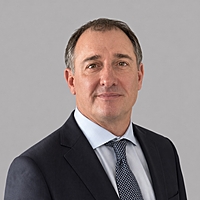
Chief Investment Officer & Director, Janah Capital | Portfolio Manager, ICM Global Funds
Nicholas Boyd-Mathews has more than 35 years of international investment management experience spanning portfolio management, natural resources, institutional asset management, capital markets and corporate finance.
He currently serves as Chief Investment Officer and Director of Janah Capital, where he is responsible for investment strategy, portfolio construction and risk management. He is also a Portfolio Manager at ICM Global Funds, contributing to the firm’s global investment platform and institutional investment
........
The information provided on this website is for use of a general nature only and is not intended to be relied upon as, nor to be suitable for, specific professional advice.
No responsibility for loss occasioned to any persons acting on or refraining from action as a result of any material in this publication can be accepted. Links are provided for your convenience. This does not mean that we endorse, or are associated with those sites and their information.

Never miss an update
Get the latest insights from me in your inbox when they’re published.
5 topics
Chief Investment Officer & Director, Janah Capital | Portfolio Manager, ICM Global Funds Nicholas Boyd-Mathews has more than 35 years of international investment management experience spanning portfolio management, natural resources, institutional...
Chief Investment Officer & Director, Janah Capital | Portfolio Manager, ICM Global Funds Nicholas Boyd-Mathews has more than 35 years of international investment management experience spanning portfolio management, natural resources, institutional...
Comments
Comments
Sign In or Join Free to comment
most popular
Education
Why Chris Bowen is mistaken about solar and wind power
Leithner & Company Ltd