TOL - 11th Aug, 2026
There are only a few things you can control in markets. Vanguard is obsessed with them
As markets become increasingly speculative, Vanguard's Duncan Burns explains why diversification, discipline and patience still matter most.
 Add us as a preferred Google source
Please note, this interview was recorded Thursday 23 July, 2026
At Berkshire Hathaway's annual meeting in May, Warren Buffett commented that the stockmarket is like "a church with a casino attached" and that he'd "never seen people in a more gambling mood than now".
In a similar vein, Macquarie's Viktor Shvets has long discussed "hyperfinancialisation", in which the growth of financial assets (derivatives, options, etc.) far outstrips that of real assets.
It's not hard to see these things around us. Leveraged products are fashionable again and, let's face it, many of us were tempted by the SpaceX IPO. What is harder, and increasingly important, is to refrain from such adventures and remind ourselves of what we can control.
When it comes to investing, there are only two things we can control: how much risk we take, and how much we pay to take that risk. To believe anything else is to kid oneself.
Against that backdrop, it was refreshing to sit down with Vanguard Chief Investment Officer for APAC, Duncan Burns. Deeply embedded in Vanguard's DNA, thanks to founder Jack Bogle, is a focus on low cost, diversification, balance and discipline. But perhaps that philosophy is best captured in the following observation from Burns:
"Every investor needs a quality investment framework or philosophy to ground themselves. That is how you make decisions, particularly when markets become difficult."
In this interview, Burns explains why strategic asset allocation remains the most important decision investors make, how Vanguard's partnership with Lonsec blends active and passive investing into a scalable solution, why preparing for markets is more effective than trying to predict them, and what continues to set Vanguard apart in an increasingly crowded investment landscape.

Interview summary
Asset allocation comes first
Burns argues that better outcomes begin with matching a portfolio to an investor's goals rather than trying to predict markets. He says Vanguard's four investment principles all stem from that starting point.
"Job one is figure out what your goals are and match that to your asset allocation."
From there, he explains why diversification, low cost, low turnover and tax efficiency remain the biggest drivers of long-term returns, before introducing the core-satellite framework as a practical way to combine broad market exposure with higher-conviction active ideas.
Why advisers matter more than ever
One of the more interesting observations from Burns relates to the role of advisers.
Drawing on Vanguard's Advisors' Alpha research, he says around 80% of the value advisers create comes from planning, behavioural coaching and tax advice, while only around 20% comes from investment decisions.
Initially, Burns admits he found that conclusion confronting.
"As a CIO and someone who's dedicated my life's work to investments, I was kind of insulted by the seeming lack of importance there at the 20%."
However, he says the industry has evolved to the point where strong investment implementation is now expected, allowing advisers to spend more time on the areas where clients receive the greatest benefit.
A partnership designed to free up advisers
That philosophy sits behind Vanguard's recently launched Core Satellite Model Portfolios, developed in partnership with Lonsec Investment Solutions (LIS).
Rather than asking advisers to research, monitor and rebalance portfolios themselves, Burns says the new offering combines Vanguard's expertise in strategic asset allocation, portfolio construction and indexing with Lonsec's active manager research.
"What I really think advisers are going to love about this is it's a complete portfolio. The parts complement each other really well. No duplicates, no gaps."
The objective, he says, is to provide a scalable solution that lets advisers outsource portfolio management while spending more time with clients.
Prepare, don't predict
Perhaps the strongest message throughout the interview is Burns' belief that investors should resist the temptation to forecast markets.
He argues that many investors believe successful investing requires accurately predicting economic outcomes, sector rotations or individual stock winners. Decades of academic research, he says, suggest otherwise.
"The key is distinguishing between adapting and reacting."
Instead, Burns encourages investors to focus on the decisions they can control.
"Long-term success is about capturing market returns. You cannot predict the markets, but you can prepare."
For investors concerned about elevated technology valuations or the excitement surrounding artificial intelligence, he says the answer is not to guess when markets might turn, but to revisit their strategic asset allocation and ensure it still matches their risk tolerance.
Trust over trends
Burns concludes by returning to Vanguard's founding principles.
As financial markets become increasingly crowded with leveraged products, prediction markets, cryptocurrencies and social media-driven investing, he believes the distinction between investing, speculation and gambling is becoming increasingly blurred.
Against that backdrop, Vanguard remains focused on solving genuine investor problems rather than chasing the latest investment trend.
"It is not about what is hot and exciting. It is about solving real investor problems and driving great outcomes for them."
For Burns, that philosophy ultimately comes back to the structure Jack Bogle established more than 50 years ago.
As a client-owned organisation, he says Vanguard exists to improve investor outcomes, not maximise shareholder profits, a distinction he believes continues to shape every investment decision the firm makes.
Helping advisers focus on what matters most
In today's increasingly unpredictable markets, Vanguard CIO Duncan Burns explores the enduring investment principles that help advisers support client outcomes and build more scalable advice businesses.
Never miss an update
Enjoy this wire? Hit the ‘like’ button to let us know.
Stay up to date with my current content by
following me below and you’ll be notified every time I post a wire
My passion is equity research, portfolio construction, and investment education. There are some powerful processes that can help all investors identify great opportunities and outperform the market, and I want to bring them to life and share them with you.
........
Livewire gives readers access to information and educational content provided by financial services professionals and companies ("Livewire Contributors"). Livewire does not operate under an Australian financial services licence and relies on the exemption available under section 911A(2)(eb) of the Corporations Act 2001 (Cth) in respect of any advice given. Any advice on this site is general in nature and does not take into consideration your objectives, financial situation or needs. Before making a decision, please consider these and any relevant Product Disclosure Statement. Livewire has commercial relationships with some Livewire Contributors.
Vanguard Investments Australia Ltd (ABN 72 072 881 086 / AFS Licence 227263) (Vanguard) is the Portfolio Manager of the Vanguard Core-Satellite Model Portfolios (Portfolios). Lonsec Investment Solutions Pty Ltd (LIS) (ABN 95 608 837 583) is engaged to provide investment advisory services in relation to the Portfolios. LIS is a Corporate Authorised Representative (CAR) of Evidentia Financial Services Pty Ltd (ABN 97 664 546 525 / AFS Licence 546217).
The Vanguard Group, Inc. is owned by its U.S.-domiciled funds, which are owned by their shareholders. Vanguard Investments Australia is a wholly owned subsidiary of the Vanguard Group Inc.

4 topics
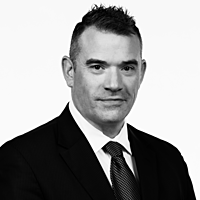
My passion is equity research, portfolio construction, and investment education. There are some powerful processes that can help all investors identify great opportunities and outperform the market, and I want to bring them to life and share them...
Expertise
My passion is equity research, portfolio construction, and investment education. There are some powerful processes that can help all investors identify great opportunities and outperform the market, and I want to bring them to life and share them...
Expertise
Comments
Comments
Sign In or Join Free to comment