
TOL - 4th Feb, 2026
This ain’t junk! Why GYG’s Steven Marks refuses to compromise on quality
Steven Marks on building Guzman y Gomez, refusing to compromise on quality, and why the US is the next major test.
 Add us as a preferred Google source

Steven Marks did not come to Australia to build a fast food empire. When he arrived from Wall Street in his early 30s, his ambitions were far less defined. What he did know was that he wanted to build something tangible, something that would last, and something he could feel proud of.
Marks had already built a formidable career. After graduating from the University of Pennsylvania, he joined SAC Capital and worked closely with hedge fund legend Steve Cohen during the firm’s early years. It was an education in discipline, probability and emotional control, and one that continues to shape how Marks thinks about decision-making.
In this episode of Success and More Interesting Stuff, I speak with Guzman y Gomez co-founder Steven Marks about leaving Wall Street, pushing through years of losses, refusing to compromise on quality, and why the US looms as the next major test for GYG.
You can listen to the full conversation via the podcast player below.
From Wall Street to Australia
Working under Cohen left a deep impression on Marks. The environment was intense, competitive and unforgiving. It also demanded clarity of thought and emotional detachment.
“What I learned from Stevie was discipline, probability, risk-reward, and the importance of not being emotionally attached. You only pray for family and friends, never stocks.”
Yet for all the lessons markets provided, Marks came to a realisation that surprised him.
“I loved the competitiveness and the intensity, but I didn’t feel like I was building anything.”
By his late 20s, he knew finance would not be his life’s work. Australia offered distance from the familiar and the space to rethink what success looked like.
An idea built on obsession with detail
The idea for Guzman y Gomez did not arrive overnight. After years trying different ventures, Marks kept coming back to the same frustration. The quality of Mexican food in Australia did not reflect what he had grown up with.
When the first GYG store opened in Newtown in 2006, Marks set out to do things properly. He imported chillies, brought chefs from Mexico, and surrounded himself with people who understood the cuisine. What he did not have was traction.
Sales were thin and losses mounted. Expansion only increased the pressure. At one point, the business was losing around $30,000 a week. Marks was not paying himself and every dollar went back into keeping the doors open.
What never changed was his refusal to cut corners.
“I just remember looking in the mirror and saying I will never compromise on the quality of the food or my people. Ever.”
That principle became the foundation of the business.
“If I go out of business, then so be it. But I’m not going out of business because I compromised.”
Progress came slowly. Then it started to compound. Repeat customers returned. Lunch periods improved. Individual stores began to break even. To Marks, these were signs that the model was working, even if the numbers were still fragile.
Relentless execution and the right partners
The turning point came when GYG attracted backing from some of Australia’s most experienced fast food operators, including Peter Ritchie and Steve Jermyn, key figures behind McDonald’s Australia.
Marks was drawn less to their capital than to their systems, discipline and understanding of scale. At the same time, he was clear about what was non-negotiable.
They could help with franchising, real estate and process. The food and the people were not up for debate.
As the business expanded into Queensland, early franchise partners delivered volumes well beyond what the Sydney stores had achieved. From that point, GYG began to look less like a niche concept and more like a platform.
As scale increased, so did Marks’ ambition to redefine what fast food could be.
“Traditional fast food is not food. As a food company, you have a responsibility to serve real food.”
The introduction of drive-through restaurants was controversial internally, but proved to be a pivotal decision. It forced the business to rethink kitchen design, speed and technology. Free-range chicken followed, reinforcing the idea that value and quality did not need to be mutually exclusive.
Building for the long term
That philosophy carried through to GYG’s partnership with TDM Growth Partners. Marks was clear he did not want short-term capital or a private equity mindset.
What appealed was TDM’s experience working alongside founders and its willingness to think long-term.
“They worked with founders and thought long-term. That mattered to me.”
The partnership helped professionalise the business, strengthen systems and ultimately paved the way for GYG’s ASX listing in 2024. While the share price has fluctuated since, Marks remains focused on operating performance rather than market noise, a mindset shaped by his earlier career in finance.
The US as the next test
For Marks, the United States represents both a return home and the most important test of the GYG model.
Scepticism is common. Launching a Mexican food business in America is often described as taking sand to the beach. Marks hears it regularly. He disagrees.
GYG is not trying to replicate local taquerias, nor is it positioning itself as another Chipotle. Instead, it is aiming to deliver fresh food, operational speed and consistency across breakfast, lunch and dinner, including drive-throughs.
“There’s nobody doing what we do in the US, across breakfast, lunch and dinner, through drive-throughs.”
Marks believes the size of the US market creates opportunity. Large populations support mediocrity. The opening lies in delivering quality at scale, at the right price, with the right systems behind it.
GYG currently operates a small but growing footprint in Chicago, with a measured rollout planned over the next few years. Metrics matter. Stores must perform before expansion accelerates. Growth for its own sake is not the objective.
There is also a cultural element. Having been away for more than two decades, Marks approaches the US with humility rather than confidence.
“There’s no arrogance. We’re taking our time and getting it right.”
Operationally, he believes the business is better prepared than ever. The systems, technology and supply chains built in Australia are transferable. The question is how the story is told. In Australia, the message focused on trust and clean food. In the US, flavour and value may lead.
Marks will spend extended time on the ground, working directly with teams and fine-tuning execution. He knows it will take time. He is comfortable with that.
What he is not comfortable with is diluting the principles that got the business this far.
“The minute you compromise, then you don’t deserve to win.”
Listen to more episodes

Education
Gold, AI and the risks investors can’t ignore heading into 2026
View
.jpg,https://www.livewiremarkets.com/rails/active_storage/representations/proxy/eyJfcmFpbHMiOnsibWVzc2FnZSI6IkJBaHBBNm9BRGc9PSIsImV4cCI6bnVsbCwicHVyIjoiYmxvYl9pZCJ9fQ==--e7a1575e378d56ae57178067f8f7834bbf1a36dc/eyJfcmFpbHMiOnsibWVzc2FnZSI6IkJBaDdCem9MWm05eWJXRjBPZ2wzWldKd09oTnlaWE5wZW1WZmRHOWZabWxzYkZzSGFRSmtBbWtDV0FFPSIsImV4cCI6bnVsbCwicHVyIjoidmFyaWF0aW9uIn19--dbcf8d7b6290376ca515990a95f79dcba96deb5c/SAMIS-Mark-Landau_Primary%20(1).jpg)
Equities
Mark Landau's best investment decision
View

Education
Alexis George: Rebuilding AMP
View
Never miss an update
Enjoy this wire? Hit the ‘like’ button to let us know.
Stay up to date with my current content by
following me below and you’ll be notified every time I post a wire
Matthew is the Principal and Portfolio Manager at Centennial Asset Management. Prior to this, Matthew was the CIO at Wilson Asset Management between 1998 and 2011, achieving 18% p.a. over the period.
........
Livewire gives readers access to information and educational content provided by financial services professionals and companies ("Livewire Contributors"). Livewire does not operate under an Australian financial services licence and relies on the exemption available under section 911A(2)(eb) of the Corporations Act 2001 (Cth) in respect of any advice given. Any advice on this site is general in nature and does not take into consideration your objectives, financial situation or needs. Before making a decision please consider these and any relevant Product Disclosure Statement. Livewire has commercial relationships with some Livewire Contributors.

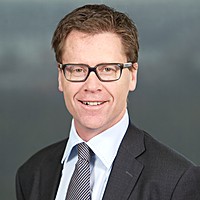
Matthew is the Principal and Portfolio Manager at Centennial Asset Management. Prior to this, Matthew was the CIO at Wilson Asset Management between 1998 and 2011, achieving 18% p.a. over the period.
Expertise
Matthew is the Principal and Portfolio Manager at Centennial Asset Management. Prior to this, Matthew was the CIO at Wilson Asset Management between 1998 and 2011, achieving 18% p.a. over the period.
Expertise
Comments
Comments
Sign In or Join Free to comment
most popular
Shares
Are Australia’s highest dividend companies worth buying?
Livewire Markets