TOL - 16th Sep, 2026
18 red flags: why we shorted a stock that had risen 872% & the $600m wipeout.
Multiple company name changes was one of the key red flags.
 Add us as a preferred Google source
It was 9:59 am on Wednesday, 9 September. The market was one minute from opening, and my leg was bouncing nervously under my desk.
Two days earlier, six minutes before the opening bell, our largest short position, where we profit when a share price falls, had requested a trading halt.
The company was EchoIQ (ASX: EIQ). Its shares had rocketed 872% in the nine months before we opened our position in early July. Now trading was halted pending an eagerly awaited update on FDA approval for its AI software designed to help identify heart failure.
If the news was good, the stock could rocket higher again, taking some of our fund's capital with it.
But we had good reason to be sceptical.
Four name changes, eighteen red flags
EchoIQ triggered 18 of our proprietary Red Flags, the highest count among more than 500 Australian companies in our investment universe. And with a market value of around $1 billion on $100k of revenue, EchoIQ made SpaceX look like a deep value stock.
One of those red flags was particularly interesting: the company had changed its name four times.
Repeated name changes should make investors curious. Sometimes a company is trying to distance itself from a chequered history. Sometimes it is reinventing itself to embrace the latest hot theme.
Facebook, for example, renamed itself Meta Platforms at the height of the metaverse frenzy, then shed around 70% of its market value over the following twelve months.
On April 15 this year, Allbirds, a struggling purveyor of woollen sneakers announced it was pivoting into AI compute infrastructure. The market reaction was extraordinary, with the share price rising 582% that day.
Our research suggests investors are right to be wary. The chart below shows that companies changing their names four or more times over the preceding decade have, on average, been horrible investments, underperforming the market by around 20% a year.

Incidentally, I have three young daughters and, in my spare time, have been working on a Red Flags model for potential boyfriends.
Historic name changes are definitely near the top of the list. If anyone is interested, I may turn it into a software-as-a-service business.
EchoIQ's corporate history
It first listed on the ASX as Sentosa Mining, a minerals explorer focused on gold and copper. It subsequently became Parmelia Resources, then Veriluma, then Houston We Have Ltd (we had to check this name it seems so bizarre, presumably a reference to the ill-fated Apolo 13 mission?), before finally emerging as EchoIQ.

ETF
Plato Global Alpha Complex ETF (PGA1)
Global Shares
View
Managed Fund
Plato Global Alpha Fund
Global Shares
View
In 2021, Houston We Have Ltd acquired Alerte Echo IQ for only around $2.5 million upfront, including just $1 million in cash, and pivoted towards using artificial intelligence to identify structural heart disease.
The transformation from mining explorer to AI healthcare company has an interesting historical echo.
The “gold to silicon” trap
During the late-1990s technology bubble, languishing Australian mining companies discovered that becoming internet companies could work wonders for their share prices.
Golden Hills Mining became Davnet. Welcome Stranger Mining became CommSecure. Walhalla Mining became Walhalla.com and then Kidz.net.
Academics later dubbed the phenomenon "gold to silicon." Investors who chased many of those transformations discovered that changing the story was considerably easier than changing the economics.
So, back to 9:59am.
The previous afternoon, EchoIQ had announced that the FDA had issued a Not Substantially Equivalent determination for the company's heart-failure technology. In simple terms, the eagerly anticipated regulatory approval had not arrived.
10:00 am. The market opened.
EchoIQ plunged from its pre-halt price of $1.28 to around 53 cents, wiping roughly $600 million from its market value almost instantly.

For investors who had bought into the story, it was brutal.
For us, it was a reminder of why we built our Red Flags model in the first place. No single warning sign tells you a company will fail. But when enough of them begin flashing at once, history suggests it pays to take notice.
In EchoIQ's case, 18 were flashing, not least the four name changes.
What’s the biggest red flag you’ve spotted in a company’s history? Let me know in the comments.
Get more information on the Plato Global Alpha Fund - Complex ETF (ASX: PGA1)
EchoIQ was a short position in the Plato Global Alpha Fund. The long/short global equities strategy is accessible on the ASX via the Plato Global Alpha Complex ETF (ASX: PGA1).
The Plato Global Alpha Fund has delivered +23.36% p.a. since inception on 1 September 2021 (to 31 August 2026). Click here to learn more.
Never miss an update
Enjoy this wire? Hit the ‘like’ button to let us know.
Stay up to date with my current content by
following me below and you’ll be notified every time I post a wire
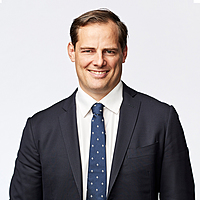
David has more than two decades’ experience investing in global equities. Prior to joining Plato Investment Management he worked for JP Morgan Asset Management in London for fifteen years becoming one of the youngest managing directors in the firm’s history. He managed the JP Morgan Europe Equity Plus active-extension fund which was closed to new investors after growing to €6 billion, generating 4% p.a. net alpha over ten years. He also launched and managed the JP Morgan Europe Equity Absolute Alpha Market Neutral fund. In its first twelve months of operation, the fund returned over 20%, and grew assets to €1 bn. In 2014 he was the European Hedge Fund Manager of the Year (UCITS).
........
This communication is prepared by Plato Investment Management Limited (‘Plato’) (ABN 77 120 730 136, AFSL 504616) as the investment manager of the Plato Global Alpha Fund (ARSN 654 914 048) (‘the Fund’). Pinnacle Fund Services Limited (‘PFSL’) (ABN 29 082 494 362, AFSL 238371) is the product issuer of the Fund. PFSL is not licensed to provide financial product advice. PFSL is a wholly-owned subsidiary of the Pinnacle Investment Management Group Limited (‘Pinnacle’) (ABN 22 100 325 184). The Product Disclosure Statement (‘PDS’) and Target Market Determination (‘TMD’) of the Fund are available via the links below. Any potential investor should consider the PDS and TMD before deciding whether to acquire, or continue to hold units in, the Fund.
Link to the Product Disclosure Statement
Link to the Target Market Determination
For historic TMD’s please contact Pinnacle client service Phone 1300 010 311 or Email [email protected]
This communication is for general information only. It is not intended as a securities recommendation or statement of opinion intended to influence a person or persons in making a decision in relation to investment. It has been prepared without taking account of any person’s objectives, financial situation or needs. Any persons relying on this information should obtain professional advice before doing so. Past performance is for illustrative purposes only and is not indicative of future performance.
Whilst Plato, PFSL and Pinnacle believe the information contained in this communication is reliable, no warranty is given as to its accuracy, reliability or completeness and persons relying on this information do so at their own risk. Subject to any liability which cannot be excluded under the relevant laws, Plato, PFSL and Pinnacle disclaim all liability to any person relying on the information contained in this communication in respect of any loss or damage (including consequential loss or damage), however caused, which may be suffered or arise directly or indirectly in respect of such information. This disclaimer extends to any entity that may distribute this communication.
Any opinions and forecasts reflect the judgment and assumptions of Plato and its representatives on the basis of information available as at the date of publication and may later change without notice. Any projections contained in this presentation are estimates only and may not be realised in the future.
Unauthorised use, copying, distribution, replication, posting, transmitting, publication, display, or reproduction in whole or in part of the information contained in this communication is prohibited without obtaining prior written permission from Plato. Pinnacle and its associates may have interests in financial products and may receive fees from companies referred to during this communication.

4 topics
2 stocks mentioned
2 funds mentioned
David has more than two decades’ experience investing in global equities. Prior to joining Plato Investment Management he worked for JP Morgan Asset Management in London for fifteen years becoming one of the youngest managing directors in the...
Expertise
David has more than two decades’ experience investing in global equities. Prior to joining Plato Investment Management he worked for JP Morgan Asset Management in London for fifteen years becoming one of the youngest managing directors in the...
Expertise
Comments
Comments
Sign In or Join Free to comment