TOL - 22nd Sep, 2026
5 highs and lows hurting ASX investors right now - and what you can do about it
Records are falling across markets on an almost daily basis. The problem for investors is they're almost all negative.
 Add us as a preferred Google source
Things don't feel great and when that's the case, it can often feel difficult to put your finger on exactly why.
That's certainly not the case right now. Hardly a day goes by without business headlines proclaiming "X is at its highest for a decade" or "Y hits a 15-year low". That's just the nature of markets, but when the overwhelming majority of those headlines skew negative, as they do right now, it can weigh heavy on investors.
And here are 5 records that explain the current sense of malaise, and why investors might expect things to get worse before they get better.
- The cash rate could hit a 15-year high
The US Fed hiked rates overnight, and the RBA is widely expected to follow suit at its next rate decision on 29 September.
The current cash rate of 4.35% had represented the ceiling for post-Covid rate rises, but will be breached for the first time since 2011 if the RBA raises rates at the end of the month.
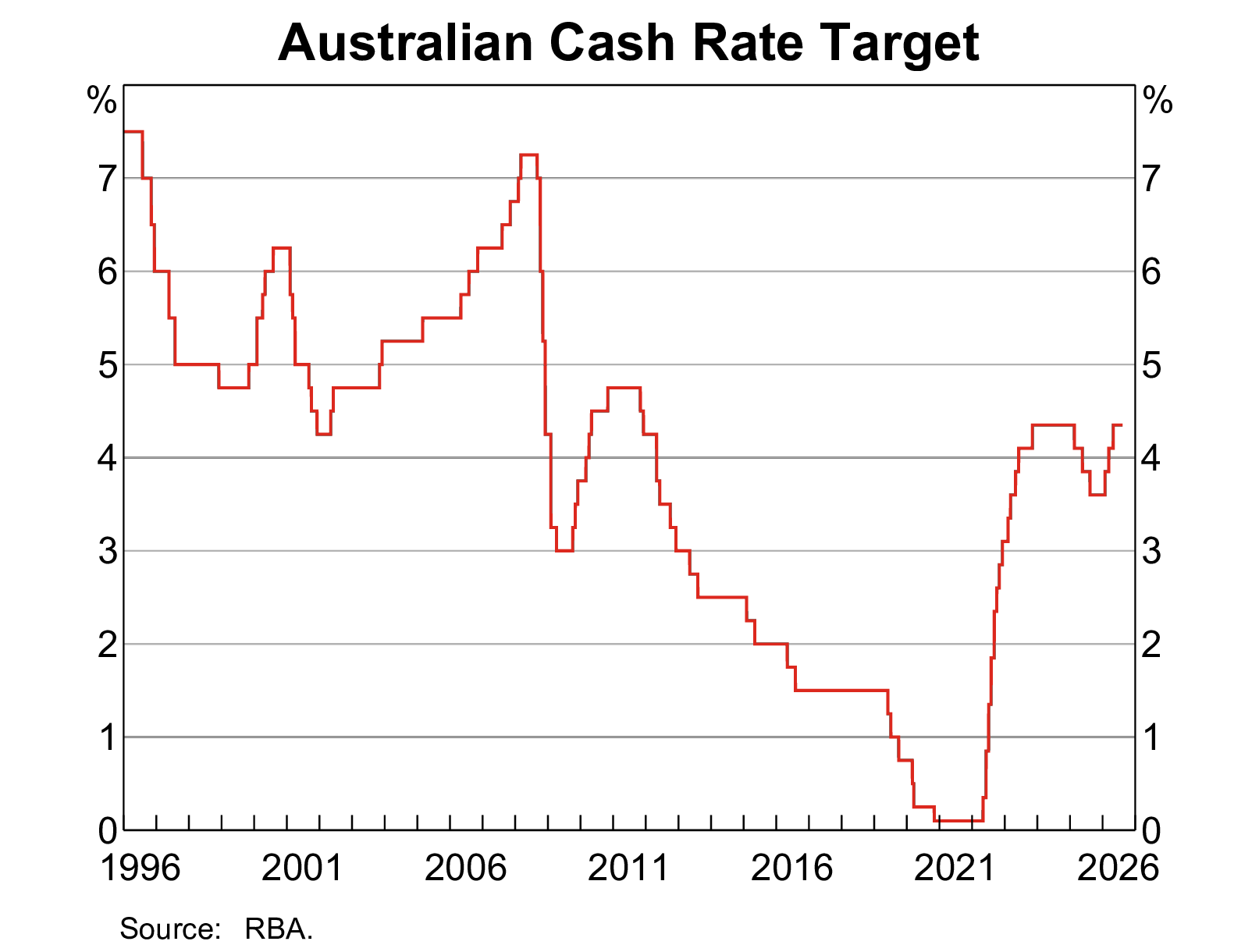
What makes it worse now compared to 2011 is that the cash rate back then was about to enter a prolonged cutting cycle, with inflation within the RBA's target range of 2-3%. Today, inflation remains elevated, and money markets are pricing in more than one hike from here.
2. Australia's inflation is trending away from peers
Australia has found itself out of lockstep with much of the developed world in its handling of post-Covid inflation. It saw the same dramatic spike in inflation from 2021 as the US, UK and Europe, but arguably didn't react decisively or quickly enough to bring it back under control.
As you can see from the chart below, other developed economies have continued to force core inflation down over the last few years, while Australia is alone in seeing it spike back up.

It means Australia will have to fight harder to re-tame inflation, and that likely means higher rates and lower economic growth.
3. Australian 10-year bonds are at a 15-year high
Like the cash rate, the 10-year bond yield finds itself back at levels last seen when Adele's Rolling In The Deep was top of the music charts.
The issue for investors now is that bond yields are becoming more attractive at a time when Australian equities are underperforming and already feel expensive. As AMP economist My Bui said, "the environment of easy asset gains is over".
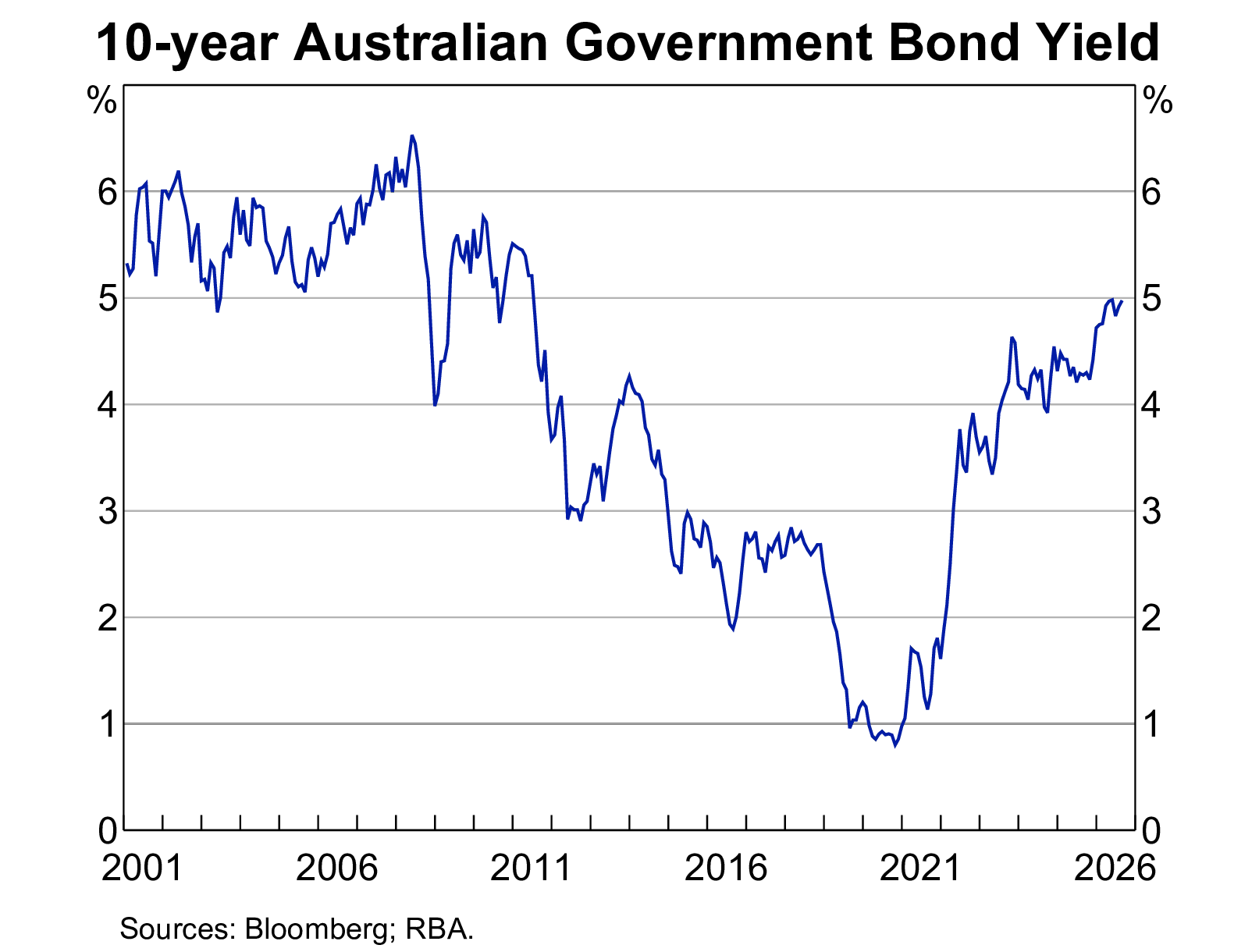
This is also part of an unfolding government debt crisis, which has created a "tug of war" between bond and equity markets, according to Schroders' Martin Conlon.
4. The ASX is more volatile than ever
Equities markets find themselves in a precarious position, but that has been exacerbated by the ongoing dislocation we've seen across the ASX.
According to analysis by Morgans, more than 60% of ASX companies saw their share prices move by at least 5% on the day of results. What will come as no surprise to investors is that it's a trend that has been growing over the last few years.

The ASX 200 is also now down more than 6% from its early September peak, and is now red on a 1-week, 1-month, YTD and 1-year basis.
5. The ASX 200 continues to fall behind global stocks
What has compounded the misery is that the ASX is increasingly volatile but investors are not getting the appropriate risk-adjusted return for that volatility.
Over the last decade, the gap between the ASX 200 and MSCI ACWI (All Country World Index) has grown wider and wider. This is despite the fact ASX's large caps have been one of the best performers.

What you can do about it
The charts above hopefully show how challenging the landscape is for Australian investors right now. So what can you do to potentially get ahead? As always, Livewire has you covered.
My colleague Chris Conway looked at the ASX stocks that could be the biggest victims and beneficiaries of higher interest rates.
In an exclusive interview with veteran investor Paul Xiradis, the Ausbil founder said he was looking at commodities and companies with overseas revenues as a way to sidestep the challenges facing the Australian economy.
He's also backing companies that could deliver meaningful turnarounds, including James Hardie Industries (ASX: JHX) and Treasury Wine Estates (ASX: TWE).
Schroders' Conlon is backing healthcare to make a comeback, while VanEck's Pranay Lai says there's a perfect storm brewing for Australian income investors and explains how they should be looking to position.
Never miss an update
Enjoy this wire? Hit the ‘like’ button to let us know.
Stay up to date with my current content by
following me below and you’ll be notified every time I post a wire
Tom is Deputy Managing Editor at Livewire Markets, having worked as a writer and editor for 10 years, specialising in investing and personal finance.
He has previously worked at Finder, FourFourTwo and Man Of Many covering everything from film to football.
He has a Masters in Media Production and a Bachelor's in Journalism.
........
Livewire gives readers access to information and educational content provided by financial services professionals and companies ("Livewire Contributors"). Livewire does not operate under an Australian financial services licence and relies on the exemption available under section 911A(2)(eb) of the Corporations Act 2001 (Cth) in respect of any advice given. Any advice on this site is general in nature and does not take into consideration your objectives, financial situation or needs. Before making a decision please consider these and any relevant Product Disclosure Statement. Livewire has commercial relationships with some Livewire Contributors.

3 topics
1 contributor mentioned

Tom is Deputy Managing Editor at Livewire Markets, having worked as a writer and editor for 10 years, specialising in investing and personal finance. He has previously worked at Finder, FourFourTwo and Man Of Many covering everything from film...
Expertise
Tom is Deputy Managing Editor at Livewire Markets, having worked as a writer and editor for 10 years, specialising in investing and personal finance. He has previously worked at Finder, FourFourTwo and Man Of Many covering everything from film...
Expertise
Comments
Comments
Sign In or Join Free to comment