
TOL - 9th Jan, 2026
Capital on the move: Why 2026 is shaping up as Australia’s year
With the US slowing and policy paths diverging, fixed income markets are re-pricing - and Australia is emerging as a clear beneficiary.
 Add us as a preferred Google source
Last year was dominated by a range of themes including geopolitics, de-dollarisation, volatile moves interest rates that has been driving capital flows and demand for yield.
There were three Australian interest rate cuts across 2025, although we did expect four at the start of the year.
Heading into 2025, we had anticipated a positive year but were also concerned that the market had underestimated the impact of US President Trump’s election.
Ahead of Liberation Day, investors that had increased cash positions and lengthened interest rate duration were able to take advantage of rising credit spreads by deploying cash, taking profits on interest rate positioning and the shape of yield curves.
On the whole, Trump’s activities have been a positive for risk assets. Despite the US economy having moved into a period of slower growth, with rising inflation and record indebtedness, we’ve seen foreign investors moving away from USD denominated assets.
The Australian credit market has benefitted from this move, helping to elevate Australia to being the third largest credit market by issuance behind the US and Europe.
2026 outlook: diverging central bank policies, high credit quality and capital flows
There’s much to be positive about heading into 2026.
Amidst significant uncertainty, it is clear to us that there is a widening divergence in the economic data coming out of the US and Australia.
Markets have priced this divergence for the year ahead, with the US continuing to focus on rate cuts while the local market prices for some level of tightening in cash rates.
Whilst we agree with this divergence, we think markets are jumping at shadows over the recent rise in Australian inflation.
Non-interest rate sensitive factors like electricity, tobacco and the recent rise in precious metals have contributed to the increase.
We expect many of these items to slowly decline in the coming quarters, which will see inflation trending back to the middle of the RBA’s range across 2026, leaving room for the RBA to deliver an additional cut or two.
Meanwhile, the US economy is heading into a period of slower growth, rising inflation, record indebtedness and growing unrest via Trump’s manic Presidency. This backdrop adds little confidence to a strong USD, stretched equity valuations and credit spreads that are trading near historical lows.
We expect Australian GDP growth to accelerate to 2.2% in 2026, outpacing that of the US at 1.6%.
In 2026 Australia looks to have a superior growth and inflation outcome than the US, with higher short-term interest rates (for the first time in over a decade), stable political environment and a cheap currency.
This environment leaves Australia well positioned to attract foreign capital into our financial markets. With higher yields, wider credit spreads and a cheaper equity market, why wouldn’t foreign investors lift their exposure to Australia and gain access to a cheap currency?
This backdrop should be conducive to quality returns in 2026 that in some ways looks and feels a lot like a repeat of 2025.

Managed Fund
Yarra Enhanced Income Fund
Australian Fixed Income
View
Never miss an update
Enjoy this wire? Hit the ‘like’ button to let us know.
Stay up to date with my current content by
following me below and you’ll be notified every time I post a wire
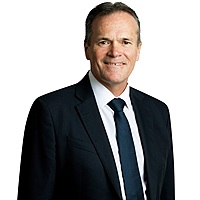
Roy is a senior leader within the Fixed Income team at Yarra Capital Management, focusing on Australian Fixed Income and Credit. He has over 30 years’ investment experience both in asset management and trading, specialising in credit products since 1995. He has been part of the investment management team for the Yarra Enhanced Income Funds since the Funds’ inception in 2002 and continues to manage these Funds. Roy is also co-portfolio manager to the Yarra Income Plus Fund. Before transitioning to Yarra Capital Management, Roy was Head of Australian Credit at Goldman Sachs Asset Management.
........
Livewire gives readers access to information and educational content provided by financial services professionals and companies ("Livewire Contributors"). Livewire does not operate under an Australian financial services licence and relies on the exemption available under section 911A(2)(eb) of the Corporations Act 2001 (Cth) in respect of any advice given. Any advice on this site is general in nature and does not take into consideration your objectives, financial situation or needs. Before making a decision please consider these and any relevant Product Disclosure Statement. Livewire has commercial relationships with some Livewire Contributors.
DOWNLOAD THE FREE EBOOK FROM
The Ultimate Investing Guide for 2026
Livewire has handpicked a selection of investment experts for their outlook for the year ahead.

DOWNLOAD THE FREE EBOOK FROM
The Ultimate Investing Guide for 2026
Livewire has handpicked a selection of investment experts for their outlook for the year ahead.

2 topics
1 fund mentioned
Roy is a senior leader within the Fixed Income team at Yarra Capital Management, focusing on Australian Fixed Income and Credit. He has over 30 years’ investment experience both in asset management and trading, specialising in credit products...
Expertise
Roy is a senior leader within the Fixed Income team at Yarra Capital Management, focusing on Australian Fixed Income and Credit. He has over 30 years’ investment experience both in asset management and trading, specialising in credit products...
Expertise
Comments
Comments
Sign In or Join Free to comment