TOL - 8th May, 2026
CGT overhaul punishes the patient investors Australia needs
Australia does not need is a tax system that penalises patient saving, prudent risk-taking, and entrepreneurship.
 Add us as a preferred Google source
There has been speculation about the changes ahead of next week’s Federal Budget centre around a shift from the current 50% CGT discount to an inflation-adjusted system. You can only assume the press gallery isn’t inventing this.
If Labor goes down this path, it should not be sold as a simple hit on wealthy landlords. The current discount applies broadly to shares, many business assets and investment properties held for more than 12 months. The family home generally remains exempt.
In other words, its not just a housing story. It’s a story about how Australia taxes saving, investing, and backing risk and entrepreneurship across our economy.
Numbers tell the story
Using 20 years of real asset class returns to December 2025, we modelled the tax rates under the current discount versus an inflation-adjusted regime (where 100% of real returns are taxed at the marginal rate). Inflation averaged 2.76% p.a.; asset returns ranged from 3.07% to 9.4%.

The current regime is simple: always 50% of your marginal rate, so 23.5% for a top-rate individual. Under an inflation-adjusted system the effective rate on nominal gains varies sharply. Australian shares, which delivered modest capital growth but strong dividends, would actually face a lower effective rate (around 6%). When you include the dividends and franking, the total return on Australian shares is almost identical to the total return on the MSCI World.
But the assets whose capital beat inflation most strongly (US shares, global shares and Sydney property) would be taxed at 30-40%.
Take $100 invested in global shares (MSCI World ) growing at 7.01% p.a. for 20 years. It generates roughly $288 in nominal gains. Under today’s rules a top-rate investor pays about $68 in tax. Under the inflation-adjusted system, that rises to around $101. The higher the real return, the higher the tax take.
There’s also another sting in the tail - the longer you hold*, the more they take.


Investors take the downside risk, tie up capital for years and often help finance the very housing and businesses governments say they want more of. If success simply triggers a bigger tax grab, the signal is clear - take the risk if you like, but we’ll claim a larger share of the upside. That’s not how you encourage long-term investment.
It won’t fix housing
Supporters of reform say this is justified because it might make housing more affordable. At the margin, that may be true. But even strong advocates of change do not pretend this is a silver bullet.
Grattan Institute has estimated that halving the CGT discount would likely cut house prices by less than 1% while reducing new-home construction by about 10,000 dwellings over five years. The housing industry goes further, warning that higher taxes on investors can reduce new supply and put upward pressure on rents. Even on its own terms, this looks like a policy with real economic costs and only modest housing gains.
There is also a bigger distortion that gets far too little attention. The family home sits outside the CGT net. Treasury has described that as effectively a 100% CGT discount.
More broadly, across much of Australia, housing has not dramatically outpaced inflation in capital terms. That means under an indexed system, the effective tax on many property gains could actually fall reinforcing the point that this is unlikely to fix housing, while shifting a larger tax burden onto higher-return investments and entrepreneurial activity.
If you tax shares, investment properties and many business gains more heavily while leaving the family home untouched, households will rationally shift more capital into their own home - paying down mortgages faster, renovating more, or stretching for a bigger place. That does little for productivity and deepens Australia’s unhealthy housing bias.
The same concern applies to entrepreneurship. Yes, there are some small-business CGT concessions, and those may remain. But recent reporting has not made clear how any broader rewrite would interact with business assets, founders or existing concessions.
The ASX already has too few genuinely innovative growth companies. A country that wants more innovation and more productive risk capital should be very careful before making successful long-term exits less attractive.
Better ways to pursue fairness and budget repair
If the government is serious about intergenerational fairness through lower house prices, there are better levers: build more homes, speed up planning, improve infrastructure, and show spending discipline. Australia is still running deficits with rising debt and interest costs. If Canberra wants budget repair, it should not reach first for a bigger tax grab on people who save, invest and take risk for the long term, particularly in businesses that are unrelated to housing.
What Australia does not need is a tax system that penalises patient saving, prudent risk-taking and entrepreneurship while the hard spending choices slide. Australians do not live on before-tax returns, they live on what is left after tax. If Labor pushes CGT further in the direction now being rumoured, what remains may simply not justify the risk.
-------
*This assumes the investor’s average rate of return is above the inflation rate.
Learn more about Budget 2026
Visit Livewire's Wealth page for more exclusive coverage of the 2026 Federal Budget.
Never miss an update
Enjoy this wire? Hit the ‘like’ button to let us know.
Stay up to date with my current content by
following me below and you’ll be notified every time I post a wire
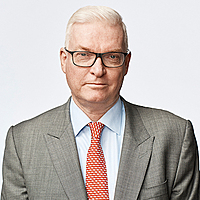
Don has over 25 years investment management experience. He founded Plato Investment Management Limited in 2006.
Prior to Plato, Don was Head of Active Equities, Asia Pacific and a member of the global Senior Management Group at State Street Global Advisors, responsible for over $10B in active and enhanced equity investments. Earlier he held various positions at Westpac Investment Management, including Chief Investment Officer, Head of Equities. During his time at Westpac he was also instrumentally involved in the mergers of BT and Rothschild.
Don has a strong interest in responsible investment and governance. He has a PhD in Finance and a Bachelor of Commerce with First Class Honours from UQ, and a University Medal.
........
This article is for general information only. Nothing contained in it constitutes or shall be deemed to constitute a financial, legal, tax or other advice of any kind, a securities recommendation or statement of opinion intended to influence a person or persons in making a decision in relation to investment. It has been prepared without taking account of any person’s objectives, financial situation or needs. You should form your own assessment and take independent professional advice on the suitability and merits of any action on the basis of this article relevant to your particular circumstances and investment objectives and the legal, regulatory, tax and investment consequences and risks of doing so. Neither we, nor our affiliates or any person named in the article accept any responsibility to any person for the consequences of any person placing reliance on the information within this article for any purpose. Past performance is not indicative of future performance. We do not guarantee or provide any assurance that our investment capabilities will achieve any target, objective or return on capital. The fact that a particular investment strategy, or shares in a particular company may be mentioned is not a recommendation to buy, sell or hold that financial product.

3 topics
Don has over 25 years investment management experience. He founded Plato Investment Management Limited in 2006. Prior to Plato, Don was Head of Active Equities, Asia Pacific and a member of the global Senior Management Group at State Street...
Expertise
Don has over 25 years investment management experience. He founded Plato Investment Management Limited in 2006. Prior to Plato, Don was Head of Active Equities, Asia Pacific and a member of the global Senior Management Group at State Street...
Expertise
Comments
Comments
Sign In or Join Free to comment