Dead reckon: navigating the structural shifts in global markets
The conditions that shaped returns for 30 years are fading. Making sense of what comes next will require a return to first principles.
 Add us as a preferred Google source
Start where you are
In April 1916, Frank Worsley kneeled on the thwart of a 22-foot lifeboat in the Southern Ocean, two men holding him upright against the swell, a sextant cupped against his chest to keep the spray off it. He was waiting for a break in the clouds. It would come once, sometimes twice a week, and he would have seconds to snap a reading of the sun before it vanished. His fingers were so numb he could barely record the figures.
He was the last hope of the crew of the Endurance after their ship was wrecked on the pack ice of Antarctica. Until then, Worsley had the benefit of landmarks, known positions, and the proper instruments to plot his course. Now, he was trying to find South Georgia Island, a speck of rock, 800 miles away, in the most violent ocean on earth by dead reckoning.
The stakes were high: if Worsley missed South Georgia island, the next land was South Africa. Behind him, on Elephant Island, 22 men were waiting to be rescued or to die. Over 16 days, he got four solid fixes on the sun. Everything else was first-principles reasoning, accounting for heading, speed, and the forces acting on the boat, continuously revised as conditions change.
They found South Georgia. All 28 men survived.
Dead reckoning works precisely because it doesn’t rely on assumptions about the path ahead, but only an honest assessment of the circumstances you find yourself in.
For nearly three decades, investors could navigate by fixed reference points: cheap capital, global supply chains, and deficit spending that sustained the corporate profit pool.
These were features of a specific era, not permanent conditions. That era is ending. The question now is how to navigate without them. The answer lies in stripping away assumptions and taking a clear-eyed view of where we stand.
Getting our bearings: a brief history of globalisation
To understand where markets are, it helps to understand the specific conditions that shaped them. Three structural forces converged from the early 1990s onward to create one of the most supportive investment environments in history.
- The liberalisation of planned economies: The collapse of the Soviet Bloc and China’s integration into the global economy expanded the global labour pool and productive capacity. Across Asia, liberalisation embedded economies into global supply chains, suppressing wage pressures and supporting corporate margins.
- The establishment of international institutions: Institutions such as the WTO, IMF and World Bank helped lower trade barriers and support capital market integration. Supply chains lengthened and production shifted to lower-cost regions, allowing firms to scale efficiently while keeping inflation contained across developed markets.
- A supportive environment for corporate profits: Disinflation, strong demand for government bonds and increasingly accommodative central bank policy pushed interest rates lower across the developed world. After the Global Financial Crisis, real rates were often close to zero or negative, making capital abundant and mobile. US fiscal policy played a critical supporting role: as the chart below shows, US government deficits and corporate free cash flow as a share of GDP have moved as mirror images of one another. This reflects a simple but often overlooked dynamic: a deficit in one part of the economy is a surplus in another.

Taken together, these forces created an environment in which costs fell, capital was abundant, and profits were persistently supported; conditions that underpinned asset prices and shaped investor expectations for years.
Valuations: a sea change
Valuation is driven by three variables: the required return, nominal cashflow growth, and the cost of funding. For nearly thirty years, deficit spending sustained corporate cashflows, globalisation suppressed costs and boosted margins, and steadily falling funding costs did the rest. With the required return broadly stable, the arithmetic of higher valuations largely took care of itself.
The conditions that supported cashflow growth and kept funding costs low are fading: supply chains are shortening, trade barriers are rising. The era in which a company could locate production wherever labour was cheapest, move capital wherever returns were highest, and borrow at rates set by a global glut of savings is giving way to something more fragmented and contested, a kind of fight for capital.
Nations are increasingly competing to retain their own savings and direct them toward domestic priorities. The UK's Mansion House reforms, European defence bond proposals and Australia's Future Fund mandate revision are all expressions of the same impulse: capital that once flowed freely across borders is increasingly being kept at home.
Meanwhile, the debt accumulated during the good years is becoming harder to service. Japan, France and Canada now carry total debt exceeding three times annual output, more than Greece when it required an EU and IMF bailout in 2010. In the United States, interest payments on public debt now exceed total corporate tax receipts.
Discretionary spending, the part of the budget over which policymakers retain meaningful control, represents only a quarter of total federal outlays. The ambition of large-scale fiscal consolidation is real; the arithmetic makes it extraordinarily difficult.

If deficit spending structurally supported the corporate profit pool on the way up, a sustained reduction in that deficit, or simply its stabilisation, removes a tailwind that equity valuations have continued to price in.
The valuation picture is stark. US equities currently sit at a Shiller CAPE of around 40 times earnings, exceeded only briefly at the dotcom peak of the late 1990s. As our analysis below shows, every period in history that began at similar valuation levels has been followed by negligible or negative real returns over the subsequent decade. High valuations are not deterministic, expensive markets can stay expensive, but starting points do matter.

Close quarters: the illusion of diversification
Passive investing has gained momentum, but that momentum is reinforcing concentration in equity markets. Capital allocated by index weight rather than by valuation creates a feedback loop: rising prices attract more capital, which drives prices higher still, which attracts more capital. Today seven companies account for more than a third of the S&P 500 by market capitalisation.

What looks like exposure to five hundred companies is, in meaningful respects, a bet on a handful of businesses priced for conditions that may no longer hold. Fewer than a third of stocks have outperformed the index in recent years, showing that the gap between the appearance of diversification and its reality has rarely been wider.

A lack of income reduces the diversity of return sources, compounding this concentration. Total distribution yield from the S&P 500 has roughly halved from its peak, with dividend yields approaching historic lows and buyback activity volatile across cycles.

In Australia too, bank hybrids are rolling off. In reaching for yield, many investors have also taken on liquidity risk, allocating to private equity, private credit and unlisted assets where income and capital are less accessible. In private equity particularly, that trade-off is already being tested as exits have stalled and distributions remain well below historical norms.
Plotting a course: the playbook for a new era of investing
Periods of transition are rarely smooth, but they create opportunities for investors who adapt more quickly than the market. As conditions shift from capital abundance toward greater scarcity, four principles matter most.
- Short duration: When funding costs were low and stable, investors could afford to wait for distant cash flows. When the cost of capital matters again, the timing and certainty of those flows becomes critical. Getting paid back sooner means less exposure to whatever the future may bring, and in an environment where the investment landscape itself is shifting, that matters.
- Strong balance sheets: Companies with low leverage, strong cash generation and conservative capital structures retain flexibility where others are constrained. When refinancing costs rise and economic conditions tighten, these companies can invest, defend margins and return capital through the cycle. Others cannot.
- Real assets: Exposure to physical or inflation-linked assets, commodities and infrastructure, helps preserve purchasing power if inflation proves persistent.
- Genuine diversification: Exposure to genuinely uncorrelated sources of return.
Conclusion
Worsley didn't wait for better conditions, but reasoned his way forward, revising carefully as new information arrived. Navigating under uncertainty must start with first principles, and although prudence fell out of fashion when growth was easy, in a more capital constrained environment it will matter again.
The task for investors today is to navigate them without the reference points of the past thirty years, but instead accounting honestly for the forces acting upon them, and working forward from what they know to be fundamentally true.
We believe global markets are undergoing a major structural shift. If you enjoyed this article and would like to learn more, explore our Playbook for a New Era of Investing — a deep dive into what is changing, why it matters, and how investors can respond.
Never miss an update
Enjoy this wire? Hit the ‘like’ button to let us know.
Stay up to date with my current content by
following me below and you’ll be notified every time I post a wire
Chad is the Co-Chief Investment Officer and co-founder of Talaria Asset Management. He has more than 21 years of experience in the financial services industry in the UK, South Africa and Australia. Talaria's investment strategy seeks to increase the certainty of global equity returns for investors through its:
> Unique and structurally lower-risk investment approach that combines capital growth and income generation to deliver a more consistent return profile (smoothing).
> Portfolio of up to 45 large, globally listed companies.
> Internationally experienced and personally invested leadership team.
www.talariacapital.com.au
........
The information in this article is general information only and is not based on the objectives, financial situation or needs of any particular investor. In deciding whether to acquire, hold or dispose of the product you should obtain a copy of the current Product Disclosure Statement (PDS) for the Fund and consider whether the product is appropriate for you.
Units in the Talaria Global Equity Fund (Managed Fund) (the Fund) are issued by Australian Unity Funds Management Limited ABN 60 071 497 115, AFS Licence No. 234454.Talaria Asset Management Pty Ltd ABN 67 130 534 342, AFS Licence No, 333732 is the investment manager and distributor of the Fund. References to “we” means Talaria Asset Management Pty Ltd, the investment manager. The information in this document is general information only and is not based on the objectives, financial situation or needs of any particular investor. In deciding whether to acquire, hold or dispose of the product you should obtain a copy of the current Product Disclosure Statement (PDS) for the Fund and consider whether the product is appropriate for you. A copy of the PDS is available at australianunity.com.au/wealthor by calling Australian Unity Wealth Investor Services team on 13 29 39. Investment decisions should not be made upon the basis of the Fund’s past performance or distribution rate, or any ratings given by a rating agency, since each of these can vary. In addition, ratings need to be understood in the context of the full report issued by the rating agency itself. The information provided in the document is current at the time of publication

5 topics
1 stock mentioned
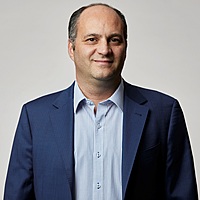
Chad is the Co-Chief Investment Officer and co-founder of Talaria Asset Management. He has more than 21 years of experience in the financial services industry in the UK, South Africa and Australia. Talaria's investment strategy seeks to increase...
Expertise
Chad is the Co-Chief Investment Officer and co-founder of Talaria Asset Management. He has more than 21 years of experience in the financial services industry in the UK, South Africa and Australia. Talaria's investment strategy seeks to increase...
Expertise
Comments
Comments
Sign In or Join Free to comment