
TOL - 17th Dec, 2025
Doing more with less: The real winners of changing demographics
Demographic shifts are both a challenge and an investment opportunity for companies.
 Add us as a preferred Google source

Around the world, populations are aging, birth rates are falling, and the number of working-age people is growing at the slowest pace in modern history. This presents an economic challenge, yet also an investment opportunity.
Globally people aged 65 years and over already outnumber children aged under 5. In the next 50 years, they’ll outnumber children under 18 years too1. Demographer Simon Kuestenmacher of The Demographics Group, based in Australia, observes that these challenges are even present closer to home:
“On top of the ongoing and current general worker shortages, many jobs face the additional challenge of a steep retirement cliff. In Australia, 5% of the workforce is already at retirement age, while a further 15% are aged between 55 and 64 and approaching retirement.”
The team at Aoris has been closely observing the implications of these demographic headwinds on investment portfolios.
For example, a leading structural design software company told us that for every new engineering graduate entering the field, 15 are retiring.
Examples like this highlight a critical question: how can economies and businesses continue to grow with fewer workers.
We believe the solution lies in productivity – empowering existing workers and systems to do more with less.
Companies delivering productivity-enhancing technologies or labour-outsourcing solutions stand to thrive as demographic pressures intensify.
For investors, this seismic demographic shift is creating structural long-term growth opportunities.
Productivity leaders paving the way
Microsoft (NASDAQ: MSFT) is a standout example. Through its partnership with OpenAI, its Azure cloud platform, and Copilot AI tools, Microsoft is automating a vast range of tasks, from coding and accounting to customer service. The productivity gains its products create are meaningful: the Australian Public Sector’s Copilot trial saved an average of one hour per user per day.
Another Aoris portfolio company RELX (NYSE: RELX) is harnessing AI to drive customer productivity. RELX provides data, analytics, and decision-making tools to professional users, including its LexisNexis solutions for lawyers. Its newly launched Lexis+ AI significantly reduces the time it takes for lawyers to research cases and draft documents. As a result, RELX has seen a notable acceleration in revenue growth in recent years.
While a lawyer previously spent several hours searching through thousands of legal documents to find relevant precedents for a case, Lexis+ AI can complete this research in minutes. The system summarises key cases and drafts sections of legal arguments automatically. This allows legal professionals to focus on interpretation and strategy rather than manual research.
Beyond AI: Outsourcing as a growth engine
AI may dominate the productivity spotlight, yet investors can discover equally compelling opportunities through other levers such as outsourcing.
Compass Group (LON: CGP), the world’s largest contract caterer, is a prime example. As hiring and retaining hospitality staff becomes increasingly difficult, organisations from corporate offices and factories, to universities, hospitals and sports stadiums are turning to Compass to manage their catering. Clients benefit from better service, simpler operations, and costs that are typically around 30% lower than if they managed it themselves. In addition, clients can remain focused on their core functions.
Another company that illustrates the power of outsourcing is Grainger (NASDAQ: GWW), a leading distributor of maintenance, repair and operating supplies in North America. For many industrial and commercial clients, keeping equipment running and sites well stocked is essential, but managing this internally consumes valuable time and labour. Grainger simplifies customers’ operations through its easy online ordering, automated inventory management, and a nationwide logistics network that can deliver supplies within 24 hours to more than 97% of the United States.
In one example, a Grainger client cut the time spent searching for and retrieving products by more than half, while another reported efficiency gains equivalent to more than three full-time employees through process automation and improved inventory control. These are tangible, measurable productivity gains that matter, regardless of what new technology currently captures the headlines.
Positioned for a changing world
Looking ahead, we expect labour shortages to deepen across industries and regions. Companies that enable their customers to do more with less, whether through technology, automation, or outsourced expertise, will emerge as the long-term winners.
Or, to put it another way, companies providing solutions that help their customers to be more productive, to do more with less, won’t just survive, they will thrive.
1. World Heath Organisation, 1 October 2025 ((VIEW LINK)
Never miss an update
Enjoy this wire? Hit the ‘like’ button to let us know.
Stay up to date with my current content by
following me below and you’ll be notified every time I post a wire
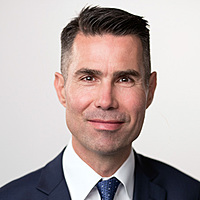
Stephen has been investing in global markets for over 30 years, making him one of Australia’s most experienced international investors.
He is the Founder and Chief Investment Officer of Aoris Investment Management, an independent, Sydney-based firm dedicated to a single strategy: a highly selective global equity portfolio.
Since its inception in March 2018 through to the end of April 2025, the Aoris strategy has ranked in the top 5% over 3 years, 5 years, and since inception, relative to a broad peer group of international equity funds (Morningstar). The firm currently manages just under $2 billion in assets.
Prior to founding Aoris in 2017, Stephen was Head of International Equities at Evans & Partners.
........
Livewire gives readers access to information and educational content provided by financial services professionals and companies (“Livewire Contributors”). Livewire does not operate under an Australian financial services licence and relies on the exemption available under section 911A(2)(eb) of the Corporations Act 2001 (Cth) in respect of any advice given. Any advice on this site is general in nature and does not take into consideration your objectives, financial situation or needs. Before making a decision please consider these and any relevant Product Disclosure Statement. Livewire has commercial relationships with some Livewire Contributors.

2 topics
3 stocks mentioned
Stephen has been investing in global markets for over 30 years, making him one of Australia’s most experienced international investors. He is the Founder and Chief Investment Officer of Aoris Investment Management, an independent, Sydney-based...
Expertise
Stephen has been investing in global markets for over 30 years, making him one of Australia’s most experienced international investors. He is the Founder and Chief Investment Officer of Aoris Investment Management, an independent, Sydney-based...
Expertise
Comments
Comments
Sign In or Join Free to comment