TOL - 29th Jan, 2026
It’s economic reality, not fear-based momentum, driving gold higher
Gold’s record highs are less about fear and panic and more about portfolios needing to diversify.
 Add us as a preferred Google source
Gold entered 2026 the same way it exited 2025: at record highs. To date, the gold price has already notched seven all-time highs this year, extending a run that saw more than 53 new records in 2025 alone, totalling 94 all-time highs since 2024. For some investors, this raises an uncomfortable question: have we missed it?
In my experience, that question often reflects a misunderstanding of why gold has been performing so strongly, and what role it is designed to play in a portfolio.
Gold’s continued rally into 2026 is not being driven purely by fear, crisis headlines or short-term speculation. Its strength increasingly reflects deeper, more structural shifts in how asset classes behave, how policy is evolving, and how risk is being priced across markets – all of which shape portfolio construction and resilience.
Figure 1: Gold has reached 95 ATHs since 2024

Momentum matters — but it’s not the whole story
There is no doubt that momentum and uncertainty have played a role in gold’s recent price. And while geopolitical tensions have further flared since the start of the year, economic events trump momentum in driving gold’s continued rally. These include expectations of US Federal Reserve rate cuts, declining real yields, and historically high levels of correlation between fixed income and equity markets.
So, while momentum-oriented investors seeking refuge have played a part, momentum alone can ignite and amplify trends but not sustain a multi-year trend – for any asset for that matter.
What underpins gold’s appeal today is a convergence of macroeconomic forces that are proving far more persistent than many investors expected: sticky inflation risks, rising sovereign debt burdens, and growing uncertainty around the effectiveness of traditional portfolio diversifiers.
These forces are further complicated by the expected change in US Federal Reserve leadership this year, an event that could materially reshape the policy reaction function and inject greater uncertainty into inflation expectations, real yields and broader market pricing.
Importantly, these are not short-lived shocks. They are slow-burn dynamics reshaping the investment landscape, and portfolios are responding accordingly.
The safe-haven trap
Geopolitical events inevitably push gold into headlines. But it’s worth being clear: while gold often responds positively to sudden shocks, those moments are rarely the best time to initiate an allocation.
The protection gold provides frequently shows up before the event, not after it. That is why we consistently caution against treating gold as a tactical trade triggered by breaking news.
Gold’s value lies less in reacting to crises and more in quietly improving portfolio resilience before correlations change and volatility rises.
Bonds lose ballast
Perhaps the most important shift for investors, particularly those managing balanced portfolios, is the changing behaviour of bonds.
For decades, government bonds offered reliable diversification against equity risk. That relationship has weakened, and in some periods broken down altogether. Rising inflation volatility, fiscal expansion and supply-heavy bond markets have altered how fixed income behaves under stress.
Many investors experienced this first-hand in recent years, when both equities and bonds declined together.
This matters because diversification is not about owning different assets - it’s about owning assets that behave differently when it matters most and shore up portfolio resilience.
Gold has historically exhibited low to negative correlation with equities over long horizons, and unlike bonds, it does not rely on a government’s ability to manage inflation, debt or deficits. Nor does gold, as a real asset, carry any counterparty risks. In a world where the interconnectedness of risks is increasingly questioned, gold’s independence matters.
Strategic allocation, not tactical timing
Aside from have we missed our chance?, another very common question we hear is: what’s the right price to buy gold?
The more useful question is: what role should gold play in my portfolio? - as you would ask of any potential portfolio asset.
Trying to time entry points after a strong rally can be counterproductive, particularly for an asset held for diversification benefits. Like any long-term asset, gold’s contribution should be assessed across market cycles, not month-to-month price moves.
This is why the World Gold Council’s research consistently frames gold as a strategic allocation, not a short-term hedge.
Across a wide range of portfolio simulations, allocations in the region of 3 to 10% have historically improved risk-adjusted returns - not because gold always rises, but because it behaves differently when other assets struggle.
Debt, deficits and the long game
While the world enters a period of geopolitical realignment - a backdrop likely to add to market volatility - a major and enduring feature of the global economy remains the scale of sovereign debt accumulation.
Major economies are running persistent deficits with limited political appetite, or ability, to materially reverse course. At some point, investors may begin to question whether bond markets are adequately compensating them for duration, inflation and fiscal risk.
Will 2026 be the year that concern becomes acute? That is impossible to forecast. But the underlying conditions are unlikely to disappear.
Gold’s role here is subtle but important. It is not a bet against any single currency or government. Rather, it acts as a portfolio anchor in environments where confidence in long-term policy outcomes is eroding.
Have investors missed the move — or missed the point?
For many investors, particularly in Western markets, the more pressing risk today may not be over-exposure to gold as a safe-haven, but persisting under-allocation as a strategic diversifier.
While we have seen Western investors reallocate to gold after decades on the sidelines - with Eastern markets continuing to play a far greater role in shaping prices - gold ownership remains modest relative to the size of global capital markets. And many portfolios still rely heavily on asset relationships that no longer behave as reliably as they once did.
Some large institutional investors, including the Future Fund have shifted course in anticipation of a new investment order, selecting assets for long-term resilience.
Seen through that lens, gold’s recent performance is less about a crowded trade, and more about a gradual reassessment of what diversification really means in a changing macro environment.
Gold does not need perfect timing to be effective.
Investors who treat gold as a permanent component of their portfolio, building positions over time and rebalancing as conditions evolve, are more likely to capture its benefits than those attempting to trade short-term price movements.
That discipline matters even more after strong performance. Gold’s role is not to predict the next shock, but to help portfolios endure whatever comes next.
In an environment defined by policy uncertainty, rising debt and fragile diversification, gold’s value increasingly lies in disciplined portfolio construction rather than reactive positioning.
Hear John Reade and Joe Cavatoni on their latest Unearthed podcast: Unearthed: Geopolitics, Volatility & the Case for Long-Term Gold Allocation (published 14 January 2026)
Podcast Timestamps
- 00:45 - Gold Price Trends & 2026 Market Outlook
- 01:53 - Economic Factors Influencing Gold in 2026
- 02:52 - Gold as a Safe Haven: Short-Term vs. Long-Term Allocation
- 04:20 - Investor Positioning and Gold Allocation in Portfolios
- 06:26 - Impact of Monetary Policy and New Fed Chair
- 07:35 - Debt Levels, Bond Market, and Long-term Drivers for Gold
- 08:12 - Timing the Market vs. Strategic Gold Allocation
Never miss an update
Enjoy this wire? Hit the ‘like’ button to let us know.
Stay up to date with my current content by
following me below and you’ll be notified every time I post a wire
John Reade joined the World Gold Council in February 2017 as Chief Market Strategist. He is responsible for producing strategy and developing insights on the gold market; leading our global dialogue by engaging with leading economists, academics, policy makers, fund managers and investors on gold; and leading our research team.
John has over 30 years’ experience in the gold industry and related fields, most recently as a partner and gold strategist with Paulson & Co for the past seven years. Prior to that, he worked as a precious metals strategist at UBS for 10 years; a gold equity analyst in South Africa for 5 years; and over 8 years held various positions in production and project evaluation in the gold division of Gencor, then a leading South African mining house.
John has a degree in Mining Engineering from the Royal School of Mines, a constituent of Imperial College, London.
........
© 2026 World Gold Council. All rights reserved. World Gold Council and the Circle device are trademarks of the World Gold Council or its affiliates.
All references to LBMA Gold Price are used with the permission of ICE Benchmark Administration Limited and have been provided for informational purposes only. ICE Benchmark Administration Limited accepts no liability or responsibility for the accuracy of the prices or the underlying product to which the prices may be referenced. Other content is the intellectual property of the respective third party and all rights are reserved to them.
Reproduction or redistribution of any of this information is expressly prohibited without the prior written consent of World Gold Council or the appropriate copyright owners, except as specifically provided below. Information and statistics are copyright © and/or other intellectual property of the World Gold Council or its affiliates or third-party providers identified herein. All rights of the respective owners are reserved.
The use of the statistics in this information is permitted for the purposes of review and commentary (including media commentary) in line with fair industry practice, subject to the following two pre-conditions: (i) only limited extracts of data or analysis be used; and (ii) any and all use of these statistics is accompanied by a citation to World Gold Council and, where appropriate, to Metals Focus or other identified copyright owners as their source. World Gold Council is affiliated with Metals Focus.
The World Gold Council and its affiliates do not guarantee the accuracy or completeness of any information nor accept responsibility for any losses or damages arising directly or indirectly from the use of this information.
This information is for educational purposes only and by receiving this information, you agree with its intended purpose. Nothing contained herein is intended to constitute a recommendation, investment advice, or offer for the purchase or sale of gold, any gold-related products or services or any other products, services, securities or financial instruments (collectively, “Services”). This information does not take into account any investment objectives, financial situation or particular needs of any particular person.
Diversification does not guarantee any investment returns and does not eliminate the risk of loss. Past performance is not necessarily indicative of future results. The resulting performance of any investment outcomes that can be generated through allocation to gold are hypothetical in nature, may not reflect actual investment results and are not guarantees of future results. The World Gold Council and its affiliates do not guarantee or warranty any calculations and models used in any hypothetical portfolios or any outcomes resulting from any such use. Investors should discuss their individual circumstances with their appropriate investment professionals before making any decision regarding any Services or investments.
This information may contain forward-looking statements, such as statements which use the words “believes”, “expects”, “may”, or “suggests”, or similar terminology, which are based on current expectations and are subject to change. Forward-looking statements involve a number of risks and uncertainties. There can be no assurance that any forward-looking statements will be achieved. World Gold Council and its affiliates assume no responsibility for updating any forward-looking statements.

3 topics
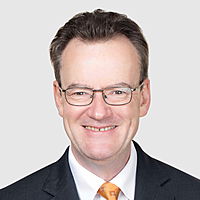
John Reade joined the World Gold Council in February 2017 as Chief Market Strategist. He is responsible for producing strategy and developing insights on the gold market; leading our global dialogue by engaging with leading economists, academics,...
Expertise
No areas of expertise
John Reade joined the World Gold Council in February 2017 as Chief Market Strategist. He is responsible for producing strategy and developing insights on the gold market; leading our global dialogue by engaging with leading economists, academics,...
Expertise
No areas of expertise
Comments
Comments
Sign In or Join Free to comment