Like October 2022. Are small caps ready to rip?
Seneca's Luke Laretive says surviving the past 12 months in small caps has been tough but now he's seeing a market flush with opportunity
 Add us as a preferred Google source
I’ve just completed a rat run of some of my favourite investing resources. From the AFR and Bloomberg to investing podcasts and the depths of Twitter and fund manager performance reports, one theme emerges: it's been a tough environment for stock picking.
The causes, or culprits, of a challenging returns environment range from extreme concentration in global mega caps and rising interest rates to geopolitical uncertainty. On the home front, look no further than the small cap index, which is down 17% over 12 months and on the brink of entering a bear market. Clearly, that’s not an environment offering tailwinds for investors.

For Luke Laretive and Ben Richards, who run the Seneca Australian Small Companies Fund, the past 12 months have been about holding ground, not losing money and finding 40 ideas they believe will lay the foundation for higher returns when enthusiasm returns to markets.
The pair has done an admirable job delivering a 5% return over the past 12 months, helping notch up a three-year after-fee performance record of 23.3% p.a.
The good news is that Laretive believes the current environment resembles late 2022, when small caps endured a similarly deep drawdown.
“October 2026 reminds us of October 2022 - rising rates, small-cap underperformance and investors being really risk-averse and bearish saw the Small Ordinaries fall -26%. It then spent the next 3 years rising +53%.”
Laretive will be the first person to tell you he has no idea what the future holds, but he does have conviction in the behaviours that lead to average returns and where he thinks the most attractive opportunities lie. Right now he says there are lots of them.
I highly recommend watching my interview with Luke on YouTube. His passion for investing is infectious, and it's well worth hearing his conviction firsthand. Alternatively, you can read a summary of our discussion below.
Sure ways to generate average returns
It’s been a while since I channelled the sage advice of the Oracle of Omaha, but it seems timely, and Laretive’s starting point is capital preservation. In Laretive's view, simple narratives and recent strong performance are a trap for investors.
“Buying stuff that everybody thinks is good, that has done well over the recent period, is a surefire way to underperform in the future.”
US mega-caps, stocks exposed to the AI trade and anything with ‘drones and defence’ currently sit in that bucket. His view is that you need to be willing to go against the herd and find value in companies where the narrative is less compelling.
“You've always got to have out-of-consensus views to make really good returns.”
“Those stocks that you don't really think are doing so well. They're the ones you should be having a look at.”
From an asset allocation perspective, he says it is important to stick with your plan. If you’ve correctly mapped your risk profile, then de-risking your investment approach after a bad year will hamper future returns.
“If you dial your risk profile down at this point, it might make you feel better, but it's the exact opposite of what you should be doing.”
Laretive’s views on ways to generate average returns extend to the rapidly growing universe of exchange-traded funds (ETFs). Seneca’s website states that its services are not suited to investors ‘seeking purely passive investments’.
ETFs have been a great innovation, making investing more approachable and affordable for all Australians. As of September, Australian ETFs had total assets of $388 billion, with a VanEck survey citing 96% penetration of ETFs in advised portfolios.
So with such broad adoption, what’s Luke’s beef with ETFs? “No beef”, he says, but he believes there are better ways to invest.
“I think if you're scared of being wrong, you're scared of making a mistake, and you're not interested in generating the best return possible over the long run, ETFs are great for you.”
“It's not a criticism of ETFs as a product. They're fine. They do the job. I don't think it's the best way to invest. If you're going to knock on my door and ask me to look after your money, I'm going to want to invest that money from an ethical perspective, the best way I know how to.”

Embracing complexity
Laretive doesn’t view himself as a contrarian; however, his investment approach naturally leads him to parts of the market fewer investors are looking at. He says actively seeking out complexity has consistently produced good ideas.
“Simplicity sells, and people will overpay for things that they think they understand. In politics, in life, in relationships and investing, complex, nuanced, opaque things are often underappreciated and undervalued.”
Over the years, he has published in-depth articles on both Euroz Hartleys and Venus Metals, two stocks that have delivered 50% upside. With Euroz, those returns didn’t come in a straight line.
“We bought it for a dollar, and we've received 20 cents in capital return, 13 cents in special dividends, 18 cents in franking credits and some other complicated way of returns. So those things were going to happen whether the share market went up, down or sideways for the next 12 months.”
Right now, HMC Capital (ASX: HMC) is a stock that Luke believes is undervalued and under-appreciated by the market. The valuation has materially de-rated after a series of issues that saw investors flee the stock. At its core, Laretive sees a well-run fund management business generating strong returns, with the ability to reinvest capital at ever-higher rates of return.

Stocks Seneca thinks could double
Laretive is a regular, open contributor to Livewire, and his most recent article reflected on the highs, lows, and lessons of the past 12 months. When reading that report, one line jumped off the page: “we have never had this many names in the fund that we think can (at least) double in price.”
They’re some bullish words, but Laretive argues that, after a difficult 12 months, the small end of the market is flush with opportunity; his challenge is narrowing it down to just 40 names.
“If you don't have a bunch of high expected return things in your portfolio, you better sell them and buy something that is high expected return because there's lots out there.
At the top of his list right now are retailers Universal Store Holdings (ASX: UNI) and Lovisa (ASX: LOV). Rising interest rates and soft consumer sentiment have hit these consumer facing companies hard. He argues the market has become too negative, and both stocks now sit at decade-low valuations, an opportunity that doesn’t come up too often.
“You don't get to buy those kinds of businesses on five or nine times EV to EBITDA too often, and you certainly don't lose money very often buying those sorts of businesses at those sort of prices.”
Gold was the flavour of the month not long ago, but sentiment has turned. He believes the market is underappreciating the assets of both Ramelius Resources (ASX: RMS) and Genesis Minerals (ASX: GMD).
Rule of 40 growth stocks have also taken a bath, first hit by the SaaS sell-off at the start of 2026, then hit by rising interest rates. Names such as Catapult Group International (ASX: CAT), SiteMinder (ASX: SDR) and Aura (ASX: AXQ) fall into a category with Laretive labelling them as ‘cheap, cheap, cheap’.
M&A has also been a feature of ASX small and mid-caps, and Laretive believes we’re yet to see the peak of activity. This clearly shows strategic buyers and private equity firms are finding compelling value.
Laretive rattles off a list of companies, mostly in the materials sector, that he believes are prime targets over the next 12 - 18 months. Golden Horse Minerals (ASX: GHM), Greatland Resources (ASX: GGP), EQUUS Energy (ASX: EQU), Jupiter Mines (ASX: JMS) and Maronan Metals (ASX: MMA).
You can read about a selection of these situations in Seneca’s annual takeover picks article.
Lessons from 3 years of outperformance
It remains early days for Seneca, with the Small Companies Fund just notching up a strong three-year performance record. The first few years can make or break a boutique fund manager, so I asked Luke to reflect on lessons he’s learnt from his first 3 years so readers can apply them to their own investing.
His key takeaway was the value of having someone to test his ideas against. Laretive says having someone to bounce ideas off helps build discipline, accountability, and a higher standard.
“Having to be really rock solid in my ideas, better justification and bouncing off a harder, better brain has been good for me personally. And I think that process of how we do things has been good for investors with us as well.”
Never miss an update
Enjoy this wire? Hit the ‘like’ button to let us know.
Stay up to date with my current content by
following me below and you’ll be notified every time I post a wire
Livewire is Australia’s #1 website for expert investment analysis. We work with leading investment professionals to deliver curated content that helps investors make confident and informed decisions.
Safe investing and thanks for reading Livewire.
........
Livewire gives readers access to information and educational content provided by financial services professionals and companies ("Livewire Contributors"). Livewire does not operate under an Australian financial services licence and relies on the exemption available under section 911A(2)(eb) of the Corporations Act 2001 (Cth) in respect of any advice given. Any advice on this site is general in nature and does not take into consideration your objectives, financial situation or needs. Before making a decision please consider these and any relevant Product Disclosure Statement. Livewire has commercial relationships with some Livewire Contributors.

8 stocks mentioned
1 fund mentioned
2 contributors mentioned
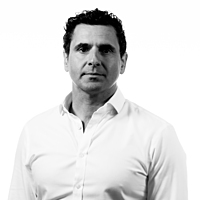
Livewire is Australia’s #1 website for expert investment analysis. We work with leading investment professionals to deliver curated content that helps investors make confident and informed decisions. Safe investing and thanks for reading...
Expertise
Livewire is Australia’s #1 website for expert investment analysis. We work with leading investment professionals to deliver curated content that helps investors make confident and informed decisions. Safe investing and thanks for reading...
Expertise
Comments
Comments
Sign In or Join Free to comment
most popular
Equities
Navigating the AI boom: Who we think is best placed to win
Auscap Asset Management
Equities
Time to get your dividend investing passport ready for 2027
Plato Investment Management