TOL - 23rd Mar, 2026
Quality stocks have been crushed but cashflows will have the final word
CIO Kent Hargis says it's possible to beat the market while lowering the risk if you're careful about stock selection.
 Add us as a preferred Google source
This interview was filmed on Friday 6 March 2026.
Accepted wisdom suggests finding better returns means taking on more risk. The idea of "risk-adjusted returns" shapes much of how we think about markets and assess opportunities.
But what if there was a way to deliver market-beating returns without taking on additional risk? That's what the AB Global Strategic Core Equities Fund is looking to deliver, says Kent Hargis, AllianceBernstein's Chief Investment Officer of Strategic Core Equities.
"What we're finding actually is you can actually deliver lower risk and give a better return," he says. "By protecting more of the downside and capturing more on the upside, in this strategy, our objective is to give you both more return and less risk at the same time."
In this interview, he explains how AllianceBernstein look to achieve that, why we could see a return to quality and why they're looking outside the US for the best growth opportunities.

More return, less risk
"Our investment philosophy is to invest in high-quality companies to get that upside and beat the market, while investing in stable companies to protect on the downside and buy that at a reasonable price," says Hargis.
"That combination of quality, stability and price is how we're able to beat the market and do it with less risk because it provides multiple ways to win and gives you a very consistent pattern of performance."
The disruption caused by AI is a case in point, given the level of divergence it has created between perceived AI winners and losers.
It has created an environment where investors have the chance for substantial upside potential and great growth opportunities, but also dialled up the downside risk.
AllianceBernstein's approach is to strike something of a middle ground. In terms of harnessing the upside potential, it means backing the defensive winners of AI, such as infrastructure and power companies.
In terms of downside protection, it means backing the more conservative growth names like Microsoft (NYSE: MSFT) or TSMC, which Hargis describes as "very diversified businesses that are able to provide the cushion on the downside".
A return to quality
AllianceBernstein are also positive on stable companies that have trailed the market despite strong fundamentals.
"Quality stocks have underperformed more than they have at any time over the the past 20 years," he said. "You're getting quality stocks at a discount and we believe that, in the end, cashflow drives stock price performance."
"The earnings and the growth rates of these companies continue to be strong and we believe you're getting them at greater discounts and valuations. For those business models that we feel have competitive moats and that will continue to be successful, we find greater opportunities today than we did a year ago."
AI has been a big factor here, but Hargis believes investors may be getting ahead of themselves on the longer-term outcomes.
"The market is pricing in that the disruption is universal and immediate. We think it is more specific and it takes longer."
He points to the example of Amazon in the early 2000s, which was tipped to disrupt and destroy entire industries. Whilst that proved to be true in some cases, many of the potential casualties emerge from that period stronger than ever, like Walmart.
Some of the portfolio's best-performing stocks in recent years are also companies from industries tipped to be victims of disruption, such as drug distributor McKesson and automotive parts retailer AutoZone.
But Visa Inc (NASDAQ: V) is the most notable example, says Hargis.
"Many have tried to disrupt Visa's platform with network effects and their infrastructure rails for many years. They've continued to find that those companies want to partner with them rather than compete with them because the mode is just so strong."
"The lesson here is that there's winners and losers," says Hargis. "We've gone back in history and looked at this, and the key success stories are those that have some sort of moat or proprietary information. They're driving the infrastructure of the business and they're able to monetise that investment."
It's a trend that naturally extends to some digital and information services companies that have been impacted by AI, but that Hargis says have been "underperforming for a significant period of time".
As many others have stressed, investors have focused on the companies that may be adversely affected by AI, whilst ignoring the opportunity it presents for others.
"In the end, the addressable market of software will grow and there will be winners and there will be losers. And a lot of these companies are actually going to benefit from AI and they're being penalised as if they're not going to have a business in five years."
Looking ex-US
According to Hargis, you can also now find similarly high-quality companies outside the US, but at much better valuations and therefore less downside risk.
"We're finding more opportunities outside of the US market," says Hargis. "The US market is about 60% more volatile than non-US markets. That wasn't the case in the 2010s."
He points to two European names. The first is RELX (NYSE: RELX), a UK information services company. It is an example of a company that has been caught up in the AI panic but could actually be set to benefit.
"It has been subject to some of the concerns around disruption risk, but it's monetising its AI offerings, accelerating its legal practises and legal software. We believe that kind of company will outperform over time."
The other is Industria de Diseno Textil SA (BME: ITX), better known as Inditex, the world's largest fast fashion company and owner of Zara.
It has what Hargis describes as great sourcing models, and is "continuing to go upscale, growing double digits, but also trading at attractive valuations."
For those looking to beat the market while minimising risk, finding the best quality globally is paramount, and that's the challenge the AllianceBernstein Strategic Core Equities team has set themselves.
"Most strategies give you one or the other. The objective, and what we've delivered on, is to give both."
Never miss an update
Enjoy this wire? Hit the ‘like’ button to let us know.
Stay up to date with my current content by
following me below and you’ll be notified every time I post a wire
Tom is Deputy Managing Editor at Livewire Markets, having worked as a writer and editor for 10 years, specialising in investing and personal finance.
He has previously worked at Finder, FourFourTwo and Man Of Many covering everything from film to football.
He has a Masters in Media Production and a Bachelor's in Journalism.
........
Livewire gives readers access to information and educational content provided by financial services professionals and companies ("Livewire Contributors"). Livewire does not operate under an Australian financial services licence and relies on the exemption available under section 911A(2)(eb) of the Corporations Act 2001 (Cth) in respect of any advice given. Any advice on this site is general in nature and does not take into consideration your objectives, financial situation or needs. Before making a decision please consider these and any relevant Product Disclosure Statement. Livewire has commercial relationships with some Livewire Contributors.
AllianceBernstein:
Information, forecasts and opinions (“Information) set out in this document are not personal advice and have not been prepared for any recipient’s specific investment objectives, financial situation or particular needs. Neither this document nor the information contained in it are intended to take the place of professional advice. Please note that past performance is not indicative of future performance and projections, although based on current information, may not be realised. Information can change without notice and neither ABIMAL or ABAL guarantees the accuracy of the information at any particular time. Although care has been exercised in compiling the information contained in this report, neither ABIMAL or ABAL warrants that this document is free from errors, inaccuracies or omissions.
AllianceBernstein Investment Management Australia Limited (ABN 58 007 212 606, AFSL 230 683) (“ABIMAL”) is the responsible entity of the AB Global Strategic Core Equities Fund - Active ETF (ARSN 680 787 535) (“Fund”) and is the issuer of units in the Fund. ABIMAL has appointed AllianceBernstein Australia Limited (ABN 53 095 022 718, AFSL 230 698) (“ABAL”) as the investment manager of the Fund. ABAL in turn has delegated the investment manager function to AllianceBernstein L.P. The Fund’s Product Disclosure Statement (“PDS”) is available by contacting the client services team at AllianceBernstein Australia Limited at (02) 9255 1299 or at www.alliancebernstein.com.au. Investors should consider the PDS in deciding whether to acquire, or continue to hold, units in the Fund. A Target Market Determination for the Fund is available free of charge from our website www.alliancebernstein.com.au. The TMD sets out the class of persons who comprise the target market for the Fund and the distribution conditions that are applicable together with a number of other matters which should be considered by retail investors and their advisers.

2 topics
3 stocks mentioned
1 fund mentioned
1 contributor mentioned
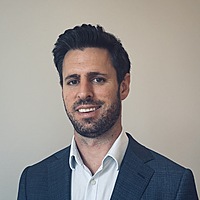
Tom is Deputy Managing Editor at Livewire Markets, having worked as a writer and editor for 10 years, specialising in investing and personal finance. He has previously worked at Finder, FourFourTwo and Man Of Many covering everything from film...
Expertise
Tom is Deputy Managing Editor at Livewire Markets, having worked as a writer and editor for 10 years, specialising in investing and personal finance. He has previously worked at Finder, FourFourTwo and Man Of Many covering everything from film...
Expertise
Comments
Comments
Sign In or Join Free to comment