Singapore's VCC: A Growing Challenger to Europe's UCITS Fund Structure
 Add us as a preferred Google source
Singapore's Variable Capital Company has grown rapidly since its introduction in 2020. With more than 1,400 VCCs and 3,400 sub-funds by the end of 2025, could it offer specialist fund managers a more cost-effective alternative to European UCITS structures?
When Singapore introduced the Variable Capital Company (VCC) in January 2020, it was addressing a gap in one of Asia's leading financial centres.
Singapore had developed a substantial asset-management industry, attracting international investment managers, institutional capital and family offices. However, it needed a fund structure designed specifically for the requirements of modern investment managers.

Six years later, the VCC has become an increasingly important part of Singapore's fund-management landscape.
At the end of 2025, Singapore had 1,406 VCCs incorporated or re-domiciled, representing 3,443 sub-funds. That compared with approximately 1,200 VCCs and 2,695 sub-funds at the end of 2024.
Over the same period, Singapore's overall assets under management increased by 10.1% to S$6.7 trillion.
These figures highlight the growing importance of Singapore as an international asset-management centre.
The more interesting question for fund managers, however, is whether the VCC can provide a credible alternative to established European fund structures, particularly for managers targeting institutional investors, family offices and private wealth across Asia-Pacific.
From a new structure to an established fund domicile
The VCC was introduced under Singapore's Variable Capital Companies Act 2018, which came into effect on 14 January 2020.
Its defining feature is flexibility.
Unlike a conventional company, a VCC is specifically designed for investment funds. Its capital can vary as investors subscribe and redeem shares, while an umbrella VCC can accommodate multiple sub-funds with legally segregated assets and liabilities.
This allows an investment manager to establish several strategies within a common structure rather than creating an entirely separate fund company for every mandate.
The growth in sub-funds is particularly revealing.
Between the end of 2024 and the end of 2025, the number of VCCs increased by approximately 17%, while sub-funds increased by around 28%.
That suggests managers are increasingly using the structure as a platform for multiple strategies and investment mandates.
The VCC is no longer simply a new legal vehicle. It is becoming part of Singapore's broader fund-management infrastructure.
Singapore's international appeal
The growth of the VCC coincides with the expansion of Singapore's overall asset-management industry.
According to the Monetary Authority of Singapore's 2025 Asset Management Survey, industry assets under management reached S$6.7 trillion at the end of 2025.
Approximately 76% of assets were sourced from outside Singapore, while around 88% were invested outside the country.
These figures demonstrate that Singapore is not merely a domestic fund market. It is an international centre through which capital is managed and invested globally.
For fund managers, the advantages include an established financial-services ecosystem, access to professional service providers, a sophisticated banking sector and proximity to institutional investors, family offices and private wealth across Asia.
Singapore's regulatory framework and established legal system also provide a familiar environment for international investors.
For managers seeking to build a specialist investment business, the jurisdiction offers the potential to combine fund administration, investment management and regional business development within one financial centre.
The cost comparison: VCC versus UCITS
The cost of establishing and operating a fund is a significant consideration for emerging managers.
This is particularly true when launching a new strategy with relatively modest initial assets under management.
A European UCITS fund and a Singapore VCC, however, are not directly interchangeable.

UCITS is a harmonised European regulatory framework that allows qualifying authorised funds to be marketed to retail investors across the European Union, subject to the applicable requirements.
That distribution capability is a major commercial advantage.
it also requires a substantial supporting infrastructure, including fund authorisation, governance, administration, depositary arrangements, audit, legal documentation and regulatory reporting.
The exact requirements depend on the fund's domicile, legal structure and operating arrangements.
A Singapore VCC also requires professional infrastructure, appropriate governance and regulatory compliance. Its costs depend on the fund's strategy, service providers, regulatory arrangements and investor base.
The difference is that a manager using a VCC may not need to pay for the European distribution infrastructure associated with UCITS if its target investors do not require it.
For a specialist manager raising capital from institutional investors, family offices or sophisticated private investors in Asia-Pacific, that distinction can be commercially important.
The relevant question is not simply which structure is cheaper. It is which structure provides the required investor access and regulatory framework at the most appropriate total cost.
What does it cost to establish a Singapore VCC?
Singapore's official incorporation fees are relatively straightforward.
The Accounting and Corporate Regulatory Authority (ACRA) charges S$8,000 to register a VCC, with an additional S$400 for each sub-fund. The annual return filing fee is S$1,600.
These are government fees rather than the total cost of establishing or operating a fund.
The more substantial expenses typically involve legal documentation, fund administration, audit, tax, directors, compliance and the fund-management arrangements.
Managers should also consider whether they need a standalone operating platform or can use an established fund-management provider.
The latter approach can change the economics significantly. A manager operating through an existing platform may avoid some of the costs associated with establishing and maintaining a completely independent management infrastructure, although platform fees and contractual obligations must be taken into account.
There is no single annual operating cost applicable to every VCC. A straightforward fund with a limited investor base may have a very different cost profile from a multi-strategy umbrella with complex assets, numerous investors and extensive reporting requirements.
For this reason, comparisons should be based on like-for-like quotations rather than headline estimates alone.
Why UCITS can be more expensive — and why that may be justified
The European UCITS market has developed over several decades into one of the world's most established fund-distribution ecosystems.
For managers targeting European retail investors, the framework offers access to distribution channels that would otherwise be difficult to replicate.

That access has value.
However, a manager launching a specialist natural-resources, private-credit, infrastructure or alternative-investment strategy may have a different commercial objective.
Rather than targeting thousands of retail investors across Europe, the manager may initially seek commitments from a smaller number of institutional investors, family offices and sophisticated private clients.
In that situation, the manager needs to consider whether the benefits of a UCITS structure justify the additional costs and operational requirements.
The European Securities and Markets Authority has highlighted the significance of distribution expenses in its analysis of retail investment products. In its 2025 report, distribution costs accounted for 48% of the total costs paid by investors in UCITS.
This is a measure of investor-level costs, not the cost of establishing a fund. Nevertheless, it illustrates the importance of the wider distribution ecosystem surrounding European retail investment products.
For a fund that does not require broad European retail distribution, the economics may be different.
A VCC can provide an alternative route for managers whose investor base and commercial strategy are better suited to Singapore and the wider Asia-Pacific region.
A structure suited to specialist and alternative managers
The VCC has attracted interest across a range of investment strategies.
These include private equity, venture capital, hedge funds, traditional investment strategies, real estate and structures used by external asset managers and multi-family offices.
The umbrella model is particularly attractive to managers who intend to develop several products over time.
For example, an investment manager might establish a flagship global equities fund and subsequently add natural resources, private credit or co-investment strategies.
Subject to the applicable legal, regulatory and tax requirements, an umbrella VCC can accommodate multiple sub-funds within the same broader structure.
Each sub-fund benefits from the shared umbrella architecture while maintaining statutory segregation of assets and liabilities.
This can help reduce duplication and support economies of scale as a management business expands.
It does not eliminate the costs of launching additional strategies. Each sub-fund still requires appropriate documentation, administration, governance and compliance.
Nevertheless, the structure provides a potentially efficient foundation for managers seeking to build a multi-strategy business.
The importance of choosing the right fund domicile
The comparison between Singapore and Europe should not be reduced to a contest between two legal structures.
The choice of domicile depends on the manager's investment strategy, target investors, distribution requirements, tax position, regulatory obligations and long-term commercial objectives.
UCITS remains a compelling option for managers seeking broad European retail distribution.
A Singapore VCC may be more appropriate for managers focused on institutional capital, family offices, private wealth and alternative strategies across Asia-Pacific.
Some managers may ultimately require more than one structure to serve different investor groups and markets.
For an emerging manager, however, the initial decision is particularly important. Fixed operating costs can have a disproportionate impact on a fund with a relatively small asset base.

A structure that provides capabilities the manager does not need can add unnecessary complexity and expense.
Conversely, selecting a cheaper structure that cannot serve the intended investor base may prove a false economy.
The objective should be to match the fund structure to the commercial strategy.
Singapore's next opportunity
Singapore's VCC has made considerable progress since its introduction in 2020.
By the end of 2025, the jurisdiction had recorded 1,406 VCCs and 3,443 sub-funds, while the broader asset-management industry had grown to S$6.7 trillion in assets under management.
The next challenge is to build on that adoption and attract more international investment managers, strategies and institutional capital.
The VCC's appeal rests on more than incorporation costs. It combines a purpose-built investment-fund vehicle with Singapore's financial-services infrastructure, international outlook and access to Asian capital.
For specialist managers, the opportunity is to establish an appropriately regulated fund structure without necessarily paying for distribution capabilities they do not require.
The VCC is not a replacement for UCITS, nor will it be the right choice for every fund.
But for managers whose investors and investment strategies are aligned with Singapore and the wider Asia-Pacific region, it offers a credible alternative worth serious consideration.
The central question for a new manager is therefore not simply whether Singapore is cheaper than Europe.
It is whether Singapore provides the right combination of cost, flexibility, regulation and investor access for the fund the manager actually intends to build.
Never miss an update
Enjoy this wire? Hit the ‘like’ button to let us know.
Stay up to date with my current content by
following me below and you’ll be notified every time I post a wire
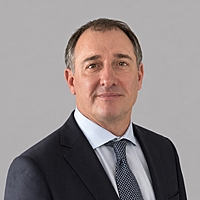
Chief Investment Officer & Director, Janah Capital | Portfolio Manager, ICM Global Funds
Nicholas Boyd-Mathews has more than 35 years of international investment management experience spanning portfolio management, natural resources, institutional asset management, capital markets and corporate finance.
He currently serves as Chief Investment Officer and Director of Janah Capital, where he is responsible for investment strategy, portfolio construction and risk management. He is also a Portfolio Manager at ICM Global Funds, contributing to the firm’s global investment platform and institutional investment
........
The information provided on this website is for use of a general nature only and is not intended to be relied upon as, nor to be suitable for, specific professional advice.
No responsibility for loss occasioned to any persons acting on or refraining from action as a result of any material in this publication can be accepted. Links are provided for your convenience. This does not mean that we endorse, or are associated with those sites and their information.

Never miss an update
Get the latest insights from me in your inbox when they’re published.
5 topics
Chief Investment Officer & Director, Janah Capital | Portfolio Manager, ICM Global Funds Nicholas Boyd-Mathews has more than 35 years of international investment management experience spanning portfolio management, natural resources, institutional...
Chief Investment Officer & Director, Janah Capital | Portfolio Manager, ICM Global Funds Nicholas Boyd-Mathews has more than 35 years of international investment management experience spanning portfolio management, natural resources, institutional...
Comments
Comments
Sign In or Join Free to comment