The AI Bubble is about to burst. There’s just one problem - it already has
The AI correction we had to have and why it is good news.
 Add us as a preferred Google source
Everyone seems to be talking about the AI bubble.
Wall Street strategists are warning about excessive valuations, investors are questioning whether the hyperscalers will ever earn an adequate return on their extraordinary capital expenditure, and comparisons with the dotcom bubble are becoming increasingly common.
It's not difficult to understand the concerns. Trillions of dollars are being committed to AI infrastructure, often on the assumption that future demand will justify today's extraordinary spending.
But there's just one rather awkward problem with the argument that the AI trade is about to collapse.
It already has.
And the numbers are quite remarkable.
The great AI unwind
Goldman Sachs maintains a series of thematic equity baskets, hand-curated by its analysts to capture some of the market's most important investment themes.
Two are particularly interesting.
The GS US Broad AI basket contains companies expected to benefit from the AI revolution. These include businesses developing the technology, manufacturing the semiconductors and building the infrastructure required to power it.
On the other side sits the GS AI At Risk basket, comprising companies whose business models may be disrupted by AI. Think software businesses, IT consultants and professional service providers whose customers may increasingly turn to AI to perform tasks previously undertaken by humans.
In many respects, these baskets represent the two sides of the great AI investment debate: the winners and the potential losers.
And for several years, being long the winners and short the losers was a spectacular trade. GS AI Beneficiaries have risen almost 500% from the end of 2022 to June 30 this year. Meanwhile AI At Risk names have fallen around 15%.

Until it wasn't.
As shown below, since June 30, AI Beneficiaries have fallen almost 30%. Over the same period AI At Risk stocks have risen almost 50%.

While investors have been busy debating whether the AI trade is about to unwind, it appears they may have missed the fact that a substantial unwind has already occurred.
From AI darlings to market casualties
The magnitude of the reversal becomes even more apparent when we examine some of the individual companies.
Consider three businesses central to the AI infrastructure boom.
ASML, the Dutch semiconductor equipment giant, has fallen 29% since 30 June. ASML enjoys an extraordinary competitive position as the world's only manufacturer of the extreme ultraviolet lithography machines essential for producing the most advanced semiconductors.
Put simply, without ASML's machines, there would be no AI revolution.
Arm Holdings, whose chip architectures underpin an enormous share of the world's processors and are increasingly important in data centres, has fallen 51% over the same period.
And then there's CoreWeave, the specialist cloud infrastructure provider whose business model is built around supplying the computing capacity required by AI developers which has fallen approximately 50% since the end of June.
Three companies operating in very different parts of the AI ecosystem, but all central to the infrastructure required to support the technology.
The revenge of the AI losers
Perhaps even more interesting is what has happened on the other side of the trade.
Companies previously considered potential victims of AI disruption have staged some extraordinary recoveries.
Take Accenture, the global consulting and technology services giant.
One of the central arguments against Accenture has been that AI will dramatically reduce the need for human consultants and software developers.
Why pay an army of consultants to perform work that increasingly sophisticated AI models may be able to complete in a fraction of the time?
It's a reasonable question.
But there's another side to the argument. Businesses adopting AI still need help integrating new technologies, redesigning processes, managing risks and transforming their organisations.
In other words, the technology that threatens Accenture's traditional business model may also create enormous demand for its services.
Investors appear to have been reassessing that equation, with Accenture's shares rising an extraordinary 103% since 30 June.
Then there's Duolingo, the popular language-learning platform.
With AI models increasingly capable of holding sophisticated conversations in dozens of languages, the threat to traditional language-learning applications seems obvious.
Why pay to learn a language when an AI tutor can teach you for next to nothing?
Yet Duolingo also possesses a globally recognised brand, an enormous user base and a highly engaging, gamified learning experience. AI may ultimately make its product better and cheaper to deliver rather than render it obsolete.
Its shares have rebounded 45% since the end of June.
Finally, consider H&R Block, one of America's best-known tax preparation businesses.
Tax preparation would seem an obvious candidate for AI disruption. Much of the process involves collecting information, applying rules and completing forms, precisely the sort of work AI is increasingly capable of performing.
But tax preparation also involves trust, regulatory complexity and the reassurance of having someone accountable when things go wrong.
H&R Block shares have risen 31% since 30 June.
AI will undoubtedly disrupt many existing business models. But disruption is not the same thing as extinction.
And as investors reassess the likely winners and losers, some of yesterday's most unpopular stocks are enjoying spectacular recoveries.
Are AI valuations really that expensive?
Perhaps the most interesting development is what has happened to the valuations of some of the world's largest AI-related companies.
Given the constant warnings about an AI bubble, you might reasonably expect these businesses to be trading on astronomical earnings multiples.
Yet consider the following forward price-to-earnings ratios:
|
Company |
Forward P/E |
|
Alphabet |
15x |
|
Meta Platforms |
21x |
|
Taiwan Semiconductor Manufacturing |
20x |
|
NVIDIA |
16x |
Source: Bloomberg
These are hardly the sorts of valuations we typically associate with speculative bubbles.
Alphabet, the owner of Google, YouTube and one of the world's leading cloud businesses, trades on approximately 15 times forward earnings.
That's a remarkably modest valuation for a company with enormous existing cash flows and substantial exposure to what may prove to be the most consequential technological revolution of our lifetimes.
Meta, whose AI investments are already improving advertising effectiveness and content recommendations across its platforms, trades on approximately 21 times earnings.
Unlike many speculative AI businesses, Meta has an established and highly profitable business model through which it can monetise AI improvements.
TSMC, the world's leading advanced semiconductor manufacturer, trades on approximately 20 times earnings.
Whatever AI model ultimately wins, someone needs to manufacture the chips. And TSMC occupies an extraordinarily important position in that supply chain.
Then there's NVIDIA, arguably the company most synonymous with the AI revolution.
Despite its extraordinary growth and dominant position in AI accelerators, NVIDIA trades on approximately 16 times forward earnings.
Of course, the recent departure of its legendary founder and CEO, Jensen Huang, represents a significant loss.
Few individuals have been as instrumental in building a company, or indeed an entire industry, as Huang has been.
But as the old saying goes, "Graveyards are full of indispensable men."
NVIDIA is much more than one individual. It has a formidable engineering organisation, an entrenched software ecosystem, deep customer relationships and a technological position that competitors will find extremely difficult to replicate.
While Huang's departure is undoubtedly a setback, we remain confident that NVIDIA can continue to thrive.
And when some of the world's leading AI businesses are available on relatively conventional earnings multiples, the argument that the entire sector remains in speculative bubble territory becomes considerably less persuasive.
A healthy correction, not the end of the revolution
At Plato, we've long believed that the AI revolution will create enormous opportunities, but also considerable risks for investors.
Technological revolutions rarely proceed in a straight line, and stock markets have a habit of getting rather carried away when confronted with an exciting new investment theme.
The internet revolution was real. So were the railways, electricity and telecommunications revolutions.
But that didn't mean every company involved deserved an extraordinary valuation, or that every dollar of capital invested would generate an attractive return.
AI will be no different.
There will be winners, losers and undoubtedly some spectacular failures along the way.
Indeed, we would argue that the AI trade was overdue for a reset.
The extraordinary enthusiasm surrounding AI had encouraged investors to overlook some fairly basic investment principles, including valuation discipline, balance-sheet strength and the importance of sustainable competitive advantages.
A correction helps restore that discipline.
And with some of the world's most important AI companies now trading on considerably more reasonable valuations, we believe the outlook for the sector may be more constructive than the prevailing commentary suggests.
There may also be a timely catalyst on the horizon.
As expected, the Anthropic IPO has been buoyant in early trading. While we remain conscious of the risks associated with its valuation and business model, a successful listing could provide the broader AI trade with a welcome shot in the arm.
The irony of the current AI bubble debate is that everyone seems to be waiting for the great AI unwind.
The numbers suggest we've already had one.
And that may be rather good news for investors.
Never miss an update
Enjoy this wire? Hit the ‘like’ button to let us know.
Stay up to date with my current content by
following me below and you’ll be notified every time I post a wire
David has more than two decades’ experience investing in global equities. Prior to joining Plato Investment Management he worked for JP Morgan Asset Management in London for fifteen years becoming one of the youngest managing directors in the firm’s history. He managed the JP Morgan Europe Equity Plus active-extension fund which was closed to new investors after growing to €6 billion, generating 4% p.a. net alpha over ten years. He also launched and managed the JP Morgan Europe Equity Absolute Alpha Market Neutral fund. In its first twelve months of operation, the fund returned over 20%, and grew assets to €1 bn. In 2014 he was the European Hedge Fund Manager of the Year (UCITS).
........
This communication is prepared by Plato Investment Management Limited (‘Plato’) (ABN 77 120 730 136, AFSL 504616) as the investment manager of the Plato Global Alpha Fund (ARSN 654 914 048) (‘the Fund’). Pinnacle Fund Services Limited (‘PFSL’) (ABN 29 082 494 362, AFSL 238371) is the product issuer of the Fund. PFSL is not licensed to provide financial product advice. PFSL is a wholly-owned subsidiary of the Pinnacle Investment Management Group Limited (‘Pinnacle’) (ABN 22 100 325 184). The Product Disclosure Statement (‘PDS’) and Target Market Determination (‘TMD’) of the Fund are available via the links below. Any potential investor should consider the PDS and TMD before deciding whether to acquire, or continue to hold units in, the Fund.
Link to the Product Disclosure Statement
Link to the Target Market Determination
For historic TMD’s please contact Pinnacle client service Phone 1300 010 311 or Email [email protected]
This communication is for general information only. It is not intended as a securities recommendation or statement of opinion intended to influence a person or persons in making a decision in relation to investment. It has been prepared without taking account of any person’s objectives, financial situation or needs. Any persons relying on this information should obtain professional advice before doing so. Past performance is for illustrative purposes only and is not indicative of future performance.
Whilst Plato, PFSL and Pinnacle believe the information contained in this communication is reliable, no warranty is given as to its accuracy, reliability or completeness and persons relying on this information do so at their own risk. Subject to any liability which cannot be excluded under the relevant laws, Plato, PFSL and Pinnacle disclaim all liability to any person relying on the information contained in this communication in respect of any loss or damage (including consequential loss or damage), however caused, which may be suffered or arise directly or indirectly in respect of such information. This disclaimer extends to any entity that may distribute this communication.
Any opinions and forecasts reflect the judgment and assumptions of Plato and its representatives on the basis of information available as at the date of publication and may later change without notice. Any projections contained in this presentation are estimates only and may not be realised in the future.
Unauthorised use, copying, distribution, replication, posting, transmitting, publication, display, or reproduction in whole or in part of the information contained in this communication is prohibited without obtaining prior written permission from Plato. Pinnacle and its associates may have interests in financial products and may receive fees from companies referred to during this communication.

Never miss an update
Get the latest insights from me in your inbox when they’re published.
2 topics
8 stocks mentioned
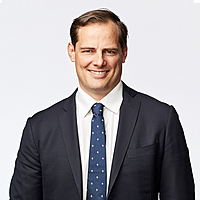
David has more than two decades’ experience investing in global equities. Prior to joining Plato Investment Management he worked for JP Morgan Asset Management in London for fifteen years becoming one of the youngest managing directors in the...
David has more than two decades’ experience investing in global equities. Prior to joining Plato Investment Management he worked for JP Morgan Asset Management in London for fifteen years becoming one of the youngest managing directors in the...
Comments
Comments
Sign In or Join Free to comment
most popular
Shares
The only 3 "Buys" in the ASX 10
Livewire Markets
Shares
Australia’s top 20 stocks – the price of conformity
Spheria Asset Management