TOL - 31st Jul, 2026
The AI trillion-dollar question spooking markets: Will hyperscalers justify the biggest spending spree in history?
Will the trillions of dollars being poured into artificial intelligence by the hyperscalers ultimately earn an adequate return?
 Add us as a preferred Google source
There is one question that matters more than almost any other in markets today.
Will the trillions of dollars being poured into artificial intelligence by the hyperscalers ultimately earn an adequate return?
Meta. Microsoft. Amazon. Alphabet. Nvidia. Together, they're engaged in one of the largest capital spending programs the corporate world has ever witnessed. Data centres are being built at breakneck speed, power infrastructure is expanding, and AI chips are disappearing from factory floors as fast as they can be made.
The investment case for AI may ultimately come down to a surprisingly simple question:
Will the world spend enough on AI to pay for it all?
The bulls and the bears have very different answers.
The optimists see AI as the beginning of a third industrial revolution. They argue that AI will become as indispensable as electricity or the internet, transforming virtually every industry, dramatically boosting productivity, and ushering in an age of abundance. If they're right, today's extraordinary capital spending may eventually look like a bargain.
The sceptics see something very different. They argue that history is littered with periods of technological euphoria where investment ran far ahead of demand. In their view, AI revenues will never come close to justifying the staggering sums being spent on chips, data centres, electricity and infrastructure. If they’re right, today's spending boom could become tomorrow's capital destruction.
A simple reality check
Forecasts for AI spending have become almost surreal.
Goldman Sachs estimates that Amazon, Microsoft, Alphabet and Meta alone will invest around US$5.3 trillion in AI infrastructure between 2025 and 2030. That figure includes data centres, GPUs, networking, power infrastructure and the enormous ecosystems needed to support them.
The obvious question for investors is:
How much revenue must this infrastructure ultimately generate to justify that investment?
A simple back-of-the-envelope calculation provides a useful reality check.
Assume:
-
US$5.3 trillion of cumulative investment.
- An average asset life of 8 years.
- Investors require approximately a 12% annual return on capital.
- 40% cash margin
Under those assumptions, which are, of course, open to debate, the AI ecosystem would ultimately need to generate approximately US$1 trillion of annual operating cash flow. At a 40% operating cash flow margin, that implies around US$2.7 trillion of incremental annual revenue, equivalent to roughly 2–3% of global GDP or the entire GDP of the UK or India.
To put that figure in perspective, the global software industry generates around US$800 billion to US$1 trillion of annual revenue, global advertising around US$1 trillion, and global pharmaceuticals approximately US$1.7 trillion.
If AI ultimately transforms professional services, software, healthcare, manufacturing, financial services and transportation, it is conceivable that it could become one of the largest industries in the world.
But the bear case is equally compelling.
If enterprise adoption proves slower than expected, or businesses conclude that many AI applications fail to generate an adequate return on investment, these spending assumptions become much harder to sustain. Large enterprises may spend heavily, but smaller businesses could simply rely on low-cost AI features bundled into existing software subscriptions.
In that world, the industry could find itself with enormous computing capacity chasing insufficient demand. Prices would come under pressure, returns on invested capital would disappoint, and today's record-breaking capital expenditure could become tomorrow's case study in capital misallocation.
Worse still, AI may prove extraordinarily valuable for society while capturing relatively little economic rent for the companies providing it. If competition drives AI models towards commodity pricing, much of the productivity gain may accrue to customers rather than shareholders. That's exactly what happened in airlines, PCs and many internet businesses.
Framing the debate this way shifts the focus from the technology itself to the economics. The question is no longer whether AI will change the world. It's whether the world's businesses will ultimately spend an extra ~US$2.5 trillion every year using it.
So how should investors think about the odds? While nobody knows how the AI story will unfold, we do know something about history.
One of the most reliable lessons from the past 30 years is what has happened to companies that dramatically increase capital expenditure.
We show in the chart below the stock price performance of the 2.5% of companies with the highest capex growth each year using a global investment universe of around 10,000 companies per year.
The result is remarkable.
A hypothetical US$1 million invested in 1997 and rebalanced each year into the 2.5% of companies with the fastest capex growth would have shrunk to just US$87,000 today, even before allowing for inflation.

That is an astonishing amount of value destruction. Indeed, extreme capex growth is one of Plato’s 150 Red Flags that underpins our approach to shorting.
The implication isn't that capital expenditure is inherently bad. Far from it. Some of history's greatest businesses were built through bold investment. The problem is that markets have consistently overestimated the returns generated during periods of investment euphoria. Building capacity is easy. Earning an attractive return on that capacity is much harder.
Does that mean today's hyperscalers are destined to suffer the same fate?
Of course not.
Unlike many historical investment booms, today's leaders possess fortress balance sheets, dominant competitive positions and genuine technological advantages. AI could very well become one of the greatest wealth-creating innovations in history.
AI may prove to be the most important technological breakthrough of our lifetimes.
That is not the same as saying today's AI investments will generate attractive returns for investors.
Every great investment boom has been built on a true story. Railways transformed transport. The internet transformed communication. Smartphones transformed computing. In each case, the technology changed the world. The harder question was who ultimately captured the economic value.
That is the question investors should be asking today.
Not whether AI will change the world.
Whether the companies investing trillions of dollars to build it will earn an adequate return.
Invest in the Plato Global Alpha Fund
Dr David Allen is Plato Investment Management's Head of Long/Short Strategies and Portfolio Manager of the Plato Global Alpha Fund. To June 30, 2026, The Fund has delivered +24.5% p.a. after fees since inception (1 September 2021).
You can invest in the Fund on the ASX via the Plato Global Alpha Complex ETF (ASX: PGA1). Learn more here: (VIEW LINK)

ETF
Plato Global Alpha Complex ETF (PGA1)
Global Shares
View
Managed Fund
Plato Global Alpha Fund
Global Shares
View
Never miss an update
Enjoy this wire? Hit the ‘like’ button to let us know.
Stay up to date with my current content by
following me below and you’ll be notified every time I post a wire
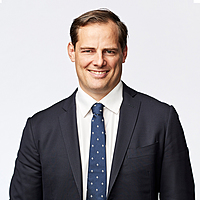
David has more than two decades’ experience investing in global equities. Prior to joining Plato Investment Management he worked for JP Morgan Asset Management in London for fifteen years becoming one of the youngest managing directors in the firm’s history. He managed the JP Morgan Europe Equity Plus active-extension fund which was closed to new investors after growing to €6 billion, generating 4% p.a. net alpha over ten years. He also launched and managed the JP Morgan Europe Equity Absolute Alpha Market Neutral fund. In its first twelve months of operation, the fund returned over 20%, and grew assets to €1 bn. In 2014 he was the European Hedge Fund Manager of the Year (UCITS).
........
This communication is prepared by Plato Investment Management Limited (‘Plato’) (ABN 77 120 730 136, AFSL 504616) as the investment manager of the Plato Global Alpha Fund (ARSN 654 914 048) (‘the Fund’). Pinnacle Fund Services Limited (‘PFSL’) (ABN 29 082 494 362, AFSL 238371) is the product issuer of the Fund. PFSL is not licensed to provide financial product advice. PFSL is a wholly-owned subsidiary of the Pinnacle Investment Management Group Limited (‘Pinnacle’) (ABN 22 100 325 184). The Product Disclosure Statement (‘PDS’) and Target Market Determination (‘TMD’) of the Fund are available via the links below. Any potential investor should consider the PDS and TMD before deciding whether to acquire, or continue to hold units in, the Fund.
Link to the Product Disclosure Statement
Link to the Target Market Determination
For historic TMD’s please contact Pinnacle client service Phone 1300 010 311 or Email [email protected]
This communication is for general information only. It is not intended as a securities recommendation or statement of opinion intended to influence a person or persons in making a decision in relation to investment. It has been prepared without taking account of any person’s objectives, financial situation or needs. Any persons relying on this information should obtain professional advice before doing so. Past performance is for illustrative purposes only and is not indicative of future performance.
Whilst Plato, PFSL and Pinnacle believe the information contained in this communication is reliable, no warranty is given as to its accuracy, reliability or completeness and persons relying on this information do so at their own risk. Subject to any liability which cannot be excluded under the relevant laws, Plato, PFSL and Pinnacle disclaim all liability to any person relying on the information contained in this communication in respect of any loss or damage (including consequential loss or damage), however caused, which may be suffered or arise directly or indirectly in respect of such information. This disclaimer extends to any entity that may distribute this communication.
Any opinions and forecasts reflect the judgment and assumptions of Plato and its representatives on the basis of information available as at the date of publication and may later change without notice. Any projections contained in this presentation are estimates only and may not be realised in the future.
Unauthorised use, copying, distribution, replication, posting, transmitting, publication, display, or reproduction in whole or in part of the information contained in this communication is prohibited without obtaining prior written permission from Plato. Pinnacle and its associates may have interests in financial products and may receive fees from companies referred to during this communication.

1 topic
1 stock mentioned
2 funds mentioned
David has more than two decades’ experience investing in global equities. Prior to joining Plato Investment Management he worked for JP Morgan Asset Management in London for fifteen years becoming one of the youngest managing directors in the...
Expertise
David has more than two decades’ experience investing in global equities. Prior to joining Plato Investment Management he worked for JP Morgan Asset Management in London for fifteen years becoming one of the youngest managing directors in the...
Expertise
Comments
Comments
Sign In or Join Free to comment