Tokenisation in 2026
The “RWA trade” moves from narrative to plumbing
 Add us as a preferred Google source
For most of crypto’s history, “real-world assets” (RWAs) have been a promise: bring the 100s of trillions of dollars of traditional finance on-chain, and you get faster settlement, broader access, and programmable money markets. In 2026, that promise is finally turning into products.
The sequence:
- Stablecoins proved product–market fit ($300Bn on-chain dollars growing rapidly).
- The next step: put the assets those dollars buy (T-bills, funds, metals, equities) on the same rails.
- Once assets are on-chain, they become transferable 24/7, instantly settleable, and programmable as collateral.
That’s why tokenisation will become one of the most important quiet compounding themes for 2026.
Tokenised asset market cap growth

Davos: Fink and Armstrong are describing the same end-state
With BlackRock's Larry Fink proclaiming at Davos 2026 that "tokenization is inevitable" and advocating for a unified blockchain to accelerate its adoption, the stage is set for tokenisation to become a dominant trend this year.
Fink has been explicit that finance is at “the beginning of the tokenization of all assets,” framing tokenisation as a structural shift rather than a crypto side-quest.
Coinbase CEO Brian Armstrong is pushing from the other side of the stack. Coming out of Davos, he emphasized stablecoins as foundational “plumbing” and pointed to tokenisation expanding from US Dollars into stocks, real estate, funds and more, with the potential to widen access globally. Crypto is not just banking the unbanked but, brokering the unbrokered too, anyone anywhere with a smart phone can purchase a fraction of a TSLA or NVDA share or gold or silver.
Different incentives, same destination: on-chain capital markets.
What tokenisation actually is
Tokenisation is not “making stocks into JPEGs.” It’s a legal + operational wrapper that lets an asset be represented and transferred as a token:
- Legal claim + custody (who owns what, where it sits, how redemption works)
- Compliance layer (KYC/AML, transfer restrictions where required)
- Blockchain rails (24/7 transfer, near-instant settlement, programmability)
The blockchain doesn’t replace the law; it replaces a lot of the friction. Like ETFs for funds, it is just a more efficient wrapper.
Why 2026 is the inflection
1) On-chain “cash and carry” is scaling
RWAs ex-stablecoins have grown sharply since end-2024, and tokenised Treasuries are emerging as the wedge product (cash wants yield, on-chain).
2) Regulation is moving quickly
WEF’s own 2026 outlook explicitly calls out improved regulatory clarity as an adoption accelerant and points to the proposed U.S. CLARITY Act as part of that market-structure push. Trump at Davos "Congress is working very hard on crypto market structure legislation, which I hope to sign very soon."
The Clarity Act is scheduled for a senate vote later this week, having passed the House with strong bi-partisan could be signed into law very soon, and could be the catalyst the whole market needs to move on from a disappointing 2025.
Metals are already tokenised (more product market fit)
Gold is the cleanest early case: it’s globally recognised collateral with real-world frictions (storage, transport, market hours). Tokenisation turns it into a digitally transferable bearer-like instrument that can also be used inside crypto collateral frameworks.
The tokenised commodity market cap is around $5.5Bn, $4.9Bn of that is gold, but other precious metals are growing quickly this year.

Tokenised equities: the “xStocks” beta test
Equities are the pinnacle of the tokenisation trend because they’re the biggest pool of value and the most operationally constrained. The experimentation is already happening: products like xStocks are essentially a beta test for what equity ownership looks like when it becomes composable and 24/7 transferable.
Even if the first wave is jurisdiction-limited and structurally imperfect, it’s hard to unsee the direction once markets taste always-on settlement.

How to invest in the theme
1) Own the rails (settlement layers + infrastructure)
As more assets settle on public blockchains, the toll roads are:
- high-throughput settlement layers,
- interoperability/messaging,
- oracle/attestation layers,
- custody/compliance middleware.
This is the “picks-and-shovels” allocation: you don’t need to perfectly pick which issuer wins—just that the pie grows.

2) Own the issuers/platforms tokenising real assets:
Ondo
If you want a single-name, crypto-native platform levered to the RWA trend, Ondo is a good example to discuss.
- Ondo’s OUSG product provides exposure to short-term U.S. Treasuries / money-market style holdings with 24/7 mint/redemption (for eligible investors).
- Ondo also has USDY, described as a tokenised yield product backed by short-term Treasuries and bank deposits (structure matters here—read the docs and restrictions).
- The ONDO token is explicitly positioned as a governance token for the Ondo DAO / Flux Finance, with a fixed initial supply stated in Ondo’s docs.

At Merkle Tree we prefer to take bigger positions in the picks and shovels, infrastructure, protocols suffer a lots of volatility and some have limited moats. The blockchains, however, have network effects and different pros and cons in terms of speed, cost and security, I did a deeper dive in to Solana a few months ago that unpacks some of this.
Never miss an update
Enjoy this wire? Hit the ‘like’ button to let us know.
Stay up to date with my current content by
following me below and you’ll be notified every time I post a wire
Ryan McMillin is the Chief Investment Officer and co-founder of Merkle Tree Capital, a specialist digital asset fund manager, managing the MTC Digital Asset Fund and the MTC Bitcoin and Gold Fund. With more than 20 years of experience across Australia and the U.K., Ryan has built his career in asset management, hedge funds and product innovation.
As CIO for the MTC Digital Asset Fund, Ryan has delivered exceptional returns for investor, including the best performing fund in Australia for FY24 and top 3 fund returns for CY23 and CY24 per AFR reporting
Before launching Merkle Tree Capital, Ryan held senior roles at leading firms including BlackRock, GAM, Coutts & Co., AMP Capital, Nemesis Asset Management, and Sarasin & Partners
........
Disclaimer
Merkle Tree Capital Pty Ltd (CAR) is a corporate authorised representative of Boutique Capital Pty Ltd (BCPL) AFSL 508011, CAR Number 1293010. CAR is an investment manager of the fund(s) described elsewhere in this document, or in other documentation (Fund).
To the extent to which this document contains advice it is general advice only and has been prepared by the CAR for individuals identified as wholesale investors for the purposes of providing a financial product or financial service, under Section 761G or Section 761GA of the Corporations Act 2001 (Cth).
The information herein is presented in summary form and is therefore subject to qualification and further explanation. The information in this document is not intended to be relied upon as advice to investors or potential investors and has been prepared without taking into account personal investment objectives, financial circumstances or particular needs. Recipients of this document are advised to consult their own professional advisers about legal, tax, financial or other matters relevant to the suitability of this information.
The investment summarised in this document is subject to known and unknown risks, some of which are beyond the control of CAR and their directors, employees, advisers or agents. CAR does not guarantee any particular rate of return or the performance of the Fund, nor does CAR and its directors personally guarantee the repayment of capital or any particular tax treatment.
The materials contained herein represent a general summary of CAR’s current portfolio construction approach. CAR is not constrained with respect to any investment decision making methodologies and may vary from them materially at its sole discretion and without prior notice to investors. Depending on market conditions and trends , CAR may pursue other objectives or strategies considered appropriate and in the best interest of portfolio performance.
There are risks involved in investing in the CAR’s strategy. All investments carry some level of risk, and there is typically a direct relationship between risk and return. We describe what steps we take to mitigate risk (where possible) in the Fund’s Information Memorandum. It is important to note that despite taking such steps, the CAR cannot mitigate risk completely.
This document was prepared as a private communication to clients and is not intended for public circulation or publication or for the use of any third party, without the approval of CAR. Whilst this report is based on information from sources which CAR considers reliable, its accuracy and completeness cannot be guaranteed. Data is not necessarily audited or independently verified. Any opinions reflect CAR’s judgment at this date and are subject to change. CAR has no obligation to provide revised assessments in the event of changed circumstances. To the extent permitted by law, BCPL, CAR and their directors and employees do not accept any liability for the results of any actions taken or not taken on the basis of information in this report, or for any negligent misstatements, errors or omissions.
This Document is informational purposes only and is not a solicitation for units in the Fund. Application for units in the Fund can only be made via the Fund’s Information Memorandum and Application Form.

4 topics
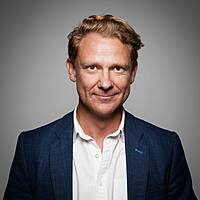
Ryan McMillin is the Chief Investment Officer and co-founder of Merkle Tree Capital, a specialist digital asset fund manager, managing the MTC Digital Asset Fund and the MTC Bitcoin and Gold Fund. With more than 20 years of experience across...
Expertise
Ryan McMillin is the Chief Investment Officer and co-founder of Merkle Tree Capital, a specialist digital asset fund manager, managing the MTC Digital Asset Fund and the MTC Bitcoin and Gold Fund. With more than 20 years of experience across...
Expertise
Comments
Comments
Sign In or Join Free to comment