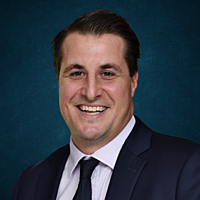
War time markets & where capital is flowing in a fragmenting world | #49 Michael Frazis
Michael discusses geopolitics, capital concentration, AI & more — hear how these forces are reshaping markets and portfolio positioning.
 Add us as a preferred Google source

In this episode of The Rate of Change, Murdoch Gatti sits down with Michael Frazis, Founder and Portfolio Manager of Frazis Capital Partners, to discuss the shifting macro landscape and how capital is being deployed in an increasingly fragmented global market.
If you are interested in war time markets, capital flows, artificial intelligence, and how professional investors are positioning portfolios in a changing world, then you will enjoy this conversation.
Markets are no longer being driven by a single narrative. Geopolitics, energy shocks, inflation and technological disruption are colliding — creating a far more complex and uneven investment environment.
In this environment, capital is not flowing evenly.
It is concentrating into specific areas — AI infrastructure, semiconductors, defence, energy and large-scale platform businesses — while other parts of the market, particularly software and consumer-facing sectors, face increasing pressure.
Frazis outlines how this shift is reshaping opportunity sets globally, and how his firm is navigating risk, volatility and changing market regimes through a combination of fundamental insight and quantitative risk management.
Key themes discussed:
• How war time dynamics and geopolitical tensions are actively reshaping global markets and capital flows
• The structural shift away from globalisation towards a more fragmented, multipolar world
• Why capital is no longer flowing evenly — and instead concentrating into specific sectors and themes
• Why energy, commodities and defence are emerging as structural beneficiaries in this environment
• The impact of rising fuel, labour and input costs on consumers and broader market dynamics
• Why Australia, as a commodity exporter, may be relatively well positioned in the current cycle
• The role of currency movements, particularly the Australian dollar, in offshore portfolio returns
• The scale of AI-driven capital expenditure and the infrastructure required to support it
• Why semiconductors and critical bottlenecks (NVIDIA – NVDA, Broadcom – AVGO) sit at the centre of the AI investment cycle
• The broader capex cycle spanning AI, energy, defence and industrial capacity
• The increasing concentration of market returns in a small number of mega-cap companies (Alphabet – GOOGL, Microsoft – MSFT, Amazon – AMZN, Meta – META, Apple – AAPL)
• How passive investment flows are reinforcing these winners while creating dispersion beneath the surface
• The widening divergence between large platform businesses and traditional software companies
• Why parts of software (Atlassian – TEAM, Adobe – ADBE, WiseTech – WTC.AX, Block – XYZ, Salesforce – CRM, GitLab – GTLB) may face structural pressure from AI
• How artificial intelligence is beginning to reshape business models, margins and competitive moats in real time
• Lessons from companies including Costco (COST), Walmart (WMT), Tesla (TSLA), BlackBerry (BB) and DHL Group (DHL.DE) in understanding scale, disruption and durability
• Why this is becoming a true stock picker’s market, with increasing dispersion across companies and sectors
• The growing importance of risk management and portfolio construction in a volatile, late-cycle environment
• How professional investors are positioning portfolios to navigate uncertainty and capture asymmetric opportunities
Follow The Rate Of Change to never miss a ROCast!
Never miss an update
Enjoy this wire? Hit the ‘like’ button to let us know.
Stay up to date with my current content by
following me below and you’ll be notified every time I post a wire
Murdoch: Adviser & CEO @ York Wealth Management. 'The Rate of Change' podcast shares the insights of some of the brightest minds in asset management.
We work with High-Net-Worth individuals, institutions & family offices to help grow & protect their wealth.
Outside of working with clients, Murdoch & his wife Yasmin, an Executive Assistant to the Chairman of Wealth at a global investment firm, have 2 young children, a boy & a girl.
........
York Wealth Management Pty Ltd ABN 46 605 610 679 is an Corporate Authorised Representative of Samuel Allgate Investments Pty Ltd AFSL No. 420170; Financial Adviser Authorised Representative Number 001007979.
This article has been prepared without taking into consideration any investor’s financial situations, objectives or needs. Accordingly, before acting on the advice in this article, you should consider its appropriateness to your financial situation, objectives and needs. Every reasonable effort has been made to ensure the information provided is correct, but we cannot make any representation nor warranty as to the accuracy, completeness or currency of that information. To the extent permissible by law, no responsibility for any errors or misstatements is taken, negligent or otherwise. SAI or its authorised representatives may also receive fees or brokerage from dealing in financial products, see the Financial Services Guide for information about the services offered available at York Wealth Management.
.png)
5 topics
27 stocks mentioned
.png)
Murdoch: Adviser & CEO @ York Wealth Management. 'The Rate of Change' podcast shares the insights of some of the brightest minds in asset management. ...
Expertise
Murdoch: Adviser & CEO @ York Wealth Management. 'The Rate of Change' podcast shares the insights of some of the brightest minds in asset management. ...
Expertise
Comments
Comments
Sign In or Join Free to comment