
TOL - 7th Jan, 2026
What the next phase of the dividend cycle means for Australian investors
Income in 2026 will be about more than headline yields. Diversification, franking credits and choices will separate winners from traps.
 Add us as a preferred Google source
There’s one thing we can say with confidence about the outlook for equity income in 2026 - that is that dividends and franking credits will remain a critical component in most Australian portfolios.
Some income investors may feel a little flat with ASX 200 dividends down 3.6% so far in 2025 compared with 2024. But with active, tax-aware management of a diversified equity portfolio, investors could still have captured a disproportionately larger share of the roughly $90 billion in dividends paid this year and the $30 billion in franking credits.
For Australian retirees and low-tax investors, franking continues to be the icing on the cake.

Dividends stabilise as 2026 approaches
Encouragingly, Plato Investment Management’s proprietary dividend-cut model has strengthened in the latter part of 2025. It now indicates that the probability of dividend cuts is below average.
Figure 1: Dividends Plato

Source: Plato Investment Management
As a result, we expect a modest uplift in overall dividend payouts across Australian equities in 2026. At the index level, we project the ASX 200 will deliver a gross yield of around 4.4% (including franking credits).
But, as always, active management and tax-aware portfolio construction should be able to generate meaningfully higher income than the index alone.
Where to look for income in 2026
Energy is where we see the greatest risk of dividend cuts, largely driven by a weakening oil price over the past 12 months.
In contrast, industrials, including select mining services companies, offer attractive opportunities. High gold prices have supported increased investment across the sector, which should help underpin improving dividends. We also remain constructive on consumer discretionary, where spending has proven more resilient following interest-rate cuts.
When it comes to the banks, for now, Westpac (ASX: WBC) stands out as our pick of the Big Four - for both capital growth and dividends in 2026. Dividend yields across the other major banks remain healthy, with gross yields of 5.7%–5.9%, comfortably above market levels.
However, here’s a left-field prediction: 2026 may be the year global banks outshine their Australian counterparts when taking dividends and capital growth into account. We advocate for a blend of Australian and Global equity income strategies in portfolios.
As CBA’s recent share-price wobble showed, relying heavily on the traditional big-name ASX dividend stocks (such as the big banks and Telstra) for income carries significant risk - especially when valuations become stretched.
Why some yields are a warning, not an opportunity
The biggest swing factor is a significant decline in commodity prices, which would pressure the major miners and their historically strong payouts. Geopolitical conflict will also continue to be a heightened risk factor in 2026, but trying to predict such shocks is futile.
We prefer to ensure our portfolios are diversified and better protected from outsized impacts in the event of shocks.
Beware too of classic dividend traps - if a stock’s historical yield looks unusually generous, it almost certainly reflects a company with impaired growth prospects.
Don’t put all your yield in one basket
In equity income, diversification is the only free lunch. Investors should ensure their portfolios, or the funds they choose to invest in, are genuinely active and properly diversified. The Australian index, and many naïve index-like yield strategies, carry substantial concentration risks, particularly overweight positions in the big banks, Telstra, and potential dividend traps.
In 2026 and beyond, generating meaningful dividends and franking credits from outside the usual household-name income stocks will be essential.
Please note, this wire is part of Livewire's Ultimate Investing Guide for 2026. The full guide is available for download here.
Never miss an update
Enjoy this wire? Hit the ‘like’ button to let us know.
Stay up to date with my current content by
following me below and you’ll be notified every time I post a wire
Don has over 25 years investment management experience. He founded Plato Investment Management Limited in 2006.
Prior to Plato, Don was Head of Active Equities, Asia Pacific and a member of the global Senior Management Group at State Street Global Advisors, responsible for over $10B in active and enhanced equity investments. Earlier he held various positions at Westpac Investment Management, including Chief Investment Officer, Head of Equities. During his time at Westpac he was also instrumentally involved in the mergers of BT and Rothschild.
Don has a strong interest in responsible investment and governance. He has a PhD in Finance and a Bachelor of Commerce with First Class Honours from UQ, and a University Medal.
........
Livewire gives readers access to information and educational content provided by financial services professionals and companies ("Livewire Contributors"). Livewire does not operate under an Australian financial services licence and relies on the exemption available under section 911A(2)(eb) of the Corporations Act 2001 (Cth) in respect of any advice given. Any advice on this site is general in nature and does not take into consideration your objectives, financial situation or needs. Before making a decision, please consider these and any relevant Product Disclosure Statement. Livewire has commercial relationships with some Livewire Contributors.
DOWNLOAD THE FREE EBOOK FROM
The Ultimate Investing Guide for 2026
Livewire has handpicked a selection of investment experts for their outlook for the year ahead.

DOWNLOAD THE FREE EBOOK FROM
The Ultimate Investing Guide for 2026
Livewire has handpicked a selection of investment experts for their outlook for the year ahead.

5 topics
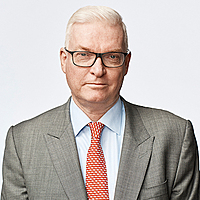
Don has over 25 years investment management experience. He founded Plato Investment Management Limited in 2006. Prior to Plato, Don was Head of Active Equities, Asia Pacific and a member of the global Senior Management Group at State Street...
Expertise
Don has over 25 years investment management experience. He founded Plato Investment Management Limited in 2006. Prior to Plato, Don was Head of Active Equities, Asia Pacific and a member of the global Senior Management Group at State Street...
Expertise
Comments
Comments
Sign In or Join Free to comment