TOL - 5th Jan, 2026
Widow-makers and haymakers: the best and worst trades of 2025
As a tumultuous 2025 draws to a close, it is worth reflecting on the year’s worst and best trades, the widow-makers and the haymakers!
 Add us as a preferred Google source
What stands out is how often consensus, “easy” trades were upended. Fortunes were made and lost as geopolitics and macro shocks collided — with Donald Trump once again ever-present in the psyche of investors.
Long quality: a crowded favourite unravels
The long high-quality equities trade has been an investor favourite for years. ETFs that tilt towards stocks with high ROE, low leverage and stable earnings within the MSCI World ex-Australia — companies like Meta Platforms, Apple and Microsoft — have attracted massive inflows. The QUAL ETF alone has more than $8 billion in assets.
This trade worked exceptionally well… until it didn’t. As market leadership narrowed and speculative appetite returned, even seasoned global quality-growth managers began to give back multi-year gains.

At the same time, the market embraced precisely what quality investors tend to avoid. The Goldman Sachs Non-Profitable US Tech basket — including names such as Rivian Automotive and Planet Labs — is up 47.7% year-to-date, as investors once again threw caution to the wind. That rotation has been painful for hedge funds, with the Goldman Sachs Most Short basket rising roughly 22% over the year.

Bitcoin: the Trump crypto thesis disappoints
One of the most widely accepted narratives entering 2025 was that a Trump White House would usher in a golden age for crypto. The logic was seductive: ultra-light regulation combined with animal spirits unleashed by a pro-growth administration would deliver strong returns.
It hasn’t played out that way. Bitcoin is down 6.7% for the year, while the $TRUMP and $MELANIA meme coins have collapsed by approximately 90% and 99% respectively. The lesson was familiar — narrative is not the same thing as realised returns.

European defence: a genuine structural shift
One of Plato Global Alpha’s most profitable trades has been European defence. Trump’s November 2024 victory, combined with Vladimir Putin’s continued aggression in Eastern Europe, was enough to finally rouse the EU from its strategic slumber.
A growing number of European nations have committed to lifting defence spending from 2% of GDP to well over 3.5%. Companies such as Rheinmetall — now indispensable to Europe’s land-based defence — and Rolls-Royce, which is central to the UK’s Trident nuclear submarine capability, have surged. Even traditionally rigid ESG funds have rewritten their rules to allow investment in so-called “defensive weapons”.
This feels less like a trade and more like a tectonic shift. In 2025 alone, the Goldman Sachs European Defence basket has rallied a staggering 168%, and we believe the investment opportunity extends well beyond a single year.

Europe versus the US: valuations matter again
2025 was the year US AI technology was rightly celebrated — and European technology widely mocked. Wags suggested the pinnacle of European innovation was the tethered bottle cap.
Yet markets have a habit of humbling consensus. Despite the narrative, the MSCI Europe delivered a rare annual victory over the MSCI USA, a timely reminder that valuation still matters, even in a world obsessed with growth stories.

US onshoring: the obvious trade that wasn’t
It seemed almost axiomatic that Trump’s aggressive tariff agenda would ignite a boom in US-facing, domestically oriented businesses. Once again, the obvious trade disappointed.
US onshoring beneficiaries have underperformed offshore-aligned businesses by more than 20% this year, as higher input costs, policy uncertainty and retaliatory dynamics offset any theoretical protectionist advantage.

Gold: the king of metals reasserts itself
Another widely held view was that a Trump presidency would boost economic growth and dampen demand for gold. Initially, the market appeared to agree. Following Trump’s victory, gold slid to US$2,667 per ounce, with Reuters declaring: “Gold hastens retreat as dollar rallies on Trump victory.”
Fast forward twelve months and gold sits at US$4,343 per ounce. Plato has maintained long positions in several gold miners, including Perseus Mining and Regis Resources, benefiting from the metal’s renaissance as both a monetary and geopolitical hedge.

Short volatility and call overwriting: capped upside hurts
The world’s largest active ETF — JPMorgan’s Equity Premium Income ETF (JEPI), with roughly US$42 billion in assets — epitomises the popularity of short-volatility strategies. The fund generates income through systematic index call overwriting.
The catch is straightforward: when upside volatility rises, these strategies struggle. In 2025, the plain S&P 500 index has trounced call-overwrite strategies, mirroring the experience of several domestic income-oriented funds that capped their upside at precisely the wrong time.

RENEWABLES vs OIL
Another “lazy trade” that left investors cold was long U.S. energy and short U.S. renewables. With Trump railing against windmills and urging oil majors to “drill, baby, drill,” the logic felt superficially compelling. In practice, the trade broke down. Capital flows finally rotated back into renewables, while oil markets were swamped by a supply glut — driven by accelerating U.S. shale production and a growing lack of discipline within OPEC+. In the final analysis, US Renewables returned the 37% and MSCI USA Energy returned just 4%. Ironically, US Energy names outperformed US Renewables during the Biden administration. One can only speculate what impact the recent events in Venezuela will have on the medium term outlook for US Energy names.

THE ROAD AHEAD
If 2025 taught investors anything, it is that betting the farm on a single macro or thematic view is foolhardy. Plato Global Alpha invests across hundreds of thematics — long and short — explicitly diversifying away the risk of being wrong.
That diversification has not come at the expense of returns. The fund delivered 32% over the year, compared with 13% for the MSCI World. In a year defined by widow-makers and haymakers, flexibility and diversification proved far more valuable than conviction alone.
Never miss an update
Enjoy this wire? Hit the ‘like’ button to let us know.
Stay up to date with my current content by
following me below and you’ll be notified every time I post a wire
David has more than two decades’ experience investing in global equities. Prior to joining Plato Investment Management he worked for JP Morgan Asset Management in London for fifteen years becoming one of the youngest managing directors in the firm’s history. He managed the JP Morgan Europe Equity Plus active-extension fund which was closed to new investors after growing to €6 billion, generating 4% p.a. net alpha over ten years. He also launched and managed the JP Morgan Europe Equity Absolute Alpha Market Neutral fund. In its first twelve months of operation, the fund returned over 20%, and grew assets to €1 bn. In 2014 he was the European Hedge Fund Manager of the Year (UCITS).
........
This communication is prepared by Plato Investment Management Limited (‘Plato’) (ABN 77 120 730 136, AFSL 504616) as the investment manager of the Plato Global Net Zero Hedge Fund (ARSN 654 914 048) (‘the Fund’). Pinnacle Fund Services Limited (‘PFSL’) (ABN 29 082 494 362, AFSL 238371) is the product issuer of the Fund. PFSL is not licensed to provide financial product advice. PFSL is a wholly-owned subsidiary of the Pinnacle Investment Management Group Limited (‘Pinnacle’) (ABN 22 100 325 184). The Product Disclosure Statement (‘PDS’) and Target Market Determination (‘TMD’) of the Fund are available via the links below. Any potential investor should consider the PDS and TMD before deciding whether to acquire, or continue to hold units in, the Fund.
Link to the Product Disclosure Statement: https://plato.com.au/wp-content/uploads/Plato-Global-Net-Zero-Hedge-Fund-PDS.pdf
Link to the Target Market Determination: https://plato.com.au/wp-content/uploads/Plato-Global-Net-Zero-Hedge-Fund-TMD.pdf
For historic TMD’s please contact Pinnacle client service Phone 1300 010 311 or Email [email protected]
This communication is for general information only. It is not intended as a securities recommendation or statement of opinion intended to influence a person or persons in making a decision in relation to investment. It has been prepared without taking account of any person’s objectives, financial situation or needs. Any persons relying on this information should obtain professional advice before doing so. Past performance is for illustrative purposes only and is not indicative of future performance.
Whilst Plato, PFSL and Pinnacle believe the information contained in this communication is reliable, no warranty is given as to its accuracy, reliability or completeness and persons relying on this information do so at their own risk. Subject to any liability which cannot be excluded under the relevant laws, Plato, PFSL and Pinnacle disclaim all liability to any person relying on the information contained in this communication in respect of any loss or damage (including consequential loss or damage), however caused, which may be suffered or arise directly or indirectly in respect of such information. This disclaimer extends to any entity that may distribute this communication.
Any opinions and forecasts reflect the judgment and assumptions of Plato and its representatives on the basis of information available as at the date of publication and may later change without notice. Any projections contained in this presentation are estimates only and may not be realised in the future.

5 topics
5 stocks mentioned
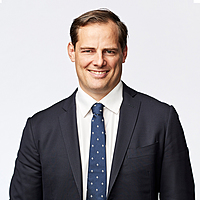
David has more than two decades’ experience investing in global equities. Prior to joining Plato Investment Management he worked for JP Morgan Asset Management in London for fifteen years becoming one of the youngest managing directors in the...
Expertise
David has more than two decades’ experience investing in global equities. Prior to joining Plato Investment Management he worked for JP Morgan Asset Management in London for fifteen years becoming one of the youngest managing directors in the...
Expertise
Comments
Comments
Sign In or Join Free to comment