TOL - 10th Apr, 2026
7 deadly sins of investing: the base-rate fallacy
The same statistical trick that helped O.J. Simpson walk free is costing investors a fortune.
 Add us as a preferred Google source
Before reading this latest edition, you can catch up on our 7 Deadly Sins of Investing article series here:
Deadly Sin 1: Overconfidence
.jpg,https://www.livewiremarkets.com/rails/active_storage/representations/proxy/eyJfcmFpbHMiOnsibWVzc2FnZSI6IkJBaHBBMmlQRGc9PSIsImV4cCI6bnVsbCwicHVyIjoiYmxvYl9pZCJ9fQ==--8a61eb51c1e7437e9b3aa28b77f5e785d5bc12e6/eyJfcmFpbHMiOnsibWVzc2FnZSI6IkJBaDdCem9MWm05eWJXRjBPZ2wzWldKd09oTnlaWE5wZW1WZmRHOWZabWxzYkZzSGFRSmtBbWtDV0FFPSIsImV4cCI6bnVsbCwicHVyIjoidmFyaWF0aW9uIn19--dbcf8d7b6290376ca515990a95f79dcba96deb5c/seven-deadly-sins-investing-part-1%20(1).jpg)
Education
Seven deadly sins of investing: Part 1
View
Deadly Sin 2: The hot-hand fallacy
.jpg,https://www.livewiremarkets.com/rails/active_storage/representations/proxy/eyJfcmFpbHMiOnsibWVzc2FnZSI6IkJBaHBBNGVYRGc9PSIsImV4cCI6bnVsbCwicHVyIjoiYmxvYl9pZCJ9fQ==--e9c09347bb8821b932c6b33329fb3aad3e5e1ce7/eyJfcmFpbHMiOnsibWVzc2FnZSI6IkJBaDdCem9MWm05eWJXRjBPZ2wzWldKd09oTnlaWE5wZW1WZmRHOWZabWxzYkZzSGFRSmtBbWtDV0FFPSIsImV4cCI6bnVsbCwicHVyIjoidmFyaWF0aW9uIn19--dbcf8d7b6290376ca515990a95f79dcba96deb5c/Partido_NBA_-i---i-_(31445366134).jpg)
Education
Seven deadly sins of investing: Part 2 - The hot-hand fallacy
View
Deadly Sin 3: Loss aversion and the sunk cost trap

Education
Loss aversion and the sunk cost trap: 7 deadly sins of investing
View
Deadly Sin 4: The Base-Rate Fallacy
It was the case that gripped a nation. The prosecution appeared to have O. J. Simpson dead to rights.
A bloodied glove at the crime scene matched one found at his home. The victim’s, Nicole Brown Simpson, blood was found in Simpson’s house and in his car, the infamous white Bronco he later fled in. He had no alibi. And drops of blood matching Simpson’s DNA were found leading away from the bodies.
So how did his lawyer, Johnnie Cochran, secure the acquittal of the century?
Part of the answer lies in one of the most powerful (and dangerous) cognitive errors in decision-making: the base-rate fallacy.

ETF
Plato Global Alpha Complex ETF (PGA1)
Global Shares
View
Managed Fund
Plato Global Alpha Fund
Global Shares
View
A statistical sleight of hand
The LAPD’s forensic experts testified that the probability of a random person matching the DNA evidence was extraordinarily small - less than one in ten million.
The defence turned this on its head.
They argued that in a country of roughly 300 million people, this implied there could be around 30 individuals who might match the DNA. Therefore, the odds that the blood belonged to Simpson were “only” 1 in 30.
It sounds compelling. It’s also deeply misleading.
This argument quietly replaces the relevant base rate, the probability that Simpson was the killer given his relationship to the victim, history of domestic violence, lack of alibi, and suspicious behaviour, with an irrelevant one: the probability that a random person in America might match the DNA.
In doing so, it ignores the obvious: Simpson was not a randomly selected individual from the population. He was the ex-husband of the victim, present in the right place at the right time, with no alibi and a trail of incriminating evidence.
Undermine the base rate, and even overwhelming evidence starts to look ambiguous. The jury bought it. Simpson walked free.
A quick test
Before we move to markets, a simple question.
- 1% of people have a disease
- 99% do not
- If you have the disease, there is a 99% chance you test positive
- If you do not, there is a 5% chance you still test positive
If you test positive, what is the probability you actually have the disease?
Most people answer somewhere between 95% and 99%.
The correct answer is 17%.
Why? Imagine 10,000 people:
- 100 have the disease → 99 test positive
- 9,900 do not → 495 test positive
So out of 594 positive tests, only 99 are real cases.
Even with a highly accurate test, false positives dominate because the disease is rare.
If you got this wrong, you’re in good company - around 80–95% of people do, including most doctors. The mistake is systematic: we focus on the strength of the signal and ignore the base rate.
Markets: where the fallacy gets expensive
This same error shows up everywhere in investing.
We are drawn to companies with:
- charismatic founders
- disruptive technologies
- massive addressable markets
- compelling narratives
We look at them and think: this could be the next NVIDIA!
But the base rate matters.
The probability that any given pre-revenue company becomes a generational winner is vanishingly small. Yet investors routinely anchor on the upside scenario and ignore the distribution of outcomes.
Take pre-revenue stocks such as NexGen Energy, PYC Therapeutics, or IperionX. One of their great advantages is that they can’t be valued on traditional metrics - there are no earnings to anchor valuation.
So what actually happens?
A global portfolio of pre-revenue companies, rebalanced monthly since 1996, turns $100,000 into $59,000 over nearly three decades. The only meaningful period of outperformance came during the tech bubble, when the market temporarily suspended disbelief and reason.
By contrast, the same $100,000 invested broadly across all listed companies grows to roughly $900,000, with significantly lower volatility. Case closed.
The lesson
The base-rate fallacy isn’t about intelligence, it’s about instinct.
We overweight compelling signals and underweight underlying probabilities.
In court, that can lead to reasonable doubt. In markets, it leads to permanent capital loss.
The discipline is simple, but not easy:
Start with the base rate. Then update with the evidence, not the other way around.

Invest in a long/short portfolio of global stocks via the Plato Global Alpha Fund Complex ETF (ASX: PGA1)
Dr David Allen is Portfolio Manager of the Plato Global Alpha Fund, accessible as an Active ETF on the ASX under the ticker PGA1.
As at 28 Feb 2026, The Plato Global Alpha Fund has delivered +23.7% p.a. (after fees) since inception (1st September 2021). Click here to see full performance details and portfolio information.
.jpg,https://www.livewiremarkets.com/rails/active_storage/representations/proxy/eyJfcmFpbHMiOnsibWVzc2FnZSI6IkJBaHBBN0FPRGc9PSIsImV4cCI6bnVsbCwicHVyIjoiYmxvYl9pZCJ9fQ==--4f509ad714bcbde4933a9437e07f62bee4f426b7/eyJfcmFpbHMiOnsibWVzc2FnZSI6IkJBaDdCem9MWm05eWJXRjBPZ2wzWldKd09oTnlaWE5wZW1WZmRHOWZabWxzYkZzSGFRSmtBbWtDV0FFPSIsImV4cCI6bnVsbCwicHVyIjoidmFyaWF0aW9uIn19--dbcf8d7b6290376ca515990a95f79dcba96deb5c/ROI_25_Dr-David-Allen_primary%20(1).jpg)
Equities
David Allen reveals the systematic playbook behind Plato’s 25 percent returns
View
Never miss an update
Enjoy this wire? Hit the ‘like’ button to let us know.
Stay up to date with my current content by
following me below and you’ll be notified every time I post a wire
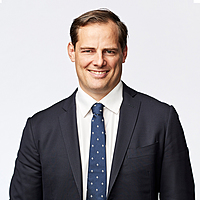
David has more than two decades’ experience investing in global equities. Prior to joining Plato Investment Management he worked for JP Morgan Asset Management in London for fifteen years becoming one of the youngest managing directors in the firm’s history. He managed the JP Morgan Europe Equity Plus active-extension fund which was closed to new investors after growing to €6 billion, generating 4% p.a. net alpha over ten years. He also launched and managed the JP Morgan Europe Equity Absolute Alpha Market Neutral fund. In its first twelve months of operation, the fund returned over 20%, and grew assets to €1 bn. In 2014 he was the European Hedge Fund Manager of the Year (UCITS).
........
This communication is prepared by Plato Investment Management Limited (‘Plato’) (ABN 77 120 730 136, AFSL 504616) as the investment manager of the Plato Global Net Zero Hedge Fund (ARSN 654 914 048) (‘the Fund’). Pinnacle Fund Services Limited (‘PFSL’) (ABN 29 082 494 362, AFSL 238371) is the product issuer of the Fund. PFSL is not licensed to provide financial product advice. PFSL is a wholly-owned subsidiary of the Pinnacle Investment Management Group Limited (‘Pinnacle’) (ABN 22 100 325 184). The Product Disclosure Statement (‘PDS’) and Target Market Determination (‘TMD’) of the Fund are available via the links below. Any potential investor should consider the PDS and TMD before deciding whether to acquire, or continue to hold units in, the Fund.
Link to the Product Disclosure Statement: https://plato.com.au/wp-content/uploads/Plato-Global-Net-Zero-Hedge-Fund-PDS.pdf
Link to the Target Market Determination: https://plato.com.au/wp-content/uploads/Plato-Global-Net-Zero-Hedge-Fund-TMD.pdf
For historic TMD’s please contact Pinnacle client service Phone 1300 010 311 or Email [email protected]
This communication is for general information only. It is not intended as a securities recommendation or statement of opinion intended to influence a person or persons in making a decision in relation to investment. It has been prepared without taking account of any person’s objectives, financial situation or needs. Any persons relying on this information should obtain professional advice before doing so. Past performance is for illustrative purposes only and is not indicative of future performance.
Whilst Plato, PFSL and Pinnacle believe the information contained in this communication is reliable, no warranty is given as to its accuracy, reliability or completeness and persons relying on this information do so at their own risk. Subject to any liability which cannot be excluded under the relevant laws, Plato, PFSL and Pinnacle disclaim all liability to any person relying on the information contained in this communication in respect of any loss or damage (including consequential loss or damage), however caused, which may be suffered or arise directly or indirectly in respect of such information. This disclaimer extends to any entity that may distribute this communication.
Any opinions and forecasts reflect the judgment and assumptions of Plato and its representatives on the basis of information available as at the date of publication and may later change without notice. Any projections contained in this presentation are estimates only and may not be realised in the future.

2 topics
1 stock mentioned
2 funds mentioned
David has more than two decades’ experience investing in global equities. Prior to joining Plato Investment Management he worked for JP Morgan Asset Management in London for fifteen years becoming one of the youngest managing directors in the...
Expertise
David has more than two decades’ experience investing in global equities. Prior to joining Plato Investment Management he worked for JP Morgan Asset Management in London for fifteen years becoming one of the youngest managing directors in the...
Expertise
Comments
Comments
Sign In or Join Free to comment