TOL - 23rd Jan, 2026
Metals, commodities and engineering of the future
Five ASX companies driving the multi decade energy transition
 Add us as a preferred Google source
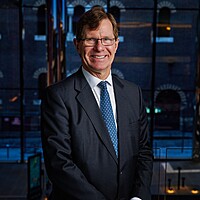
Will Baylis
ClearBridge Investments
Key Takeaways
- The energy transition is a multi-decade build-out of physical materials, infrastructure and engineering capabilities, driving sustained demand for metals, materials and engineering capability.
- Copper, steel, lithium, rare earths, engineering and execution capabilities are foundational to electrification, renewables, energy storage and industrial decarbonisation, and success depends on producing those materials with improving emissions intensity and strong environmental performance.
- These dynamics are reflected in the ClearBridge Sustainable Equity Strategy through overweight positions in BHP Group, BlueScope Steel, Lynas Rare Earths, IGO and Worley.
- Our active engagement is focused on operational decarbonisation, capital discipline, transparency, and delivery against stated targets seek to support long-term shareholder value creation alongside measurable progress toward a lower carbon economy.
Why metals and commodities matter for lower-carbon outcomes
The transition to a lower carbon global economy is not only a technology shift, but also a sustained expansion of physical infrastructure. Electrification, renewable energy, grid expansion, electric vehicles and industrial decarbonisation all require large volumes of copper, steel, lithium and rare earths, alongside the engineering capability to design, deliver and decarbonise complex assets.
While decarbonisation is often framed as a story of innovation and software, in practice, it is driven by the engineering and materials cycle. As active investors, we seek exposures across the transition value chain: the foundational materials required to build the future economy, the critical minerals enabling electrification and energy storage, and the engineering capability that turns transition ambition into delivered outcomes. We consider these exposures as sustainable when end uses enable decarbonisation and the companies demonstrate credible pathways to improve emissions intensity, environmental performance, transparency and governance.
This dynamic is evident across the key building blocks of the energy transition:
- Electrification requires copper intensive grids, motors, wiring, transformers and charging infrastructure.
- Renewables and transmission require large volumes of steel for towers, foundations and network expansion.
- Higher renewable penetration, EV adoption and resilient power systems require lithium and supporting battery supply chains.
- Efficiency gains in EVs, wind turbines and automation increasingly rely on high-performance rare earth magnets, particularly Neodymium-Praseodymium (NdPr).
- Engineering and execution capacity ultimately determines whether decarbonisation occurs at scale, translating climate ambition into real-world delivery through design, retrofit, optimisation and project execution.
Together, these forces underpin long-duration demand for the commodities and capabilities represented in our portfolios, while also raising expectations around responsible production and continuous improvement in emissions intensity.
Portfolio holdings
Across several Australian equity focussed portfolios, and particularly in the ClearBridge Australian Sustainable Equity portfolio, we hold overweights in foundational materials and engineering companies that play distinct and complementary roles in the transition. Below, we outline our sustainability investment thesis and our engagement priorities for five key Australian companies.
BHP Group (ASX: BHP)
- Primary products: Iron ore, metallurgical coal, copper.
- Role in transition: BHP provides scale exposure to copper, a critical input to electrification. Its scale and cash generation support investment in productivity, safety and decarbonisation initiatives.
- Illustrative assets: Iron Ore (Western Australia), Escondida copper mine (Chile).
-
Engagement priorities:
- Delivery of operational decarbonisation, including electrification, renewable power and diesel displacement.
- Capital allocation discipline between bulk commodities and transition-facing growth.
- Credible value chain Scope 3 emissions.
BlueScope Steel (ASX: BSL)
- Primary products: Coated and value-added steel products.
- Role in transition: BSL provides exposure to steel demand while progressing lower emissions production pathways.
- Illustrative assets: North Star steel mill (United States), electric arc furnace production.
-
Engagement priorities:
- Clear pathway and milestones for steel decarbonisation, including electric arc furnace expansion, scrap availability and hydrogen optionality.
- Consistent emissions intensity reporting per tonne of steel, with progress tracking over time.
- Alignment of capital investment with demand for lower emissions steel products and demonstrable returns discipline.
Lynas Rare Earths (ASX: LYC)
- Primary products: Oxides.
- Role in transition: LYC provides exposure to NdPr, a critical input for high-efficiency electric motors. It also supports diversification of supply in a strategically important market, contributing to greater resilience in global transition supply chains.
- Illustrative assets: Mt Weld (Western Australia), rare earth production and concentration.
-
Engagement priorities:
- Progress toward lower emissions processing and improved energy sourcing.
- Strong environmental management and maintenance of social licence as production expands.
- Improved transparency on lifecycle emissions and sustainability metrics to support comparability.
IGO Limited (ASX: IGO)
- Primary products: Lithium.
- Role in transition: IGO provides exposure to lithium, a foundational input to batteries across transport and stationary storage.
- Illustrative assets: Greenbushes lithium mine (Western Australia), via joint venture interest.
-
Engagement priorities:
- Expansion of renewable energy use across lithium operations and processing footprint where feasible.
- Capital discipline through lithium price cycles, with a focus on returns and balance sheet resilience.
- Long-term approach to processing efficiency, recycling and circularity positioning, and supply chain emissions transparency.
Worley (ASX: WOR)
- Primary products: Engineering and project execution.
- Role in transition: Engineering execution is a bottleneck for decarbonisation. WOR enables clients to design, retrofit and decarbonise complex assets, supporting real world emissions reductions through efficiency upgrades, electrification, fuel switching and delivery capability across industrial systems.
- Illustrative assets: Brownfield engineering, asset optimisation and retrofit capability across energy and industrial assets.
-
Engagement priorities:
- Evidence of revenue mix shift toward sustainability aligned work, supported by clear definitions and consistent disclosure.
- Measurement and disclosure of emissions reductions enabled through client projects, including methodology and boundaries.
- Workforce, safety and capability investment aligned with long term transition demand.
Portfolio perspective and outlook
Looking ahead, the future economy will be more electrified, infrastructure intensive and materials dependent. BHP Group, BlueScope Steel, Lynas Rare Earths, IGO and Worley play complementary roles in enabling that future and reflect our pragmatic sustainability philosophy. The energy transition is fundamentally a build-out of physical materials, infrastructure and engineering capabilities, not only digital solutions, and success depends on producing those materials with improving emissions intensity and strong environmental performance. Engineering execution ultimately determines whether climate ambition is translated inro real-world outcomes.
Through active engagement with company boards and management, we seek to support long-term shareholder value creation alongside measurable progress toward a lower carbon economy. Our engagement is focused on operational decarbonisation, capital discipline, transparency, and delivery against stated targets across all holdings. We continuously reassess both sustainability and investment merit for all of our holdings. A reduction in conviction could be triggered by material slippage in decarbonisation delivery, weakening transparency or governance, or deterioration in environmental or social licence outcomes.

Managed Fund
ClearBridge Sustainable Equity Fund
Australian Shares
View
Never miss an update
Enjoy this wire? Hit the ‘like’ button to let us know.
Stay up to date with my current content by
following me below and you’ll be notified every time I post a wire
Will is a Portfolio Manager and is responsible for ESG Strategy within the Australian equity investment team.
Will joined a predecessor firm in July 2013 as a Client Portfolio Manager. Spearheading ethical values research and the implementation of client screens, Will was central to the launch of the Ethical Income strategy in 2015 and serves as co-Portfolio Manager alongside Reece Birtles. Will was also central to the launch of the Sustainable Equity strategy and has served as lead Portfolio Manager since May 2020. Will has also been a co-Portfolio Manager for multi-asset portfolios since 2014.
Prior to joining the firm, Will worked at Deutsche Bank in various roles including research sales, head of Australian equity sales and account management, as well as head of the Melbourne equities desk. Prior to Deutsche Bank, Will worked at ANZ (McCaughan) Securities as head of equities desk across various regions, including London and New York, and National Mutual Funds Management as an investment analyst. Will believes his extensive experience has allowed him to have a strong perspective on Australia’s unique relation landscape and environment.
Will has a Bachelor of Economics and Commerce from University of Melbourne, a Diploma of Financial Planning, and is a graduate from the Australian Institute of Company Directors.

5 stocks mentioned
1 fund mentioned
Will Baylis
Portfolio Manager
ClearBridge Investments
Will is a Portfolio Manager and is responsible for ESG Strategy within the Australian equity investment team. Will joined a predecessor firm in July 2013 as a Client Portfolio Manager. Spearheading ethical values research and the...
Expertise
Will Baylis
Portfolio Manager
ClearBridge Investments
Will is a Portfolio Manager and is responsible for ESG Strategy within the Australian equity investment team. Will joined a predecessor firm in July 2013 as a Client Portfolio Manager. Spearheading ethical values research and the...
Expertise
Comments
Comments
Sign In or Join Free to comment