Singapore VCCs: A new route to Australian property investment
How the Asian economic powerhouse's fund structure could offer a new cross-border investment opportunity.
 Add us as a preferred Google source
Singapore has established itself as an international fund management hub, and its Variable Capital Company (VCC) structure offers fund managers a flexible vehicle for investment strategies spanning multiple asset classes.
One potential application is Australian property, where investors continue to assess opportunities across residential, industrial, logistics, commercial and specialist real estate.
Why Singapore?
Introduced in 2020, the VCC framework was designed specifically for investment funds. It allows a fund to operate as a standalone vehicle or establish multiple sub-funds under a single corporate structure, subject to applicable requirements.
For fund managers targeting international investors, Singapore offers an established financial services ecosystem, access to professional service providers and proximity to Asian family offices and institutional capital.
A VCC investing in Australian property could therefore provide a Singapore-based platform for pooling eligible investor capital and accessing Australian real estate opportunities.
Where could the opportunities lie?
Australian property encompasses several investment strategies, each with different risk and return characteristics.
Industrial and logistics assets may benefit from demand for modern distribution facilities and supply-chain infrastructure. Residential strategies may target rental income or development opportunities in markets experiencing housing shortages. Healthcare, specialist accommodation and other alternative property sectors may also warrant consideration.
Commercial property presents a more selective opportunity, with asset quality, location, occupancy and tenant demand influencing investment outcomes.
For fund managers, the challenge is identifying assets where acquisition prices, financing costs and expected income provide an attractive risk-adjusted proposition.

Why consider a fund structure?
Direct property ownership can require substantial capital and ongoing asset management. A property fund can pool investor commitments and provide access to a professionally managed portfolio or a defined investment strategy.
A Singapore VCC may offer structural flexibility, including the ability to establish separate sub-funds for different strategies or investor groups, subject to legal and regulatory requirements.
However, the structure is not automatically cheaper or more tax-efficient than an Australian property trust. Establishment and administration costs, Australian taxation, foreign investment rules, property-specific taxes and fund management requirements must all be assessed.
The family office opportunity
Family offices and sophisticated investors may be interested in property strategies offering a combination of recurring income, potential capital appreciation and portfolio diversification.
A Singapore-based fund manager investing in Australia could seek to connect these investors with carefully selected property assets and an investment strategy aligned with their objectives.
Attracting capital will depend on more than the fund's jurisdiction. Investment performance, manager experience, governance, transparency, fees and alignment with investors are likely to remain central considerations.

Looking ahead
The combination of Singapore's fund management infrastructure and Australia's real estate market presents a potential cross-border investment opportunity.
For managers considering this approach, the key questions are whether the VCC structure suits the intended investor base, whether the Australian assets offer compelling value and whether the expected investment returns justify the costs and complexity.
Ultimately, the success of a Singapore VCC investing in Australian property will depend less on the structure itself than on the quality of its investment strategy, the discipline of its manager and its ability to attract long-term capital.
Conclusion: A Market in Transition
The outlook for the Australian property market is increasingly defined by selective opportunities rather than broad-based price appreciation. Higher borrowing costs, weaker investor sentiment and the Federal Government’s forthcoming tax reforms are likely to influence valuations and investment decisions, although persistent housing shortages and rental demand continue to underpin the longer-term market.
From 1 July 2027, negative gearing deductions for residential investment properties acquired after 7:30 pm on 12 May 2026 will generally be restricted to new builds, while existing investments acquired before the announcement are grandfathered under the previous rules.
The reforms will also replace the 50% capital gains tax discount with inflation-adjusted cost-base indexation and introduce a 30% minimum tax rate on realised capital gains, subject to the legislation’s detailed provisions. These changes may encourage some investors to reconsider existing residential property strategies while directing additional capital towards new housing, although the overall effects on prices, rents and construction remain uncertain.
For fund managers and investors, the coming period may create opportunities to acquire quality assets at more attractive valuations, particularly in sectors supported by structural demand, including residential rental housing, industrial and logistics property, and specialist real estate.
Ultimately, investment performance is likely to depend on disciplined asset selection, prudent leverage, sustainable rental income and the ability to navigate an evolving tax and financing environment.
Never miss an update
Enjoy this wire? Hit the ‘like’ button to let us know.
Stay up to date with my current content by
following me below and you’ll be notified every time I post a wire
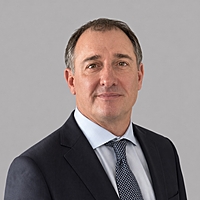
Chief Investment Officer & Director, Janah Capital | Portfolio Manager, ICM Global Funds
Nicholas Boyd-Mathews has more than 35 years of international investment management experience spanning portfolio management, natural resources, institutional asset management, capital markets and corporate finance.
He currently serves as Chief Investment Officer and Director of Janah Capital, where he is responsible for investment strategy, portfolio construction and risk management. He is also a Portfolio Manager at ICM Global Funds, contributing to the firm’s global investment platform and institutional investment
........
The information provided on this website is for use of a general nature only and is not intended to be relied upon as, nor to be suitable for, specific professional advice.
No responsibility for loss occasioned to any persons acting on or refraining from action as a result of any material in this publication can be accepted. Links are provided for your convenience. This does not mean that we endorse, or are associated with those sites and their information.

Never miss an update
Get the latest insights from me in your inbox when they’re published.
5 topics
Chief Investment Officer & Director, Janah Capital | Portfolio Manager, ICM Global Funds Nicholas Boyd-Mathews has more than 35 years of international investment management experience spanning portfolio management, natural resources, institutional...
Chief Investment Officer & Director, Janah Capital | Portfolio Manager, ICM Global Funds Nicholas Boyd-Mathews has more than 35 years of international investment management experience spanning portfolio management, natural resources, institutional...
Comments
Comments
Sign In or Join Free to comment
most popular
Shares
Are Australia’s highest dividend companies worth buying?
Livewire Markets
Property
Singapore VCCs: A new route to Australian property investment
Janah Capital - ICM Global Funds