TOL - 17th Sep, 2026
Six income rules built for markets like these
Reporting season, elevated markets and a changing tax environment are putting a renewed focus on how investors generate reliable income.
 Add us as a preferred Google source
August reporting season is an important health check for Australian investors, and this year it is particularly relevant for those relying on their portfolios for income. We have just come through the end of FY26, advisers and investors are reviewing portfolio outcomes, and companies are providing fresh evidence on earnings, cash flow and dividends. At the same time, changes to the tax treatment of capital gains are adding another consideration to the way investors think about how their returns are generated.
Back in 2010, we challenged some of the traditional ‘rules’ of income investing when we first launched our innovative Australian Equity Income strategy. More than 15 years later, while the environment has changed considerably, our objective has not. Our motto has always been a “Sufficient Income for Life” — whether for retirees or other income-dependent investors such as charities and trusts.
As reporting season tests the resilience of earnings and dividends, markets remain elevated, and the tax treatment of investment returns evolves, now is a good time to revisit the six of the income rules that have guided our approach from the beginning.
Rule 1: Measure income in dollars, not just yield
My thinking about income investing became very personal around the time of the global financial crisis. My parents were retiring, and I spent a lot of time thinking about what they actually needed from their investments. What became clear was that to support their living expenses they needed an income stream that could be measured in dollars, not a percentage yield, and that they needed that income stream to grow over time.
That thinking really changed the way I thought about investment risk. For an accumulation investor, risk is often framed around movements in capital value. For someone drawing an income from their portfolio, there are other risks that can matter just as much: that the income is not high enough, that it fails to keep pace with inflation, or that too much of it depends on one company or sector.
That distinction is worth remembering when reviewing portfolios at financial year-end. A strong total return is welcome, but for an income investor there is another important question: How many dollars of income did the portfolio actually generate, and did that income grow?
A portfolio with an income tilt can help investors remain invested through periods of market volatility. Equities will always carry capital risk, but if the dollar income stream is sufficiently stable and growing, an investor may be less dependent on selling assets at an inconvenient time.
Rule 2: Dividend growth matters as much as, or even more than, the dividend yield
For much of the past 10 to 15 years, income from equities has had a starting advantage over cash and fixed income because interest rates were so low. That advantage still exists in parts of the market, but it is narrower today.
With markets at record highs, and the ongoing inflationary environment, it is not simply the level of income, it is the growth in that income that investors need to really consider. It is important to remember that a fixed-income security may give an investor lower capital volatility, and a known level of income, but that income generally does not grow.
So, whereas fixed-income assets are giving no growth in a high inflationary environment, the dividend growth on our portfolio of quality defensive Australian equities has accelerated. There have been periods in the past where it was circa 3%, and we're now looking at 7- 8% annual growth in dividends in the current inflationary environment(1).
Rule 3: A high yield is only useful if it is resilient
Another income rule that investors need to revise is the focus on the high headline yields. A high yield can sometimes be a warning rather than an opportunity. If the market believes earnings are under pressure or a dividend may be cut, the share price can fall and mechanically push the yield higher. That is why we focus much more on the quality of the cash flow supporting the dividend.
The characteristics we look for are relatively straightforward: durable earnings, pricing power, strong free cash flow and the capacity to keep paying and growing dividends through different economic conditions. In FY26, quality defensive companies such as Aurizon Holdings (ASX: AZJ), QBE Insurance Group (ASX: QBE), Woolworths Group (ASX: WOW) and APA Group (ASX: APA) demonstrated a number of those characteristics, and helped us to post standout returns driven by income, despite the key Australian equity market drivers of AI and energy.
What I like about businesses of this type is that they are not necessarily relying on a strong consumer economy to generate cash flow. In many cases they have strong competitive positions, reliable demand or pricing mechanisms that allow earnings to hold up in a more difficult environment.
Rule 4: Don't mistake the index for an income portfolio
The S&P/ASX 200 is not constructed to provide an investor with a diversified income stream. Being a market-capitalisation-weighted index, it is heavily skewed towards certain sectors such as banks. Yield focused smart beta indices are also sector skewed given that banks have been traditionally high yielding stocks.
But think about what happened if around 30% of an equity allocation is concentrated in banks and something goes wrong with the domestic economy and bad debts rise.
We are seeing signs already of this during the early parts of reporting season. An investor could find that a large part of their dividend income is exposed to the same correlated underlying risk. Income-dependent investors need far more diversification than that.
Commonwealth Bank of Australia (ASX: CBA) is a useful example of how the traditional income playbook can change. For a new investor, I don't think the right question is whether CBA has historically been a good dividend payer. The question is what are you are paying today for the expected dividend stream and how quickly that dividend can grow from here. That is one reason our exposure to banks is currently relatively low, at around 8%, with CBA representing only approximately 1% of the portfolio(2).
Listed real assets, which are not well represented in the index, are one area we continue to find more interesting for income. We generally maintain an allocation of around 10% because we like the quality and reliability of the cash flows and, in a number of cases, the ability to increase revenues and dividends through inflation-linked pricing. Stocks we like include selected retail REITs like Scentre Group (ASX: SCG) and Vicinity Centres (ASX: VCX), and infrastructure businesses like Transurban Group (ASX: TCL), APA Group and Aurizon Holdings, where replacement costs, contractual pricing structures or strong market positions can provide attractive income characteristics.
Rule 5: Pay attention to how the return is delivered
The announced changes to capital gains taxation give investors another reason to think about the composition of their investment returns.
The conclusion isn’t that capital growth has suddenly become undesirable, or that investors should simply buy more high-yielding shares, rather that it matters how their total returns are delivered. As we mentioned earlier, skewing returns towards franked income has always been central to the way we think about our equity income portfolios. For an investor drawing an income from a portfolio, owning companies that generate resilient cash dividends means they are less reliant on selling assets and realising capital gains (that attract CGT) to meet their spending needs.
With franking, that income can also be particularly valuable for eligible Australian investors.
Our internal analysis suggests that for investors seeking to draw income from their Australian equity portfolios outside the superannuation regime from 1 July 2027, the prospect of paying top-up tax each year to meet the new minimum 30% tax on realised capital gains will render fully-franked dividend stocks much more capable of producing better after-tax incomes than no-or-low dividend paying compounders. Furthermore, the much larger final capital gain that may be payable on selling a non-dividend paying stock only makes the headwind worse.
Changing tax considerations do not however change the investment fundamentals. If anything, they reinforce the importance of being selective. We still want businesses with strong free cash flow, pricing power and resilient earnings that can support their dividends through the cycle and grow them over time. That is where I believe active management matters.
Rule 6: Don't solve today's income problem by creating tomorrow's capital problem
A final risk that retirees need to be conscious of is becoming too defensive too early and removing the potential growth in the capital from their portfolio.
If a more defensive portfolio, with a lower expected total return, only generates a total return that is close to an investor’s draw down rate, there may not be enough growth left to protect the capital base and its future income generating ability against inflation over time.
If investors can generate a sufficient income to fund their needs without continually having to sell down capital, it can give them greater ability to remain invested in growth assets and participate in the long-term growth of those assets. And for younger retirees in particular, time is still on their side. A temporary equity-market dislocation does not necessarily have to change the long-term investment strategy if the portfolio continues to generate the income they require.
Reporting season is reinforcing our non-traditional approach
The Australian investment environment today looks very different from the one we faced when we launched our Equity Income strategy more than 15 years ago. Cash and fixed income are more competitive. Parts of the equity market are trading at elevated valuations. The sources of market leadership have shifted. And changes to the tax treatment of capital gains are putting greater focus on how investment returns are delivered.
None of that changes the Sufficient Income for Life objective we set out with, or the rules that have been part of our approach since 2010. If anything, we think it makes the principles behind a diversified, resilient and growing income portfolio more relevant.
This reporting season, we have been looking for fresh evidence of which companies have the durable earnings, pricing power and free cash flow required to support dividends through different economic conditions — and, importantly, grow those dividends over time. The opportunities we are seeing across quality defensive companies reinforce why we believe a selective, non-traditional approach to equity income remains so important.
Explore ClearBridge’s range of Australian Equity Income strategies, including Equity Income, Ethical Income and Sustainable Income, and learn more about our approach to building consistent and growing income streams here.

Managed Fund
ClearBridge Equity Income Fund
Australian Shares
View
Managed Fund
ClearBridge Sustainable Income Fund
Australian Shares
View
Managed Fund
ClearBridge Ethical Values with Income Fund
Australian Shares
View
Never miss an update
Enjoy this wire? Hit the ‘like’ button to let us know.
Stay up to date with my current content by
following me below and you’ll be notified every time I post a wire
Reece leads the Australian Equity Investment team as Head of Australian Equities. He has a deep passion for valuation, behavioural finance and diversity of thought, developed during a career spanning more than 30 years as an equity investor.
Reece is the lead Portfolio Manager for the Select Opportunities, Equity Income and Diversified Growth strategies.
........
(1)Source: ClearBridge, FactSet; as of 30 June 2026. Data calculated for a ClearBridge Australian Equity Income representative account. Expected next 12 Months (NTM) data is calculated using the weighted average of broker consensus forecasts of each portfolio holding – because of this, the returns quoted are estimated figures and are therefore not guaranteed and may differ materially from the figures mentioned. The figures may also be affected by inaccurate assumptions or by known or unknown risks and uncertainties. In respect of the broker consensus data the number of brokers included for each individual stock will vary depending on active coverage of that stock by a broker at any point in time. A median of brokers is typically utilised. All estimates avoid stale forecasts which are removed after a certain number of days. Assumes zero percent tax rate and full franking benefits realised in tax return.
(2)Source: ClearBridge, FactSet; as of 30 June 2026. Data calculated for a ClearBridge Australian Equity Income representative account
Important Information
Franklin Templeton Australia Limited (ABN 76 004 835 849) is part of Franklin Templeton, Inc., and holds an Australian Financial Services Licence (AFSL No. 240827) issued pursuant to the Corporations Act 2001. The ClearBridge Australian Equities Investment Team, a division of Franklin Templeton Australia Limited, is operationally integrated under the “ClearBridge Investments” global brand, alongside ClearBridge Investments, LLC (“CBI”), and other ClearBridge entities indirectly wholly owned by Franklin Templeton, Inc. Distribution of this material is issued and approved in Australia by Franklin Templeton Australia Limited.
This publication is issued for information purposes only and does not constitute investment or financial product advice. It expresses no views as to the suitability of the services or other matters described in this document as to the individual circumstances, objectives, financial situation, or needs of any recipient. You should assess whether the information is appropriate for you and consider obtaining independent taxation, legal, financial or other professional advice before making an investment decision.
Neither ClearBridge Investments, Franklin Templeton Australia, nor any other company within the Franklin Templeton group guarantees the performance of any Fund or Strategy, nor do they provide any guarantee in respect of the repayment of your capital.
The document does not form the basis of, nor should it be relied upon in connection with, any subsequent contract or agreement. It does not constitute, and may not be used for the purpose of, an offer or invitation to subscribe for or otherwise acquire shares in any of the products mentioned.
Past performance is not a guide to future returns.
The distribution of specific products is restricted in certain jurisdictions, investors should be aware of these restrictions before requesting further specific information.
The investment vehicles shown may have different risk profiles and a direct comparison may not be appropriate. You should consider a number of factors when considering an investment, including fees, services and benefits provided and performance.
The views expressed are opinions of the portfolio managers as of the date of this document and are subject to change based on market and other conditions and may differ from other portfolio managers or of the firm as a whole. These opinions are not intended to be a forecast of future events, research, a guarantee of future results or investment advice.
The information provided should not be considered a recommendation to purchase or sell any particular strategy / fund / security. It should not be assumed that any of the securities discussed here were or will prove to be profitable. It is not known whether the stocks mentioned will feature in any future portfolios managed by the investment team. Any stock examples will represent a small part of a portfolio and are used purely to demonstrate our investment style.
The analysis of Environmental, Social and Governance (ESG) factors forms an important part of the investment process and helps inform investment decisions. The strategy/ies do not necessarily target particular sustainability outcomes.
Risk warnings – Investors should also be aware of the following risk factors which may be applicable to the strategy shown in this document.
Investing in foreign markets introduces a risk where adverse movements in currency exchange rates could result in a decrease in the value of your investment.
This strategy may hold a limited number of investments. If one of these investments falls in value this can have a greater impact on the strategy’s value than if it held a larger number of investments.
Smaller companies may be riskier and their shares may be less liquid than larger companies, meaning that their share price may be more volatile.
Income strategy charges are deducted from capital. Because of this, the level of income may be higher but the growth potential of the capital value of the investment may be reduced.
Franklin Templeton Australia Limited as Responsible Entity has appointed the ClearBridge Australian Equities Investment Team, a division of Franklin Templeton Australia, as the fund manager for the ClearBridge Equity Income Fund (ARSN 150 751 821, APIR SSB0043AU).
Effective 22 September 2025, the Martin Currie Equity Income Fund was renamed ClearBridge Equity Income Fund.
The fund’s investment manager continues to be Franklin Templeton Australia Limited. On 30 September 2025, the fund’s investment management team was renamed to ClearBridge Australian Equities Investment Team. The team continues to be employed as a division of Franklin Templeton Australia Limited.
© Franklin Templeton Australia Limited. You may only reproduce, circulate and use this document (or any part of it) with the consent of Franklin Templeton Australia Limited.
WF: 12094258

8 stocks mentioned
3 funds mentioned
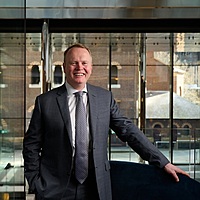
Reece leads the Australian Equity Investment team as Head of Australian Equities. He has a deep passion for valuation, behavioural finance and diversity of thought, developed during a career spanning more than 30 years as an equity investor. ...
Expertise
Reece leads the Australian Equity Investment team as Head of Australian Equities. He has a deep passion for valuation, behavioural finance and diversity of thought, developed during a career spanning more than 30 years as an equity investor. ...
Expertise
Comments
Comments
Sign In or Join Free to comment