The Great Copper Squeeze: Why the Next Decade Could Belong to Resource Investors
 Add us as a preferred Google source
By Nicholas Boyd-Mathews, Chief Investment Officer, Janah Capital | Portfolio Manager, ICM Global Funds
For much of the past decade, investors have been captivated by technology, artificial intelligence and the growth sectors reshaping the digital economy.
Yet beneath the surface, a very different story is unfolding.
The green energy transition, the electrification of transport, expanding power grids, rapid urbanisation across Asia and growing geopolitical competition are colliding with a simple reality:

The world is running short of copper
Copper may not generate headlines like AI, lithium or semiconductors, but it remains the metal that underpins modern civilisation. Without copper there are no electric vehicles, renewable energy networks, data centres or large-scale electrification projects.
The question investors should be asking is not whether copper demand will grow.
The question is whether global supply can keep up.
Demand is accelerating
A traditional internal combustion engine vehicle requires approximately 20-25 kilograms of copper.
An electric vehicle typically requires three to four times that amount.
Wind farms require significant volumes of copper cabling. Solar installations require copper. Data centres powering AI applications consume enormous quantities of electrical infrastructure, much of which depends on copper.
At the same time, developing nations continue to urbanise and industrialise. China demonstrated the relationship between economic development and copper demand over the past two decades. India, Southeast Asia and parts of Africa may represent the next wave.
The demand outlook appears clear.
Supply growth is becoming more difficult
If demand growth was the only factor, markets would likely adapt.
The challenge is supply.
Large-scale copper discoveries have become increasingly rare. Ore grades have declined across major mining jurisdictions. Permitting timelines have lengthened. Environmental requirements have increased. Capital expenditure has risen significantly.
Many of the world's largest copper mines are ageing.
Even when a significant discovery is made, it can take more than a decade before meaningful production reaches market.
This creates a structural imbalance.
Demand can grow relatively quickly.
Supply responds slowly.
Geopolitics is becoming a major factor
Investors must now consider a second layer of complexity.
Critical minerals are increasingly viewed through a national security lens. Governments across North America, Europe and Asia are seeking to secure strategic supply chains and reduce dependence on single jurisdictions.
As competition for resources intensifies, assets located in politically stable mining regions are likely to command increasing strategic value.
Australia stands to benefit significantly from this trend.
With a long mining history, strong legal frameworks and established export infrastructure, Australia remains one of the most attractive destinations for long-term resource investment.
Why small and mid-cap resource companies could benefit most
Major mining companies will undoubtedly play a critical role.
However, some of the most compelling opportunities may emerge at the smaller end of the market.
Historically, resource bull markets have often begun with large-cap producers before flowing through to developers and explorers as investors search for leverage to rising commodity prices.
Smaller companies frequently possess high-quality projects but struggle to attract investor attention during weaker parts of the commodity cycle.
When sentiment improves, valuation gaps can close rapidly.
This is especially true when quality assets become acquisition targets for larger producers seeking future production pipelines.
Lessons from previous commodity cycles
Commodity markets are cyclical by nature.
Periods of oversupply eventually create underinvestment.
Underinvestment creates scarcity.
Scarcity creates higher prices.
Higher prices encourage new investment and increased production.
The process then repeats.
The current environment bears several characteristics associated with the early stages of previous resource upcycles.
Years of capital discipline have restricted project development precisely as long-term demand drivers continue strengthening.
Whether this becomes a full-scale commodity supercycle remains to be seen.
What appears increasingly likely is that critical minerals and industrial metals will remain strategically important for years to come.

Investment implications: Where could investors look?
The copper theme is not simply about forecasting higher metal prices.
It is about identifying companies positioned to benefit from a tightening supply environment.
Across the ASX there are opportunities spanning the entire value chain, from established producers through to emerging developers and explorers.
The majors: Stability and scale
BHP (ASX: BHP) remains one of the world's largest copper producers through assets including Escondida in Chile, the largest copper mine globally. BHP's increasing focus on copper reflects management's view that electrification, renewable energy and energy security will drive long-term demand growth.
Rio Tinto (ASX: RIO) has also expanded its copper exposure through assets including Oyu Tolgoi in Mongolia. While iron ore remains the cornerstone of Rio's earnings, copper is becoming increasingly important to its future growth strategy.
For investors seeking exposure with lower operational risk, these diversified global miners provide direct leverage to the copper theme while maintaining strong balance sheets and diversified revenue streams.
Mid-tier opportunities
Sandfire Resources (ASX: SFR) is often viewed as one of Australia's purest listed copper exposures. Following its acquisition of the MATSA operations in Spain, Sandfire has transformed into a globally diversified copper producer with multiple operating assets.
Should copper prices strengthen materially over the coming decade, Sandfire offers substantially more earnings leverage than many of the diversified mining giants.
Emerging developers
The next generation of copper producers may ultimately create the greatest shareholder value.
29Metals (ASX: 29M) controls significant copper assets including Capricorn Copper in Queensland and the Golden Grove operation in Western Australia. Despite facing operational challenges in recent years, the company's resource base could become increasingly valuable if copper markets tighten.
Hot Chili (ASX: HCH) continues to advance its Costa Fuego copper project in Chile, one of the world's premier copper-producing regions. Projects approaching development today may become highly strategic assets if forecast supply deficits emerge later in the decade.
The exploration end of the market
Historically, some of the largest returns in commodity cycles have come from successful discoveries rather than established producers.
Exploration companies targeting large-scale copper systems across Australia and internationally offer significant upside potential, albeit with considerably higher risk.
As copper becomes more strategically important, quality exploration assets in stable jurisdictions may attract increasing interest from larger mining companies seeking to replenish reserves and secure future production.
Why M&A could become the real story
One of the most underappreciated aspects of the copper market may be consolidation.
Major producers face declining reserve lives and growing challenges replacing mined tonnes. Building a new copper mine is becoming increasingly difficult, expensive and time-consuming.
Acquiring advanced development projects or emerging producers can often provide a faster route to future production growth.
If global copper shortages begin to materialise, investors may discover that takeover premiums become just as important as commodity price appreciation.
The next decade could see intensified competition for quality copper assets, particularly those located in mining-friendly jurisdictions.
The bottom line
Whether investors choose the relative safety of BHP and Rio Tinto, the direct copper exposure offered by Sandfire, or the higher-risk opportunities among developers and explorers, the central investment thesis remains unchanged.
The world may be entering a period where copper becomes increasingly scarce precisely when it is needed most.
The energy transition cannot occur without it.
The digital economy cannot function without it.
The expansion of power grids, electric vehicles, renewable energy infrastructure and AI-related data centres all depend on it.
History shows that when strategic commodities become difficult to secure, capital eventually flows toward the companies that control future supply.
For resource investors, the next decade may not simply be about owning commodities.
It may be about owning the companies capable of producing them.
Final thought
For much of the investment community, copper remains just another commodity.
For long-term investors, it may prove to be one of the defining strategic resources of the next decade.
The combination of rising demand, constrained supply, geopolitical importance and increasing barriers to new mine development creates a powerful long-term investment narrative.
If that thesis proves correct, today's copper market may be remembered not as the peak of the cycle, but as the beginning of a much larger structural shift.
Never miss an update
Enjoy this wire? Hit the ‘like’ button to let us know.
Stay up to date with my current content by
following me below and you’ll be notified every time I post a wire
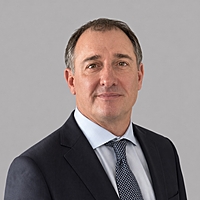
Chief Investment Officer & Director, Janah Capital | Portfolio Manager, ICM Global Funds
Nicholas Boyd-Mathews has more than 35 years of international investment management experience spanning portfolio management, natural resources, institutional asset management, capital markets and corporate finance.
He currently serves as Chief Investment Officer and Director of Janah Capital, where he is responsible for investment strategy, portfolio construction and risk management. He is also a Portfolio Manager at ICM Global Funds, contributing to the firm’s global investment platform and institutional investment
........
The information provided on this website is for use of a general nature only and is not intended to be relied upon as, nor to be suitable for, specific professional advice.
No responsibility for loss occasioned to any persons acting on or refraining from action as a result of any material in this publication can be accepted. Links are provided for your convenience. This does not mean that we endorse, or are associated with those sites and their information.

Never miss an update
Get the latest insights from me in your inbox when they’re published.
5 topics
Chief Investment Officer & Director, Janah Capital | Portfolio Manager, ICM Global Funds Nicholas Boyd-Mathews has more than 35 years of international investment management experience spanning portfolio management, natural resources, institutional...
Chief Investment Officer & Director, Janah Capital | Portfolio Manager, ICM Global Funds Nicholas Boyd-Mathews has more than 35 years of international investment management experience spanning portfolio management, natural resources, institutional...
Comments
Comments
Sign In or Join Free to comment
most popular
Buy Hold Sell
Buy Buy Buy: 6 one-of-a-kind ASX growth stocks
Livewire Markets
Shares
Australia’s top 20 stocks – the price of conformity
Spheria Asset Management
Shares
The only 3 "Buys" in the ASX 10
Livewire Markets