TOL - 16th Apr, 2026
Adam Dawes’ masterclass on investing for a wealthy retirement
Drawing on his experience with millionaire retirees, the adviser looks at how to generate reliable retirement income and protecting capital.
 Add us as a preferred Google source
This interview was recorded on 24 March 2026.
You asked. We delivered.
When we quizzed Livewire readers about what they most wanted from our Retirement Series, the clear winner was this: how to generate reliable income in retirement.
And it makes sense. The biggest risk in retirement isn’t just volatility. It’s structuring your money the wrong way for a phase of life that could easily stretch another 20 years or more - and discovering too late that your portfolio can’t sustain the lifestyle you worked decades to build.
That’s the challenge Adam Dawes, Senior Financial Adviser at Shaw and Partners and regular Buy Hold Sell guest, helps wealthy Australians solve every day.
The clients walking through his door are typically in their late 50s to early 70s, often with $3-10 million in investable assets, and facing a very different question to the one that got them wealthy in the first place.
“They’re looking for a stress-free retirement. They’re looking for something that provides income as well as growth," Dawes says.
In this practical interview, Dawes offers a masterclass in how he structures retirement portfolios, how the asset mix changes with age, and why the most important years to plan for may actually be the last.
I strongly recommend watching the full interview, where Dawes unpacks the six big elements of retirement asset allocation, how it should evolve over time, and even workshops a full portfolio designed for the golden years.
#1 – Why retirement portfolios should never be static
One of Dawes’ biggest beliefs is that retirement isn’t a one-time asset allocation decision.
“Asset allocation should move with you through your retirement. It’s never a set piece, and it must move as you get older," he says.
He explains the broad shift from growth-heavy allocations in your 50s toward a much more defensive mix later in life, but also why the client’s income sources and lifestyle matter just as much as age.
Dawes believes investors approaching retirement can still hold roughly a 70%/30% split between growth and defensive assets. But as income stops and drawdown needs rise, it’s not just the split that changes. The risk inside the portfolio - the types of securities you own - need to change too.
“When you’re close to 80, you want to be less exposed to high-beta stocks. You want to be less exposed to those cyclical stocks that are going to move around.”
#2 – Going “all income” can quietly backfire
Australian retirees love dividends, banks and franking credits.
But Dawes warns that leaning too hard into yield can create a portfolio that feels safe while actually becoming more fragile.
“You don’t want to be just 100% income at age 60,” he warns.
“Because here in Australia, we lump everybody into the income bucket, but then you’re basically banks and resources in your portfolio.”
He explains why retirees still need growth assets, how he thinks about balancing value and growth, and why inflation plus longevity means capital still needs to keep compounding.
#3 – Put your money into "buckets"
A key part of Dawes’ framework is the bucketing strategy, where retirement capital is split by time horizon rather than just asset class.
He uses a short-term bucket and long-term bucket framework, with roughly two years of income needs set aside in liquid cash-like investments.
“We want short-term buckets, that’s for money to live on, and we want long-term buckets for assets that you don’t touch,” he says.
It’s an interesting concept that aims to solve one of retirement’s biggest behavioural problems: being forced to sell quality assets into market weakness.
The beauty of the framework is that portfolio income can steadily replenish the cash sleeve, reducing the risk of forced selling when markets are under pressure.
#4 – A portfolio construction masterclass and why private credit, franked income and infrastructure matter more than ever

In your later years, cash generation is king.
For a hypothetical $5 million retirement portfolio, Dawes leans more heavily into cashflow-oriented sleeves that become far more valuable in decumulation mode than they are during the wealth-building years.
Private credit is a key one, nominating Metrics Master Income Trust (ASX:MXT) as a top pick.
The appeal isn’t just yield. For retirees drawing an income, the monthly cashflow profile and lower day-to-day swings can make the journey smoother than relying purely on listed equities or pure cash accounts, which come with all sorts of catches.
“It’s not without risk, so don’t put the whole house on it; I’d put it at a 10–15% weighting,” he suggests.
Australian shares play another foundational role, especially given that “franking credits are very, very important for Australians,” with Dawes nominating Vanguard Australian Shares High Yield ETF (ASX: VHY) as his go-to option in this regard.
Infrastructure, meanwhile, provides a defensive cash stream with the potential for capital growth, making it especially attractive, and he likes funds from Vanguard and Magellan.
Dawes also walks through the other building blocks - including cash, international shares and fixed income - and nominates his preferred ETF picks, an active manager he likes, and the exact portfolio weightings in the interview.
#5 – The big, sneaky retirement cost you many don't account for
Dawes says many retirees plan carefully for the active years of retirement - travel, lifestyle and helping family - but give far less thought to the final chapter.
He warns that many will eventually need assistance with day-to-day living and may move into a retirement village or nursing home, where costs can escalate quickly - particularly for a Refundable Accommodation Deposit (RAD). A RAD is where you provide an aged care service provider a lump sum for accommodation.
“Not a lot of people talk about RADs and nursing home fees when you get older. They could be up to $1 million.”
Having seen a loved one move into aged care, it’s critical to understand that this is often just the fee for the four corners of the wall. Food, healthcare, transport to appointments, medical assistance for insulin injections, entertainment and internet can all sit on top! For those with the means, there are then optional upgrades such as premium meals, larger rooms and higher quality lifestyle programs.
#6 - Keep or sell the properties?
For many affluent Australians, property remains one of the biggest moving parts in retirement.
But as income needs change and late-life care costs come into focus, the role of the family home and rental properties can shift in ways many investors don’t fully anticipate.
Dawes shares his thinking on the key property decisions retirees eventually face, including whether it's worth selling your principal place of residence and/or investment properties.
Watch the full interview
The written summary gives you the framework, but Adam’s calm delivery and experience - especially on the hypothetical $5 million portfolio and the exact ETF weightings - is where the real value sits.
This is one of the strongest retirement interviews we’ve done.
Never miss an update
Enjoy this wire? Hit the ‘like’ button to let us know.
Stay up to date with my current content by
following me below and you’ll be notified every time I post a wire
I have over 15 years’ experience covering financial markets and property, with a particular interest in ETFs and personal finance. I split my time between Australia and Canada to bring a global perspective to my work.
........
Livewire gives readers access to information and educational content provided by financial services professionals and companies ("Livewire Contributors"). Livewire does not operate under an Australian financial services licence and relies on the exemption available under section 911A(2)(eb) of the Corporations Act 2001 (Cth) in respect of any advice given. Any advice on this site is general in nature and does not take into consideration your objectives, financial situation or needs. Before making a decision please consider these and any relevant Product Disclosure Statement. Livewire has commercial relationships with some Livewire Contributors.

5 topics
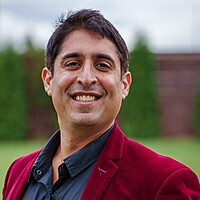
I have over 15 years’ experience covering financial markets and property, with a particular interest in ETFs and personal finance. I split my time between Australia and Canada to bring a global perspective to my work.
Expertise
I have over 15 years’ experience covering financial markets and property, with a particular interest in ETFs and personal finance. I split my time between Australia and Canada to bring a global perspective to my work.
Expertise
Comments
Comments
Sign In or Join Free to comment
most popular
Shares
Are Australia’s highest dividend companies worth buying?
Livewire Markets