He keeps countless Australians calm in a crisis, but how does Shane Oliver invest?
Gold, Asia, volatility and cycles: Shane Oliver outlines his 2026 playbook.
 Add us as a preferred Google source
Please note this interview was filmed on Wednesday, 3rd December 2025.
In a year where investors have been whipsawed by geopolitics, shifting rate expectations and an AI-driven market that refuses to cool, I sat down with AMP’s Shane Oliver to help anchor the noise.
Few voices have been as steady through decades of shocks, sentiment swings and false turning points. In this wide-ranging conversation, Oliver offers one of his clearest frameworks yet for navigating the years ahead, from his personal portfolio approach to the structural forces shaping 2026.
His core message is a warning investors may be too quick to dismiss.
“It is dangerous to say that there’s no more market cycles ... as soon as we all conclude that it doesn’t exist anymore, it will come back and bite us," says Oliver.
That warning anchors his broader message.
- Yes, governments have become more interventionist.
- Yes, downturns appear shallower.
- And yes, AI is reshaping market leadership.
But none of that erases the underlying rhythms of markets, or the volatility investors must still endure to earn long-term returns. Oliver explains why valuations remain essential, why sentiment still swings to extremes, and why newer investors chasing explosive winners need to understand the history of drawdowns that inevitably follow.
Looking into 2026, he expects moderate global growth, more volatility, and plenty of geopolitical noise, but also the foundations for an earnings recovery and clear opportunities across regions.
For investors trying to stay disciplined amid constant distractions, Oliver’s framework offers much-needed clarity.

Interview summary
How technology reshaped markets, but not investor behaviour
Oliver acknowledges that electronic trading, ETFs, and even cryptocurrencies have transformed access and lowered costs. Investors can now build diversified portfolios instantly, something that was unimaginable early in his career.
But despite this evolution, he insists the psychological patterns that drive markets have not changed.
“Things get pushed to extremes on the upside and the downside… the basic principles of investing are still there, even though the investing world has changed so dramatically," he says.
While he sees value in ETFs and thematic tools, he cautions that ease of access can tempt investors into frequent trading or market timing, behaviours that typically backfire.
How his own philosophy evolved
Oliver recounts his progression from property-heavy beginnings to privatisation allocations, to eventually recognising that he was “not a stock picker.”
Today, he prefers managed funds and broad index exposures, skewed toward regions with stronger value or structural tailwinds. His own experience running an internal super fund also influenced his preference for simple, rules-based frameworks rather than hyper-active trading.
One of his clearest lessons: property can leave investors over-concentrated, while global equities offer flexibility and choice. ETFs, he says, let investors buy “the Asian haystack, the European haystack” and adjust exposures as valuations shift.
The cycle is still alive and ignoring it is dangerous
Some strategists argue that abundant liquidity and rapid policy responses have effectively “killed” market cycles — a view echoed recently by Viktor Shvets in this Livewire interview.

Education
“This time really is different”: Viktor Shvets’ dystopian investment roadmap
View
Oliver is adamant they have not.
“The only problem with saying that cycles are dead is that I’ve heard that one before… the four most dangerous words are ‘this time it’s different’.”
He notes that recent corrections were shallower simply because markets weren’t as overstretched as they were before the tech wreck or the GFC. Liquidity may soften the landing; it doesn’t remove gravity. Rising public debt and the belief that governments can always rescue markets trouble him most, particularly for younger investors who’ve never lived through a deep recession.
How he's thinking about 2026 and where the value lies
Oliver expects global growth of around 3% in 2026. The US may slow before reaccelerating with rate cuts and possible fiscal support. China should hold near 5%, and Australia nearer 2%, enough to return corporate earnings to growth after three down years.
But volatility will be a feature, especially with the US midterm elections:
“The average top-to-bottom fall in the US shares in a midterm election year is 7–8%.”
For portfolios, he remains constructive on equities but sees better long-term value outside the US. He favours additional tilts toward Asia, Europe and Australia, while still holding some exposure to AI beneficiaries in the US.
He recommends keeping around 5% in gold, not as a trade, but as insurance against public debt risks and unpredictable policy dynamics.
The long-term playbook: compounding, cycles and turning down the noise
For new investors chasing high-flyers like Nvidia or Bitcoin, Oliver stresses perspective. Bitcoin’s correction is not unusual:
“Every four years of crypto winter it falls 80%… just bear in mind that just because something has done very well doesn’t mean it will keep going.”
His long-term playbook is simple: lean into growth assets, understand the cycle, stay invested through volatility, and don’t check your portfolio too often. Daily news is “50/50 positive or negative,” he says, whereas annual results skew far more positive. Geopolitical headlines may dominate emotions, but “markets often sail on as if nothing’s happened.”
His biggest risk for 2026 remains an upside inflation surprise that forces central banks to tighten again; a scenario that could strain tech valuations and test investor conviction. Still, Oliver believes the AI story “has further to go.”
What readers loved: Shane Oliver’s most popular commentary

Macro
7 key charts for investors to keep an eye on
View

Education
Why investors need to be aware of the psychology of investing
View

Education
5 ways to turn down the noise, stay focussed (and survive Trump)
View
Never miss an update
Enjoy this wire? Hit the ‘like’ button to let us know.
Stay up to date with my current content by
following me below and you’ll be notified every time I post a wire
I have over 15 years’ experience covering financial markets and property, with a particular interest in ETFs and personal finance. I split my time between Australia and Canada to bring a global perspective to my work.
........
Livewire gives readers access to information and educational content provided by financial services professionals and companies ("Livewire Contributors"). Livewire does not operate under an Australian financial services licence and relies on the exemption available under section 911A(2)(eb) of the Corporations Act 2001 (Cth) in respect of any advice given. Any advice on this site is general in nature and does not take into consideration your objectives, financial situation or needs. Before making a decision please consider these and any relevant Product Disclosure Statement. Livewire has commercial relationships with some Livewire Contributors.

5 topics
2 contributors mentioned
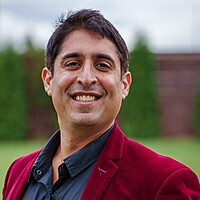
I have over 15 years’ experience covering financial markets and property, with a particular interest in ETFs and personal finance. I split my time between Australia and Canada to bring a global perspective to my work.
Expertise
I have over 15 years’ experience covering financial markets and property, with a particular interest in ETFs and personal finance. I split my time between Australia and Canada to bring a global perspective to my work.
Expertise
Comments
Comments
Sign In or Join Free to comment